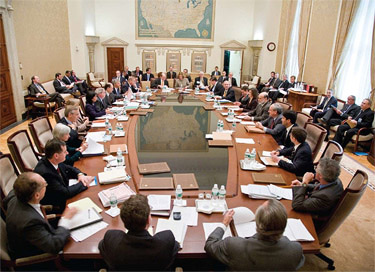
• Committee

    Still on the subject of being fast and good, team structure and process affect this massively.

    To put it simply, big is stupid and cumbersome while small is clever and nimble.

    Any sort of team should only be as big as it needs to be and, to be honest, smaller than that.

    Both the agency team and also the core client team you work with.

    Massive agency teams tend to, not just inhibit work getting out at a decent clip, they also inhibit quality.

    Massive client teams will stop work getting approved any time and bestow an agonising death of a thousand cuts on it.

    At a basic level, it's hard to keep everyone happy. In an agency team, everyone wants to contribute and feel they're part of it. Which only leads to compromise, which is not a reliable factory for good ideas.

    Sometimes though, you're stuck with a big team, and let's face it, with the complexity of modern projects, it can be unnavoidable. Which means the best approach is benign dictatorship. A tight knit group of decision makers and a greater pool of surrounding 'doers'.

    On the client side, decision by committee never works, because if you ask someone what they think, they feel obliged to tell you. Now, I've got to admit, I find creative reviews really hard, because, to be honest, at first, I don't know what I think, so I'm sneaky and make everyone else feedback first. If it's just me, I'll be honest and say I need to go away and think, to avoid saying something stupid.

    I'm not horribly bad at judging ideas, but I need time to process them, we all do.

    So if you're presenting stuff for the first time, you should try and insist it's to a core client team, and allow them space to think.

    Otherwise you've got a blizzard of half formed opinions, even worse, they are from Jill from R&D and Bill from the insight deparment.

    They will quickly become gospel, because no one wants to look like they've changed their mind in front of loads of people. Also, it's much easier to point out deficiencies in stuff than just say you like it, because no one wants to commit in big groups.

    If you can get some sort of buy-in,especially with some sort of constructive feedback from  small-ish team, they will feel they own the project and, when it's time to share it and get buy in from other stakeholders, they'll try and sell it in, rather than conform to group think.

    Smallness is also important thanks to quirks of human psychology. Millions of years ago, we evolved an instinct to resist change, to stop predators noticing us. We're hardwired to play it safe. That's the little vioce in your head that says's 'But what if?", "But what everyone else does is..". The practical, side of you that likes to stick to what it's used to. We all have this little, safe, boring little bastard whispering in the back of our minds, trying to kill innovation and originality – the lifeblood of ideas that will work, because 'being right' isn't enough, being distinctive is the most important objective. All those car ads that look exactly the same? All those researched to death campaigns that have been beaten down to the same, obvious consumer insight? That's the result of Mr Safe getting his way.

    The more people involved, the harder it is to avoid a critical mass of people giving in to the sneaky little bugger. Innovation comes from small, tight knit teams who instill energy into things, not brakes.

    At some point, of course, you need to anaylse your logic, but while it's easy to post rationalise and shape something great, it's next to impossible to inject an idea into something that's correct but utterly dull and precictable.

    Finally, a word on brainstorms. In the 1940's Alex Osborn bestowed the biggest trojan horse of mediocrity (to quote Richard Huntington) in the history of creative agencies.

    An artificial situation where any idea is good idea means that really crap ideas can get through. The phenomenon of social loafing gives crapness a good chance too, because in big groups, we naturally try LESS hard, because we hope someone else will pull the weight, and anyway, the group takes responsibilty for success, not the individual. 

    Then there is the detrimental effect of social conformity. This is also a problem in focus groups. The people with the biggest mouths get heard the most and, because we all get along by mirroring and copying each other, it quickly becomes group think. Brainstorms are really a way for despots to get everyone to think they thought of their idea (which is how I approach moderation I'm ashamed to admit).

    So again, forget big groups, aim for tight knit teams of people that trust each other to say what they really think.

    Hope this helps.


  • And after that fast strategy stuff, here's a quick guide to faster briefing.

    There are two reasons it matters.

    Firstly, the best internal way to get maximise nimbleness is to follow the three steps outlined before in a closed room with the people on the team that matter. As a minimum, that should be one account handler, on strategy type and one creative. These days, a comms planner an interactive specialist and perhaps a social media specialist could or maybe should be there.

    The core three, and everyone else, should have done some knowledge gathering before, then pool their brains, not leaving the room until you've agreed those three steps between you (or at least the first two). It's then the job of account handling to make sure it's possible. It's planning's role to validate it and, with media/comms planning, pinpoint where it should happen. It's creative's/interactive/social /PR etc role to bring it to life.

    You need a creative brief to summarise that BETA strategy and bring it to life for everyone. Not just because everyone needs a shared document to work from, also the act of precis and distillation forces you to tease any wooly thinking and contradictions out create a  more seamless,simple and slightly better spingboard. It also provides the blue-print for a client presentationm which saves time too.

    Secondly, the reality is that plenty of organisations still insist on a creative brief being written right at the start. That's kind of okay, especially if you use a 'task' based proposition and focus on the challenge or the barrier. For example:

    "Make the reliabilty of Honda desirable instead of dull"


    "Make Fox's biscuits famous for maintaining quality standards"


    "Dramatise that ghd does more than straighten your hair, in fact it does what you want"


    "Make the Market in Compare the Market famous enough to affect Google search"


    It's also okay because the act of writing a brief forces your brain into gear, in fact it can help you develop your strategy as you go along.

    The constriction of the boxes means that you can only write so much, and forces you to make the boxes fit together. The act of precis and constantly looking to connect disparate stuff enables you to go lightning fast as long as you're prepared to do the work. 

    Here's how:

    1. Stay in your chair. Switch off anything that might distract, in fact, go somewhere to be alone. This is all about 'Flow', getting utterly lost in the task, the point where you are thinkin without thinking, that heightened sense of awareness that is also totally instictive. When you're finished, it feels like waking from  a dream. That means you need to keep at it, get engrossed and don't let your mind wander.

    2. Start. No messing around with post it notes or staring into space waiting for inspiration to come. Don't look at boxes and not know where to start. Just decide which box you can fill in first,it might be the objective, it might be audience, it might be support. Write it as well as you can.It might even be a proposition.

    3. Look for connections. The act of writing one box forces you to think about other bits of the brief. Insight into the audience needs relevance to the overall objective, if you've written the objective first, it should already be sparking thoughts of what that means in human terms and writing about the audience first, their issues and what they care about suddenly makes you think of the context of the product/brand in their lives which should lead you to writing the support which, in turn should lead to a proposition.

    4. Embrace Failure. Don't waste time writing perfect pithy prose, or being crisp and seamless. Get that first draft which is roughly consistent, roughly interesting and at least complete.Then look at what's wrong. Do it box by box. Keep chipping away. An amend to the support has implications for the rest of the box's or could turn the whole emphasis on its head. Keep going until you're happy. Don't stop until you are.

    5. Get an editor. By now you're too close to it to be totally objective and you're brain is a little fried. You haven't got time for the overnight test, you need to get it to other stakeholders for sign off ASAP. So show it to someone who knows nothing about the project. From any department.They'll quickly point out what they don't understand, what interests them and what, on reflection might seem plain dumb.Consider, amend, edit, precis distill.

    6. Don't wait for perfection. It's more important to be interesting and inspiring that 100% rigurous and right. Great work is rarely on brief, it's an evolution of that original springboard. Your time is better spent totally validating the final recommendation, not what inspired it.

    In fact, a barrier to speed is getting people to sign off the damned thing. A great and sneaky tool for getting people agree a brief is to leave some room for them. Insert a couple of deliberate mistakes in it for them to amend and they'll feel like they'll have input and happily sign off a quickly edited document.

    Hope that's useful.

  • If there's one thing that having kids has taught me, it's the difference between happiness and pleasure.

    539088269_3907dd2821

    Being woken up at 5.30 am by a half crazed three year old, bashing you on the head with handmade birthday card, the one he simply can't wait another second to show you, is happiness.

    Gently stroking the hair of a one year little girl, to get her back to sleep at 2am is happiness.

    So is swimming so hard the pain in your arms makes you want to cry.

    Even rehearsing for a pitch at 2am is happiness.

    Because the things that make you happy (as umpteen pyschology experiments show us) are rarely the easy things. And it's certainly not buying stuff for yourself.

    Giving makes us happier than recieving, be that buying for people or doing for people. Experiences always win over goods,especially doing things with others, because the memories they provoke last much longer than stuff we buy – and our basic trait of seeking out novelty makes us bored with new stuff really fast.

    We also need to feel valued and to flourish, like you've accomplished something, or feeling like you're making a difference and it's doing something for a higher purpose than yourself.

    In addition, we're saving up for a extension on the house, not just a shared task which is already good, but something which will create more space for the kids playing upstairs and more family staying more often. So saving more money, not my greatest skill, would be good.

    So for an entire year,I'm not going to buy anything for myself I don't need.

    I have more than enough clothes (and don't care about fashion), enough CD's and DVD's to last a lifetime,I have a pile of books that will last a year and I don't give two hoots about gadgets.

    This doesn't preclude subscribing to Spotify, going to the cinema, holidays or downloading a film of course, and food and drink. All are rich source of experience for me.

    But I'm going to buy something, I already know that getting stuff for Mrs Northern or the kids just makes me feel better, but even then, not as happy as doing things with them.

    Of course, if my bike packs in, our TV needs replacing or my winter coat falls apart, then NEEDING is different to WANT.

    So I'm going to find out how much happier experiences not stuff, plus giving rather than recieving, makes me over a year.

    Naturally, I'm aware this is not original, but I'm not doing this to be get a book deal or anything. I'm doing this because I'm curious, I want to teach myself to be better with money and I already know what makes me happy, so I want to try and do more of it.

    Let's see what happens.


  • With the reality of modern lead times and client budgets, planning folk nowadays are challenged to get to some sort of strategy and resulting brief quicker than ever.

    This isn't so bad though, in fact, I think it's probably a blessing in disguise. Here's why.

    Firstly, on a process level, if anything has changed in the last few years, it's briefing a small team of advertising creatives on a taut proposition a lot less, in favour of galvanising a large team of different specialists around a clear task at lot more.

    This means far less shiny, impregnable 'messaging' solutions that only work for ad people, and more around shaping the collaboration around a clear juicy communications task.

    Shapers rather than planners?

    In any case, when creatives feel they are helping to solve the problem, rather than bringing someone else's thinking to life, it works so much better, because we all tend to love things we believe we've had a hand in making, including strategy.

    And the work will be better. Anyway, don't my word for it, read this.

    On more a craft level, it forces you to stop procrastinating, makes you focus on getting to the root of the business issue quickly and then helping shape the outcome.

    Nothing focuses the mind like a deadline.

    So how do you get great quickly? How can we get to, business building thinking that frames the right task for communication? That isn't just 'right' it's interesting enough to cut through?

    Fame.

    I make no apologies for banging on about 'fame strategy' again. The IPA databank shows us that this approach- getting the brand talked about -  consistently proves to be the most effective.

    Being seen to be leading, to have authority, to have people wanting to spend time with you can reduce price sensitivity, increase penetration, mantain loyalty, build consideration all in one go.

    It's naturally more integrated because, firstly, teams find it easier to coalesce around a clear problem, rather than a clear, limiting 'message' and secondly, because a task to create 'buzz' and get people talking about something is naturally social, as long as you leave the audience room get involved.  

    This also backs neatly in to the Byron Sharpe school of thought of building distinctive memory structures to reach the light buyers so precious to brand growth – while, secondarilly, maintaining loyalty by involving heavier, more engaged buyers in the conversation or collective action- making them willing, fellow protagonists.

    Of course, it's not that easy, the trick is to making sure people are talking about the right thing – whatever is related to your business problem.

    All well and good you say, but this only makes is good, it doesn't make it 'fast'.

    The fast bit comes from deciding NOT to look for ONE killer insight, or 'Revelation' as Richard Huntington might say, you know, the new discovery that sheds new light on the category. 

    The velocity arises from conflating much more obvious and easier observations – re-configuring what's already there into new connections.

    Mother shared a great little toolkit for this in their IKEA case study.

    Three steps I've moved on ever so slightly……….

    1. Inspect the business issue. Turn the business objective into a behavioural objective. What do you need people to do? Every business problem is really about what people are doing/not doing/feeling or thinking.

    2. Inspect what that means is real life. How your behavioural objective relate to something people care about or need in their real lives? What issue, tension or emerging behaviour can we tap into?

    When you have these, you're ready to brief in a clear task for communications. Then you need help with as much stimulus as possible…….

    3. Relate that to something in popular culture. What is the most culturally powerful, most relevant way to bring this to life in a way that will make people take notice, care and, in the case of the most engaged, get involved? It goes without saying that relevance and not just 'copying' other stuff is the key here.

    For example, this Yeo Valley ad was driven by the fact that the audience get together around the X-Factor, not rocket science, the brilliance to link 'X Factor' with organic values to get a boy band made of farmers.


    You'll notice there's nothing about the brand in there, because 98% of the time the brand is not the problem, it's how people feel about it at best. If you set out to solve brand problems as your primary motivation, you'll solve brand problems but not business problems. You should be well versed in the brand point of view, positioning etc, I think it's a bit more about how you bring that to life in THIS particular situation.

    Mostly, the 'leg work' in terms of hard analysis should come in at stage 1. Good planners should always be collecting observations and little insights about what's going in real culture – much of stage 1 and 2 SHOULD BE about connecting stage 1 to what you already know, or at least, have an instinct or hunch about.

    From Mother's IKEA APG case study.

    1. To increase consideration of IKEA kitchens, we need to make them famous

    2. Kitchens are increasingly the heart of the home

    3. It's a common belief you always end up in the kitchen at parties (and no one has ever made use of the Jonah Lewie classic).


    Or:

    1. Sainsburys needed to add £1 billion to revenue, which broke down into getting £1 extra for every customer visit.We need to give people a reason to spend that £1. 

    2. People are looking for inspiration for safe experimentation to liven up their food.

    That's the brief right there- give shoppers easy inspiration to add a spark of specialness to their routine cooking. Sainsburys has been an authority for good food for generations, we just need to refresh what this means and turn it into action

    3. Then tip in insight from popular culture- in a UK where most cookbooks from TV chefs are left unopened on shelves, Jamie Oliver is the champion of 'chef food' you can actually do


    The result, an idea that flexed accross promotions, advertising, staff and even product development:


    How here's a made up example for Dove Men (with echoes of Old Spice I know)

    1. We need to increase penetration for Dove Men amongst middle class Dad's over 30. Not only do they not care about shower gel etc enough to think hard about it, it's mostly bought by their wives who know this, so don't bother much themselves, just buying them non-descript own label or what's on offer.

    2. This lack of thought when buying stuff for their blokes is part of a much wider symptom in culture, where mature, reliable men just don't get the credit they deserve. Read this. It's all well and good PG doing the Mums campaign, where the hell was the cheering for Dads?

    So the brief becomes: Get women and men to talk about the role of men in family life

    3. This audience over indexes on arch, hyper-real, knowing sit-coms like the Office, Outnumbered etc.  In most of these, the cultural cliche is of the bumbling Dad and the savvy, resourceful Mum who always saves the day. Subverting this could be culturally powerful.

    On the other hand, the middle ages boyband has got traction with Take That. It could be interesting to ask women why Take That are cool, but their own partners are not (in their eyes).What if we did a multi-platform X-Factor to find a grown up boy- band for women who want men, not boys.

    Anyway, that's a poor ten minute thought experiment, what could you do in ten hours?

    Hope that's useful.


  • So we were at Mum and Dad's in St Ives for Christmas.

    Xmas 5

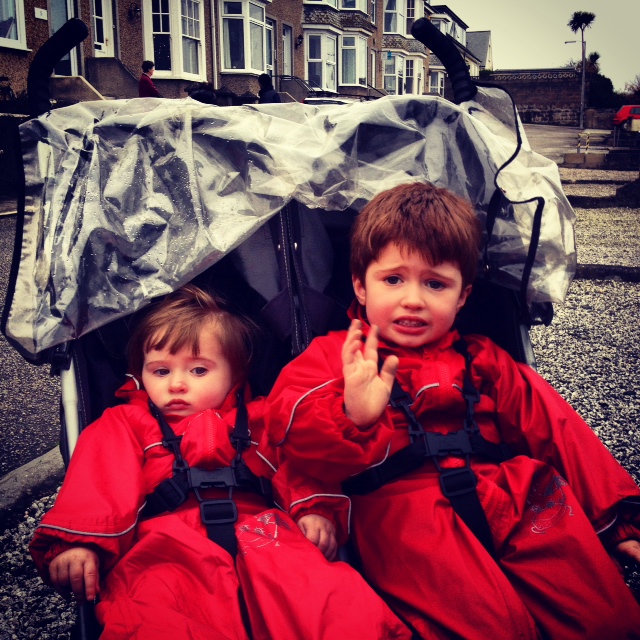
    Which meant getting kitted out for winter beach fun. That's Will's 'hurry up and take the damned picture Dad' smile.

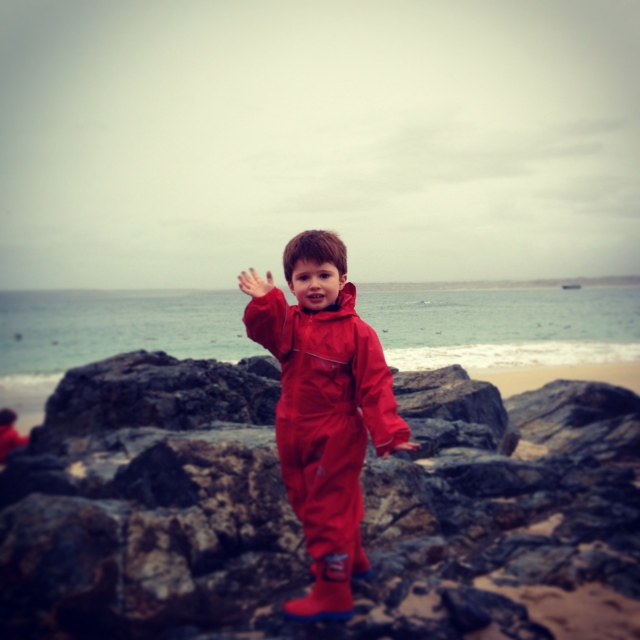
    He cheered up when he got to the beach though.

    Xmas 3

    So did Evie, although she was mostly inerested in eating sand.

    Xmas 4

    After rough and ready beach fun on Christmas morning she scrubbed up pretty well.

    Xmas 1

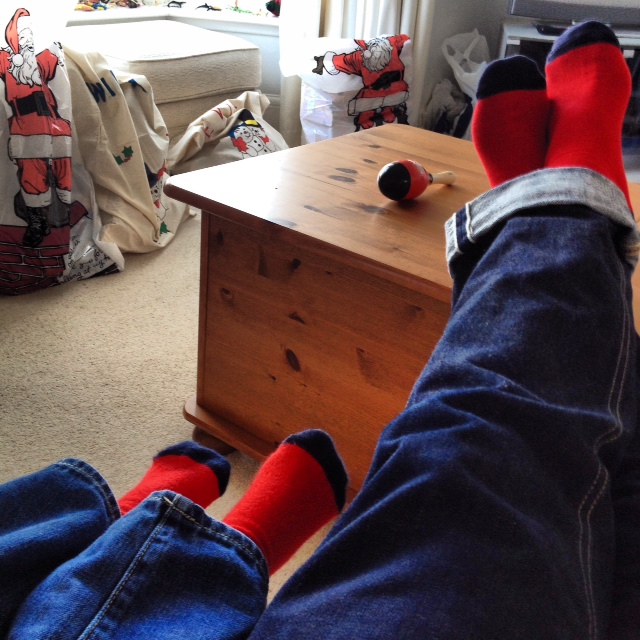
    She may well look beautiful in her dress and cardy but not as cool as Will and I in our matching Christmas socks.

    Xmas 2

    I've always loved Christmas, but it's the kids that make it magic.

    It's brought me closer to my parents too, because the thing about being someone's child is that you don't really understand them until you go through what they did.

    The way having kids is both awesome responsibility and pure joy.

    The way I only now get the pressure my Dad felt in his job, when my own is about the kids' shoes. not just being able to afford a few trainers.

    Mostly though, you don't get how much, how helplessly and unquestionably your parents love you, until you love your own children in the same way. Christmas somehow brings this home even more.

    Good that.

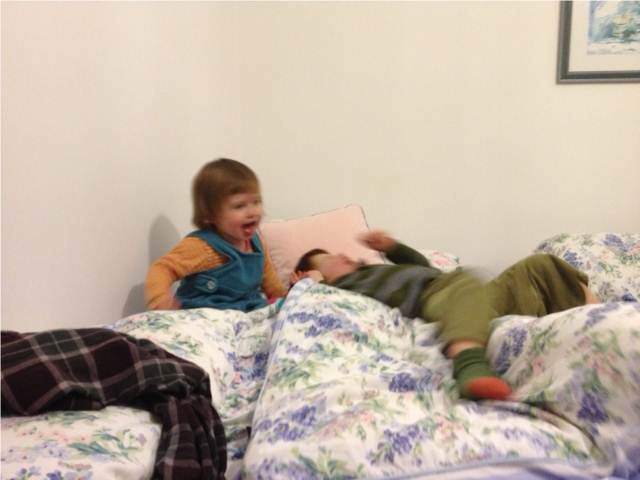
    Anyway, to counteract the sentimental seriousness, here's the offspring doing their best to break Grandma's bed-springs.

    Xmas 7

    By the way, I do love my Mother very much, but not enough to neglect pointing the horrendousness of her choice of duvet cover. Monstrous.

  • Freedom22

    In many ways it's wonderful to be working in a creative agency right now, because we have never had so many options open to us. Do a TV ad, fund a TV programme, outdoor, interactive outdoor, page take-overs, live stunts, webcasts, carnivals, Google Earth mash-ups, inventing new sports. Sometimes, God forbid, a press ad. 

    But having virtually unlimited choice of WHAT to do won't guarantee great results, in fact quite the opposite. All that choice merely means we have a greater opportunity to do something really stupid, or even worse, pointless.

    Until we even begin to consider WHAT, we need to ensure we have a really great WHY. That starts with business objectives, it doesn't start with trawling Contagious or Wired for something to copy because it would be 'really great'.

    Basically, get a clear business objective and translate into a clear behavioural objective- who you want to influence and what you want them to do.That's the WHY.

    For example, "Increase penetration amongst 18-30's by creating a new usage occasions for our premium butter" might translate into 'Get people into eating toast as a brilliant mid-morning work snack'

    Only then, dig into the WHAT – which should be informed by what you're audience cares about, what media they consume,what drives their relationships, what creates social currency etc.

    For example, people in offices tend to gossip around the toaster, perhaps we could dramatise what happens when you miss the crucial office gossip. Or forget the office cliche and dig into the double life young people of this age live- they take work more seriously than previous generations, therefore feel more pressure to be seen to be letting their hair down.There's a lovely tension to play with there, which is a little similar to Clark Kent /Superman thing.

     Anyway.

    In any case, while it needs to be insanely great, interesting and provacative to cut through the clutter and apathy, if that isn't wedded to actual business needs, and what people care about,  it's just indulgence.


  • I really enjoyed the Hobbit film, mostly because the book means so much to me. I read the book when I was eight and it was magical, I still adore it and look forward to reading it to my kids.


    I have to admit I'm a slight geek about Tolkien stuff, but not  so much is a Dungeons and Dragons manner.

    It's more to do with the way the books make me feel something, they manage to blend hope, joy extreme darkness and a beatiful sense of bravery in the face of much sorrow for paradise lost.

    It's a lot to do with  how the books make me feel like a child again.

    But it's mostly do with the way the Hobbit's, especially Bilbo,  are US. Decent, normal people forced to do frightnening, extraordinary things. They show there is greatness in everyone.

    As Philip French mentioned, Bilbo and the other Hobbits are low mimetic heroes – normal people plucked out of their lives, who will go back to it afterwards. People we can identify with, who we can 'live' the story with, they are our eyes in the world we are shown.

    As opposed to the 'high memetic' Thorin or Gandalf in the Hobbit, or Aragorn in LOTR- people who are better than ordinary people, they remain extraordinary whatever happens to them.

    When it comes to the people you portray in advertising and stuff, it's really worth considering if you're characters and overall narrative are about the high or low mimetic.

    Or both.

    For example, I'd say that most of the women in beaty ads are high mimetic which means that many women might not identify with  them, whereas the Dove women are low mimetic rebelling against the impossibility of high mimetic.


    The real idea behind the Lynx effect plays with it: low mimetic, ordinary blokes, enabled to live a high mimetic life as long as they use Lynx. While, in the same category, the Old Spice guy is high mimetic- but laced with irony.


    Most fashion is all about the fantasy of high mimetic- maybe too much so.

    Look at the crass high memetic of most travel advertising compared with visit Wales.


    Now,coming back to Lynx, it feels really interesting territory to play with the low mimetic more.

    Because the mistake many brands make is to just replay back the humdrum of everyday life to show we 'get you'. I don't really like the Asda Xmas ads because of this, although I could be wrong, I'd love to know if Mum's respond to being portrayed as ordinary people performing extraordinary things. Or just go, oh, another brand who thinks my life is all toil.


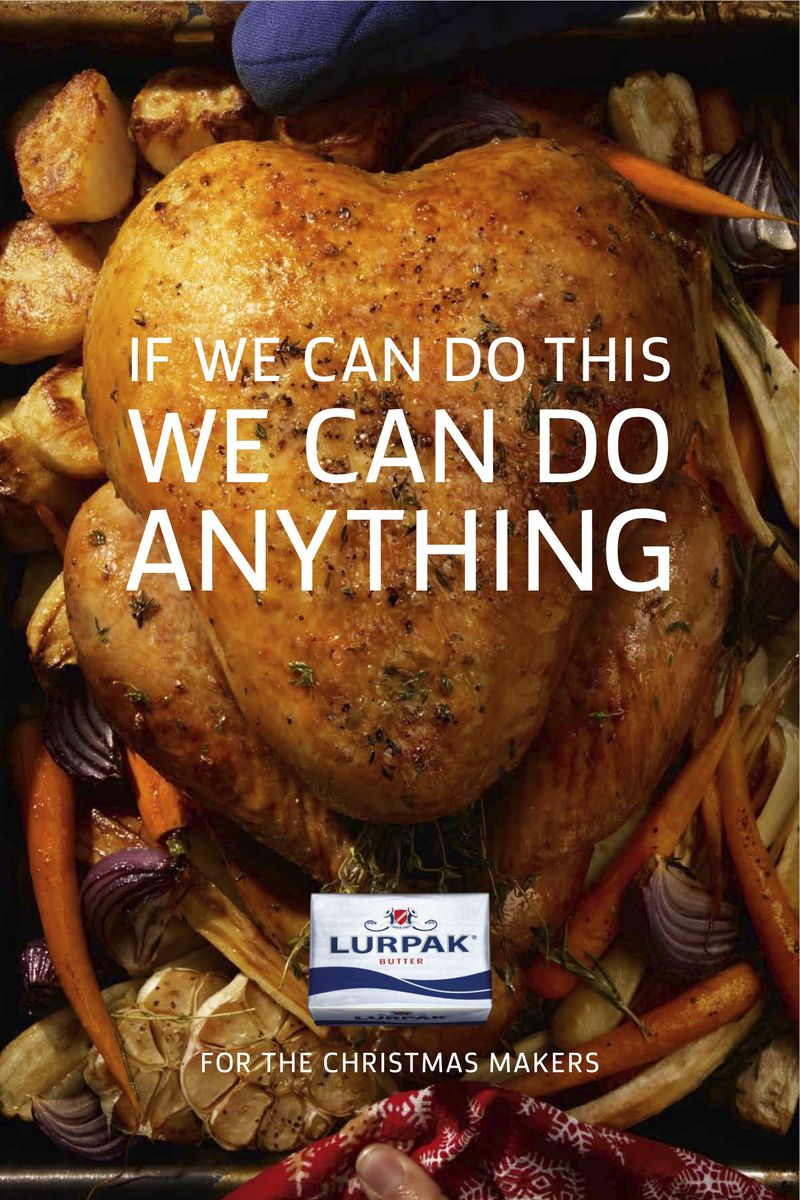
    As opposed to this lovely Lurpak stuff, which manages to not do the 'Mums' cliche.

    Lurpak


    Look at Indiana Jones- he works because of his very human ordinaryness, he gets hurt and makes mistakes, despite existing in a fantasy world.

    Threepio and Artoo are droids in Star Wars,but really, they are us, ordinary jobsworths thrust into chaos.

    The rejuvenation of Batman and Spiderman were all about making them normal, confused people who happen to be superheroes. Superman works because of the low mimetic Clark Kent. 

    All examples of well loved 'magical' stuff we utterly identify with because of the humanity and recognition of our own lives. The hope that can be us, and is, but not in such a grandiose way.

    Worth thinking about.

    One final thing. Maybe one way to cut through all that brand onion/pyramid/wheel rubbish is to ask yourself, is this brand itself a high mimetic character we all look up to? Or is a plucky everyday hero? Is one of us?

    Anyway.

  • TV advertising didn't die

    The new age of this and that never occured

    Acres of animatics and scamps died a death of a thousand cuts in research

    Most people didn't bother participating with brands in social media

    Digital banners still worked

    Google retargeting stalked us accross the web without pity

    95% of brand communications output was still a waste of time

    There was another fifty new models for how brands work, none based on how people and business works

    About 50% of original individuals who work in agencies all wore Converse

    Women were mostly portrayed in ads as clever Mums with a twinkle in their eye or one dimensional airheads

    Men were mostly portrayed as feckless buffoons or buff alpha males devoid of personality

    I made enough quality tea to fill a swimming pool


  • Will evie chistmas

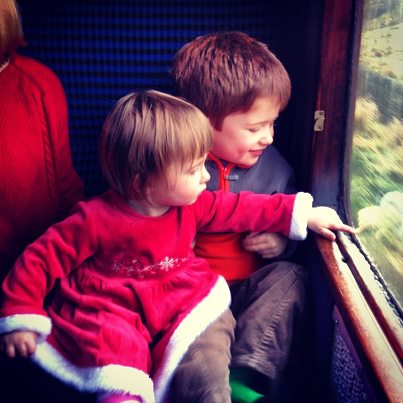
    It does exactly what it says on the tin. A steam train, with elves, Scrooge, reindeer and The Man Himself. I honestly thought Will was going to self-combust when you saw Father Christmas.

    Christmas is ace when you have kids.

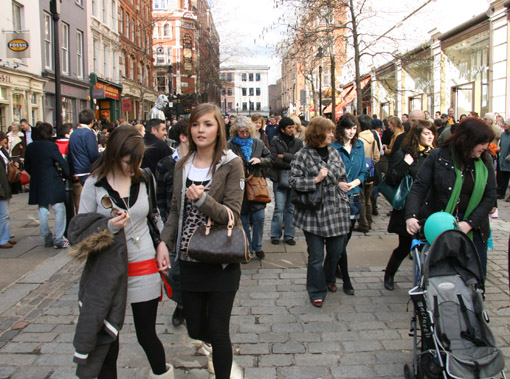
  • For reasons I won't bore you with I'm spending lots of time in London, which for most visitors means navigating The Tube, to get from a to b as quickly as possible, but for me means getting as close to the people in the streets as possible.

    London_pedspace2

    For creative (or would be creative) types the Tube means missing a golden opportunity. Because being throwing yourself  right into the over crowded, multi-faceted pace andm let's face it, grind of the city is a precious source of creative inspiration. The noise, the overheard conversation, the sights, the sheer sensory overload.

    Being right amongst all those people, the friction of them  piled on top of each other is the constant jolt to the system that makes cities THE engines of creativity. Yes, part of that is the fantastic opportunuties for serendipity, but much of is is the sensory smack in the face that keeps your mind awake and wide open. It feeds the subconcious with all sorts of stuff to bubble up later

    So every now and then, don't descend into the faceless Tube, get the bus, talk a walk or hire a bike. When there's so much happening around you, take the time to notice.