LIke most of us, I love TED. But I increasingly wonder if the ideas are overshadowed and fused with the personalities that present them. I can't work out if this is a good thing or not.
It reminds be of a vigourous debate I had about Nike's apparent move to utlility – tools and services (overplayed I think, they've just got really good at digital stuff with 20 somethings, they've gone where their customers are these days). Naturally they'll be ace and people will lap them up, Nike + is the de facto example of service innovation.
But would Nike be able to launch successful 'utility' if it hadn't already spent millions on building the distinctive place it has in our minds? I doubt it. How we resond to ideas is as much about who delivers them as what they are.
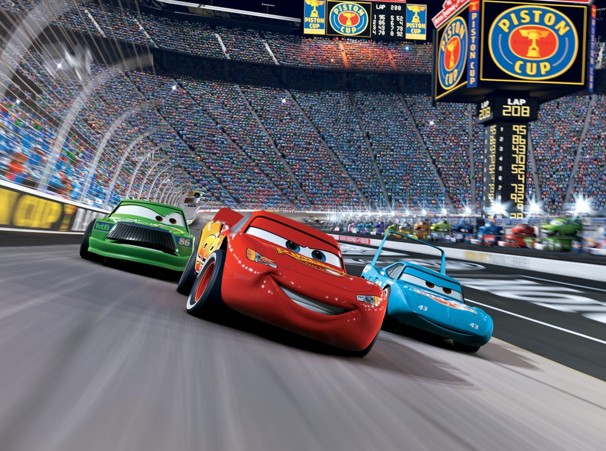
In the last two months we must have watched Cars or Cars2 at least 3 times a week, thanks to our little boy;s utter entrancement with Lighting McQuenn and co. He doesn't take just one McQueen replica to bed, oh no, he takes two.
I happened to read the reviews on Amazon after we'd the films a few million times and went a little deeper with the 'proper' film critic reviews, finding myself a little surprised they seemed to get quite a pasting, especially the second film.
I wondered if they sort of missed the point, that these films are made for children, with some adult themes to maximise Mums and Dads taking their brood to the cinema or forking our for the DVD. I wondered how many of the reviewers had watched children watching the films, rather than the films themselves.
Just like I was saddened by the snide comments in the Guardian about the comeback of Girls Aloud (talentles, irrelevantm don't write their own songs etc), which missed the point that their fans really didn't and don't care about craft and talent, or maybe they do, that's not what Girls Aloud gave them. They gave them fun, license to lighten up, the joy in ordinary girls made good and that knowing, cheeky, independent, sexy take on womanhood that Sex and the City delivered as well. In fact, that's probably rubbish too, they looked great and sang insanely catchy tunes.
Which also made me wonder how people in agencies really judge ads and stuff. If you want to know how peopl respond to TV advertising, sit with your own family and friends in front of the telly and see if they respond or enjoy any, let alone, 'talk about them' at all. Likewise with digital, sit with someone at an laptop screen, on their actual sofa while they half pay attention to Corrie etc.So if they eveb waver over banner ads or brand stuff that's snaked into their newsfeeds.
I was reminded of a comment in the blogs, to a quite good recent ad, slagging it off for being too much like Blackcurrant Tango.
First, the target customer wasn't even in long trousers when that came out and second, if they were, they won't really remember or care that much.
That's agency types talking to themselves.
Just like film critics judging childrens' content the same way they do a Orson Welles film, are missing the point.
Like Girls Aloud fans don't care an iota for what Guardian readers think.
That's not to say people are stupid, there's nothing worse than researched to death creative stuff, reduced to the lowest common demoninator, treating them like idiots. But then again, if it's stuff that only a few thousand people in adland find interesting, moving or enertaining, it's only really talking to itself.
If you want to really get creatives to understand the target customer you're on about in a brief, you could do a lot worse than show a picture of them, even better, a video. I don't know why, but it works every time. Oh yes I do, creatives respond to imagery, video or metaphor, not lots of words.
I was chatting to someone about the pitfalls of working with, or for a big company and how company size seems to be inversely proportioned to its intelligence. We agreed that most people in marketing seem to think being huge or being interesting (dare I say it cool) are mutually exclusive. Why?
Maybe that's what sets brands like Apple and Old Spice (modern incarnation) apart from everyone else. They see being interestingness as the key to bigness, rather than a barrier.
I hate them because they consistently do work I would want to do.
They mostly manage that trick of not just doing work that people will talk about, but work that get's people talking about the brand and even better, the product.
Work where you can't help but admire the attention to detail and the sheer planning craft.
Like this.
Four truths – people are not dairy intolerant, they're lactose intolerant. All hedgehogs are lactose intolerant (and cute). Lactofree is dairy stuff without the dodgy lactose,so the lactose intolerant (which includes Hedgehogs) can enjoy dairy stuff.
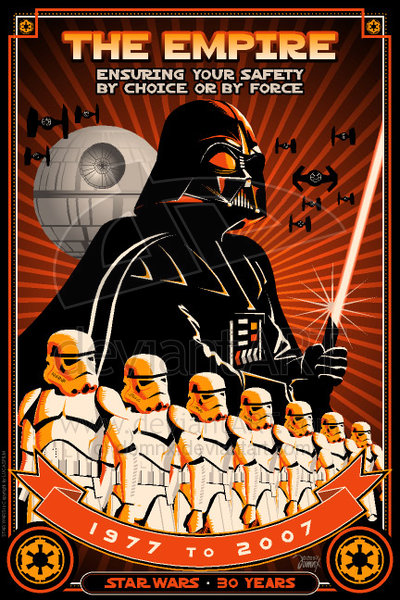
1. Massive Empire's are essentially confidence tricks. They always overeach themselves and end up as massive confidence tricks – doing eveything they can to appear stronger and more untouchable than they really are to the conquered,who collectively outgun the conquerers, so they don't realise how easily they could blow them away.
They make sure they have lots of massive displays of power therefore.
Reminds me how the whole Cold War was based on the fabrication of, not only what Stalin's intentions were, but how powerful the Soviets really were (not nearly as much as the warmongers would have everyone believe).
Also reminds me of the 'Empires' in the advertising business. With notable exceptions, they're not very good mostly, just very big and very good at 'displays of power' – the amazing buildings, the great suits and the fantastic props.
2. Great writing is timeless. Forget all the blather over to long copy or not. Great writing cuts through. The most memorable moments of the programme to me were the recitals of Rudyard Kipling's IF..
IF you can keep your head when all about you Are losing theirs and blaming it on you, If you can trust yourself when all men doubt you, But make allowance for their doubting too; If you can wait and not be tired by waiting, Or being lied about, don't deal in lies, Or being hated, don't give way to hating, And yet don't look too good, nor talk too wise:
If you can dream – and not make dreams your master; If you can think – and not make thoughts your aim; If you can meet with Triumph and Disaster And treat those two impostors just the same; If you can bear to hear the truth you've spoken Twisted by knaves to make a trap for fools, Or watch the things you gave your life to, broken, And stoop and build 'em up with worn-out tools:
If you can make one heap of all your winnings And risk it on one turn of pitch-and-toss, And lose, and start again at your beginnings And never breathe a word about your loss; If you can force your heart and nerve and sinew To serve your turn long after they are gone, And so hold on when there is nothing in you Except the Will which says to them: 'Hold on!'
If you can talk with crowds and keep your virtue, ' Or walk with Kings – nor lose the common touch, if neither foes nor loving friends can hurt you, If all men count with you, but none too much; If you can fill the unforgiving minute With sixty seconds' worth of distance run, Yours is the Earth and everything that's in it, And – which is more – you'll be a Man, my son!
And Wilfred Owen's Dulce et Decorum Este
Bent double, like old beggars under sacks, Knock-kneed, coughing like hags, we cursed through sludge, Till on the haunting flares(2) we turned our backs And towards our distant rest(3) began to trudge. Men marched asleep. Many had lost their boots But limped on, blood-shod. All went lame; all blind; Drunk with fatigue; deaf even to the hoots(4) Of tired, outstripped(5) Five-Nines(6) that dropped behind. Gas!(7) Gas! Quick, boys! – An ecstasy of fumbling, Fitting the clumsy helmets(8) just in time; But someone still was yelling out and stumbling, And flound'ring like a man in fire or lime(9) . . . Dim, through the misty panes(10) and thick green light, As under a green sea, I saw him drowning. In all my dreams, before my helpless sight, He plunges at me, guttering,(11) choking, drowning. If in some smothering dreams you too could pace Behind the wagon that we flung him in, And watch the white eyes writhing in his face, His hanging face, like a devil's sick of sin; If you could hear, at every jolt, the blood Come gargling from the froth-corrupted lungs, Obscene as cancer, bitter as the cud(12) Of vile, incurable sores on innocent tongues, My friend, you would not tell with such high zest(13) To children ardent(14) for some desperate glory, The old Lie; Dulce et Decorum est Pro patria mori.(15)
Baby Evie is sleeping in her own room now and going to bed at a reasonable hour. Which means, oh joy, reading books in bed. I drive to work, I'm busy – bed is the place I read.
The backlog is considerable and has been driving me mad, just sitting there taunting me – the bedside table is just the smallest tip if the iceberg.
Anyway, just finished Norwegian Wood. Perversely, I've read and loved tons of Murukami but never got around to the book that took from him from cult to huge. I've always loved his surreal approach and despite this book being much more straightforward at first, there's as much going on with this book as any other, in fact, possibly more. It's a real skill to pull the extraordinary out of the mundane and he does it in spades here.
And there's a quote I'll take with me forever, "only arseholes feel sorry for themselves". Quite so.
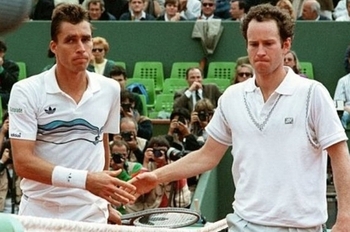
I grew up at the fag end of the golden age of tennis. Just old enough to witness Connors, Borg, McEnroe, Lendl, Becker and the very young Agassi and Sampras. I always admired Lendl the most because he had the least talent and probably did the most with it.
Lendl wasn't a natural and certainly didn't have the advantages as poor Czech boy. But he pulled himself and MADE himself great. He was never an unstoppable talent like Becker or impish genius like McEnroe, but he made himself into a tennis machine that was never a jaw dropping joy to watch, but was always reliably consistent. His trademark killer forehand and rocket serve just never let him down.
There's lots to be said for being more of a Lendl is this business and less of a McEnroe.
On an agency level, there are 'hot' shops that burn very brightly for awhile then fizzle out, because they have had some amazing moments of inspirational genius, but can't get consistency. When they're good, they're very, very good but when they're bad, they're horrendous.
Only a few achieve both excellence and longevity. Yes, they might have famous iconic examples of genius, but what's more important is a look at the whole portfolio.
The actual money often comes from clients who are not ready for 'out there' work and more importantly, their agencies know when solid work is more important than the the fireworks.
Look at the portfolio of long terms successful agencies, the ones that are not money making network behemoths, and you see consistency. Eventually hard work, determination and high personal standards always win over rampant creativity and waspish genius.
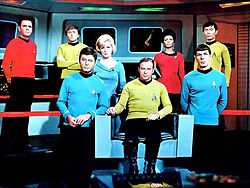
I wouldn't be the first to propose the notion those most market research about what people say they want or will do is pretty useless. It doesn't matter if that's NPD, creative development research or whatever. Research based on watching customers, observing them in their own environment, living with them can expose all sorts of opportunities. Expecting them to tell us what they want will not. Because they can't. We're all useless at predicting what we'll do,want or feel like because our frame of reference is how things are right now, or how they were. Look at Star Trek from the 60's and how archaic it looks, because it's based on how people looked and behaved in the 1960's.
Not to mention, we post rationalise what we've done anyway. Our memories work to make us feel about the past, for example believing we weren't that happy in a relationship when we get dumped – or believing we made a choice from careful consideration rather than gut instinct. Men have been proven to change their minds about how they felt in a sad situation – believing they were less emotional than they were because culture teaches us that 'men don't cry'.
So customers are pretty bad at creating the future for companies. And much of market research is about mentally removing risk for marketing folk. It's a placebo. It's snake oil.
Brands are accepted as future building tools though. But the idea of a brand doesn't always help that much either.
Companies spend a massive amount on 'brands' because they're seen as massively valuable when it comes to the bottom line. They have a point since for some of the biggest organisations, a significant proportion of the market capitalisation value (if they sold up) lies in the name, the reputation and the symbols in people's heads. If Coca Cola's entire production line blew up, they could still sell the company for billions on the name, the blood red colour and the instantly recognisable font next to the swooshy ribbon thing. Of course, maybe they would need to hold onto the secret recipe. Yep, brands can be seen as an 'asset' along with real estate, infrastructure or the R&D team.
But the people that own these brands are besieged by those who are, in many ways, nothing more than charlatans. Brand consultants, internal 'brand health directors' and the agency, design and, these days even digital partners who like to think of themselves as brand guardians.
It seems that every single one has their own version of how brands work, and, lets be honest, change it week in week out. From brand triangles, wheels, and onions to more exotic species like 'blueprints', 'disruptive brand idea', 'brand health pyramids' and even molecules.
Every week, if you follow the trade press (and hopefully you don't bother too much) there's a sparkling new methodology, tool or weird chart unleashed on the marketing universe, with all the furrowed brow gravitas of the discovery of the Higgs Boson or the key to cold fusion.
Brand people tend to have their own unique, all conquering recipe that will prevent, cure and eradicate all sorts of commercial problems.
Now only a fool would say 'the brand' is not a good idea, it's just that most have forgotten what that idea actually was. The way that mos claim they work and tend to use them is, at best, doesn't work and, at worst, causes more problems than the ones they're solving.
They stop us solving genuine problems
Most brand models have the brand as an end in itself. You move people from being 'unaware' through to considers to, God forbid, evangelists. Huge budgets are spent on brand objectives, 'awareness' 'consideration' and so on, without addressing real business issues. Decent advertising builds brands, especially stuff that makes people talk.If it uses relatively consistent symbols, themes and tone, it builds up long term recognition and distinctiveness. But this is an consistent outcome of all advertising (and I use advertising in it's broadest sense – DM, telly, digital, social etc) not the ROLE of advertising.
We're all here to use creativity and communications to solve business issues, mosty around how to grow sales. Thinking just in terms of brand issues gets in the way. I love this Chrysler stuff, love it. But I'm sure the brief for this wasn't 'we need a new relevant brand idea' but more like, 'People are put off buying our luxury cars because they don't want to be seen as ostentatious in times like these'. And it's not based on some ethereal brand idea, it's based on a truth – the cars are made in Detroit. This based on solving a very real business issue, not brand scores.
This was created to solve solve the issue that fashion has straight hair wasn't the fashion must have it once was and we needed to demonstrate the product could do a lot more.
Not solving brand problems, solving commercial problems in a way that continued to build the brand.
Claims on how brands work are exaggerated and in many ways, plain wrong anyway
The efforts of many organisations into measuring brand scores often come at the expense of delivering sales – assuming that if we get the brand scores right, sales will follow. Yet I've worked on more than one brand where the brand health scores are through the roof but sales are declining. In one case becaue penetratio in the one price bracket the brand was in has maxed out and was under attack from competitors. Leading to the search for product innovation.
Another argument is that if we get strong emotional loyalty, the more loyal and frequent their buying behaviour will be.
But both are not really true. In this book we discover that brand image etc tends to happen AFTER the actual purchase, how people's score brands alters from months to month anyway and loyalty in any category are pretty constant. And around half of sales come from people who don't very much ergo don't think about brands very much.
Just on the brand thing therefore, assuming no one is interested is by far the most sensible approach but still – solving brand problems rarely solves business problems. Solving business problems does!
Brands about your history, not your future
This is the source of biggest blockage to business building ideas. All that brand essence, values stuff is designed to be immovable. Unlike the rest of culture, brand are designed to stand the test of time. When in reality, people, markets, culture and economies are always changing and moving on.
At the very least, that requires re-evaluating the brand to new contexts and challenges. For example, I think Levis' Go Forth work moved from being a slightly sexualised symbol of youth rebellion through what you wear – very much part of you are what you wear – an irrelevant hangover from th 1980's and 1990's to a fizzing catalyst for the young to come together around and actually CHANGE stuff apart from just looking like they did.
The most stupid thing anyone can say is, 'That's not on brand' when they means it doesn't get a brand onion tick.
So, yes, brands are useful. They're useful to people because they help them not think about stuff. They're useful to organisations because they do add to things like market capitalisations rates, they do enable a measure of coherence. But they do not solve busines problems on their own. Building brands is an outcome, not the goal.


 NORTHERN PLANNER