-
I read an article the other day in Market Leader that basically had a go at communications in general and ad agencies specifically for falling far short of their claims to be 'partners' with their clients and generally having little commercial acumen or real world business experience.The article also has a go at planners, for example the quote, "Most agency planners don't understand the dynamics of business – they are about communications'.
On the face of it, I can't disagree with much of that. On the other hand, I'm not sure this is the problem.
Sometimes I do wonder if the problem with agencies on a macro level is trying to be commercial at all. Agency people are different to client people and this is a good thing. We can do what they can't and to be honest, they can do what we can't too.
I'm lucky enough to own a house. There are things I can do to it to keep it looking okay and even repair the odd thing. I can just about paint, I can fix a shelf. Can do plumbing? Can do the wiring? Can I draw the plans to my extension? No.I hire people who devoted considerable time to learn their craft and do nothing else for a living.
It's no different with agencies and agency people and their clients. I have tremendous respect for most cleints and all the things they do I,to be honest would rather slit my wrists than do all day.
The article implied that agencies having no MBA's in them was a bad thing. Why the hell do I need an MBA? Do clients need to done the APG Network to have a reasonable conversation about comms strategy?
But I and my colleagues in departments can do things they cannot. If they give us genuine business issues, we can apply understanding their customers and what they care about, leaps of imagination, technology ideas, empathy whole brain thinking to solving them.
We fill each others gaps. Just as planning suits and creatives should do the same (with a healthy blur).
The mistake agencies made wasn't being commercial enough it was trying to convince clients they were just like them and sell them linear, reliable, professional process. When great stuff really comes from chaos and serendipity.
The bit that's fair in my view is that bit about planners wanting to just talk about communications. I'd apply that to agencies too. Communications solutions, brand solutions (is there such a thing? Really?) start with business issues. At some point, mostly before I started in this business (but not entirely) agencies started having conversations about how to solve a pre-defined communications problem, rather than using creativity to solve a genuine business problem.
Somehow we colluded with the madness of only measuring brand health and other softm namby pamby targets.
I don't know who started this.Was it clients? Was it agencies? But as things stand, it's not entirely fair to just point the finger at agencies. So many briefs these days have much of the big strategy done, by peopl without the creative skill to do it well – clients and reduce planners to 'execution tweakers'. Some planners are complicit in this of course and become 'shrills for the work' but to be honest, many clients don't want to have a conversation about anything else.
That doesn't mean of course that we should give in.We'll only get 'upstream' if we start adding value, asked for or not and going beyond the tight briefs we tend to get. Asked for or not, taking to understand where the profits are, where revenue tends to come from and what the board cares about.
But that doesn't mean beautiful lies about being business partners. It means doing what the other cannot and fully appreciating the other.
Yes, agencies need to grow up and want to have business conversations, but then if clients only want talk about communications there seems little point.
-
I may have mentioned that I like to swim a lot.
I don't think I've mentioned that I've actually gone swimming about three times in the last 4 months. New baby, having a job and demanding toddler have just meant something had to drop.
I've been doing the gym and getting on the bike, but to be honest, it's been killing me not doing what I really love.
Which is why I'm extremely thankful the mini sabattical is nearly over and we're in a place where I can start to go on a morning again.
To be even more truthful, I'm also a little nervous. For a while, by body will fiendishly resist what I want it to do. It will hurt. I'll be slow and weak.
Which will mean patience and a little determination, and there's nothing like a meaty goal to keep you going.
Not like The Great North Swim and chasing times I did when I was a kid, like before. Something both realistic and sufficiently out of reach. So I'm going to work towards doing a 400 metre medley.
That's four lengths of each stroke in succession – butterfly, backstroke, breastroke and freestyle.
The last three are easy, it's the butterfly bit that's the challenge. I reckon right now, I'll just about be able swim two lengths. Rubbish (to put it in context, when I trained as a kid we used to do 5 x 8 lengths with about 15 seconds between as standard training).
So the first challenge is just to get strong enough to do four lengths fly.
Then be able to continue and do the whole thing without my lungs bursting.
I used to be able to do it in around 5 and minutes. I'll never get close to that again.
Lets see if I can do 7 minutes by the end of the year.
No reason, just because.
-
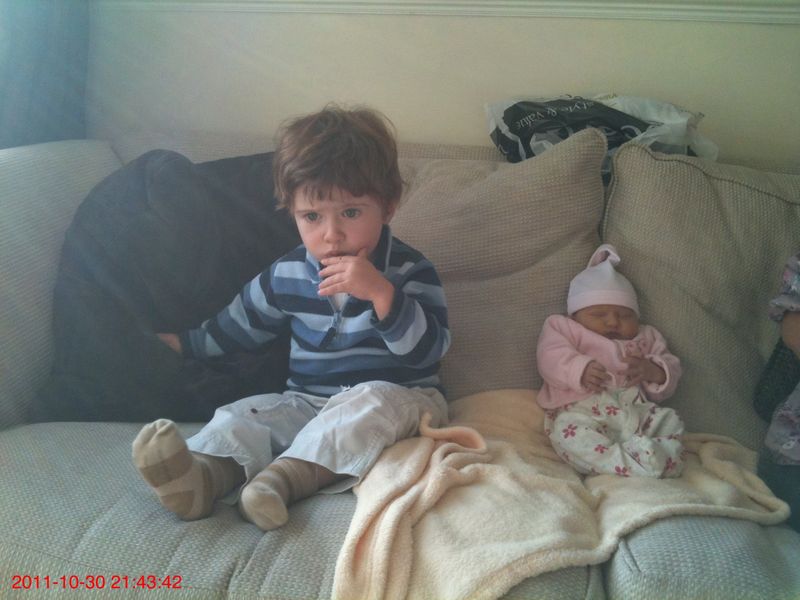
I'm sorry if banging on about kids is boring, I guess it is. Funnily enough I remember, in the days when I used to moderate focus groups more, going mental with parents who couldn't talk about anything without seeing it through their kids' eyes. It's remembering stuff like that ensures I'm determined for myself and Mrs Northern to always have some part of me and us that remains just that. We were two people who wanted to be together way before children and still do.
But, oh, they make you happy. From 4 month olf Evie laughing for the first time this weekend, to 2 year old Will going sledging for the first time on the same day. From him nearly exploding when he got a beleated Christmans present in the form of Lighting McQueen and Mac to Evie pulling at my arm if I dare to talk to someone else when I'm holding her.
I realised something this weekend also. As much as we like to think we educate our children, they do a pretty good job of teaching us things, or at least re-learning them.
For example, it's so much more fun to give than receive when you get older. Every blue moon, something comes along that excites me, that really captures my imagination and makes me really happy (but I have my eye on a new bike). But nothing like it did when I was a child, or even ten years ago. But when you make or buy stuff, or just think of things to do with children, you get outrageously excited for them, or with them and the reaction you get is worth a thousand Prada bags or limited edition trainers.
But despite this, kids are the purest evidence that doing stuff always trumps having stuff. Will always goes back to his little box of metal cars, no matter what we buy him, but nothing will ever match what he was like going to an aquarium for the first time, or the bi-weekly visits to the pet store to see the parrots, or just walking in the park looking for sticks to throw in the river. And as for going swimming………
Will doesn't know anything about status or fashion, he doesn't even suspect that people are not all nice. The only clothes he really loves are anything that has Thomas the Tank Engine on or Cars. He doesn't second guess anyone or anything. He just gets on with it. One day he'll suffer the same insecurities as the rest of it, but he still reminds me how superficial image and status really are and how liberating it is to see the best in everyone rather than the worst.
Finally, he reminds me that defining yourself by your work is really stupid. To him his Mum and I are just Mummy and Daddy, his world basically (though Evie is creeping into his affections). I like what I dom but it's impossible to take it seriously next to the feeling of being his (and her Father). Nobody needs me like they do. Nothing matter more than being able to hold him when he falls. And I'll tell you something else, the feeling of satisfaction when you win a pitch, see your work run and stuff pales next to seeing him wolfing down the food you cooked or learning to throw.
I've felt other things as keenly as the things I feel around them, but you get more jaded as you get older. Kids remind you what it felt like to be young, when you felt really alive and nothin mattered more than having fun. When the scariest thing in the galaxy was Darth Vader and you ran everywhere because you couldn't wait for the next thing.
Of course, kids make you miss things like going to the cinema when you want, holidays where you please yourself and being able to read a book a week. But that stuff is inconsequential.
Kids remind you the difference between happiness and pleasure.
-
I once met Amanda Holden. Let's be precise, I fainted 5 yards away from her for reasons I won't go through here.
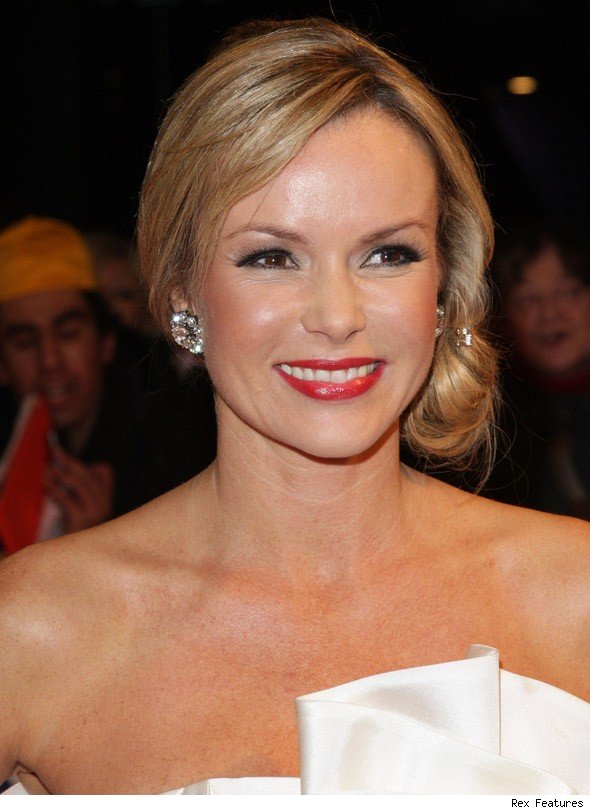
And no, I wasn't star-struck. In fact,I didn't like her. Based on what I'd read and what I'd seen on TV. Which means I didn't like HER I didn't like her image or the accepted wisdom of what she was like.
When I fainted in front of her, it was in a busy hotel reception, she was been fawned over by loads of assistants and was about to sweep outside to the waiting press corps (they were filming Britain's Got Talent). But when I did my sparko act, she stopped what she was doing, picked me up, asked if I was okay and got her assistant to get me a glass of water, plus she wouldn't leave until she was sure I was okay. Amidst all that showbiz hurly burly and the waiting journalists outside, she showed genuine concern and helped a muppet like me.
Which made me realise she probably anything like I was led to believe. She was probably quite nice. She'd certainly been nice to me.
When I was a student, I spent 3 years months not really talking to what I thought was the most pretty girl in the swim team because I couldn't see what she has to do with me and she seemed very aloof. It was only at a reunion thing 4 years after we graduated that she asked me why I never talked to her and admitted she had a 'thing' for m (no I don't know either). I found out she was very shy and found it hard to make friends because everyone assumed she was super confident, super cool and super elite.
Yet again she was nothing like what I'd expected, or even like my superficial impression.
It's a bit like that with research and 'consumers'. Data, segmentation, analytics and all that are great. So's listening to social media conversations etc. But if you think you'll understand what people are really like and what they really care about from this stuff, you're sadly wrong.
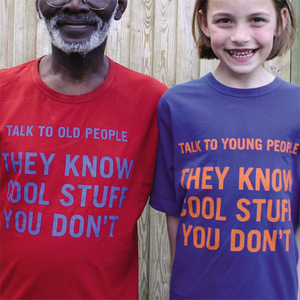
(Picture from the wonderful We are What we Do.)Take social media. So much of what people share on these platforms isn't what they're like,it's an idealised version of who they are, or who they'd really like to be. You won't get much truth from that. Just like the 'conversations' you see do not have the same conditions as real life (being anonymous, or at least not face to face makes you do and say all sorts of things you wouldn't do in the real world).
More to the point, I've banged on about the need to tap into what people really care about, not what your brand's agenda is. Much of that will come from habitually absorbing everything you can in popular culture, but also fishing where other don't fish. Anthropology and sociology papers are a useful bet for example. Not to mention dabbling in behavioural economics and stuff like that.
But nothing beats meeting them. In their own environment. As soon as you take them out of that, you affect their behaviour, just like a monkey isn't anything like what it's like in the jungle if you put it in a zoo.
In particle physics, one of the core pillars of quantum mechanics is that you can't pinpoint both a particle's position and momentum, by measuring one, you're interfering with it and affecting the other. It's just like that with people, if you want to know what people do or think, you need to meddle with what they're doing as little as possible. An artificiality lit room with 7 other strangers talking about stuff you never usually discuss or have really thought about is as nearly as much 'meddling' as I can think of.
It takes patience and you have to develop the skill for striking up conversations with people you have never met, which is tough for shy people like me, but who said this job was easy?
For example, I spent half a day hanging around a motorbike retailer, talking to the staff and customers. I was shocked by how many women came through the door and completely changed my view of them. From reckless idiots that get in the way of my car to a weird tribe that see themselves as the last wolves in an overly cushioned world of sheep. They all wanted to feel something in a jaded existence. I began to admire them in fact.
I've learned more about Mums over 35 and coffea/tea and biscuits by being around when my, maternity- leave enjoying, wife has her cronies over than any segmentation study (and you know what gents, they don't talk about us).
Just like I was in no real position to judge what Ms Holden was like until I met her, I don't think you can really say you know your customers until you've spent some time with them in their environment.
-
I got an email from a creative group head today, asking me to give him a call. Naturally ignored him and went straight over to chat. Planners should never be too busy to talk to anyone.
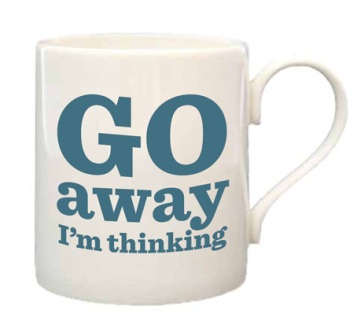
Why? Any excuse to chat to a senior creative should be embraced. And because any chance to break out of the planning bubble should be grabbed with both hands. Let me explain.
If you're a planner it's always hard when you start at a new place, because we struggle for acceptance more than any other department or discipline. Creatives and suits managed quite happily before planners arrived on the scene and in many places they still do. Creatives tend to think they should own strategy while suits tend to think to same, or even worse, can't be bothered with it.
I once worked somewhere where they were doing one of those pointless revamps of the creative brief format, so they did a quick series of interviews with the creatives to find what they wanted from planners and briefs in general. It became quite clear they wanted a say in strategy and in many cases, thought it was their job anyway. They didn't really didn't know what planners did, and to be honest, this is more common than you think.
So when you leave wherever you have worked, where you have hopefully won the respect of everyone and they WANT your input rather than avoid your interference, you have to do it all again when you start at your new place.
It's critical you get to know people quickly, learn what makes them tick and build relationships. It's easy for suits, their day job involves interacting with everyone. It's easy for creatives, their day job involves telling everyone to go away. It's easy for traffic or production, people have to talk to them or nothing gets done.
But planners tend to exist in their own little bubble or corner, quietly getting on with their intellectual (!) doings in splendid isolation. Even if you're lucky enough to sit in an integrated team with suits. planners are just a little more isolated.
So get off your arse and meet people. Find excuses for professional conversations with everyone, but have as many chats about anything as you can. And if you're in your first place, do it even more.
If you're starting out you should:
Make friends with traffic. They know everything that's going on and know everyone. They have to be evil bossy bastards to do their job, but usually, they're the nicest people in the world when they're not telling a suit they can't have it by yesterday. They can also help you find out what makes creatives tick and who to talk to.
Make friends with junior suits. If they're good, they'll rise through the ranks quickly and take you with them.
Creatives are a tough nut to crack. I've always started with bribery. Even as account exec plankton, creatives would talk to me if I was brandishing a tea pot or cafetiere. And include them as early as possible. Pretend you're stuck on a brief (or admit you are) and ask for their help. I guarantee that no creative will get testy over a brief they've had a hand in.
But never stop this. There does come a point when your seniority, or more subtle status, means you get involved by default. But there's nothing worse than losing touch with what's going on and, it doesn't matter what your job title is, the best work comes out of lots of collaborative conversations. I'm convinced the older, senior people lose their dynamism and originality because no one challenges them anymore and they just don't get enough in enough situations to be told something they didn't know.
-
When Will is happy, I'm happy
( I don't put my kids on tinternet too often but he's reasonably oscure, visually at least)
-
I turned 38 yesterday. It's just a number. Like all sybols and signs, it's the context that brings meaning.
So here's some context.
My nephews came to stay this weekend. They roll their eyes when I go on about how all 'their music' is just a rip off of the stuff I liked in the 80's. Just like anybody who grew in the 60's tells me about the 80's.
Ten years ago there would have been lazing around in bed, after a heavy night out. Yesterday we took the kids to see the ducks, I got to do a bike ride AND read the paper from cover to cover.
I'm double the age I was when I started university
I look every single hour of those 38 years (if not more) but I'm just as confused and feckless as I was when I turned 18, 20 years ago.


 NORTHERN PLANNER