..and just to be clear, it's your manifesto that needs to be 300 words or less. The rest of what you submit can be as long or short as you like. As usual, I'd take the time to write less. The judges – like clients – will appreciate brevity and clarity.
More importantly, when you edit, precis, distill etc, you tend to find all sorts of little wrinkles to iron out. It forces you to think a little harder and better.
Right, final project. I'm going to put my neck on the line and go through a thought process for what I would do for a new UK sports drink.
Here's a few caveats and stuff:
What follows will be a bit long, if had more time I'd write less, but I do not. It's case of do what I say, not do what I do. Take some time to write less (I'm guessing whatever format you present your submission in, it will have words).
Please don't think this is based on data or much category specific research. It isn't I haven't time.
It IS based on one or two things happening in culture you tend to pick up as planner with your eyes and ears open, not to mention, someone who still spends a fair amount of spare time doing sport and fitness related things. Not to mention a little experience working on soft drinks.
So don't beat me up for statistical accuracy or anything like that, this is about demonstrating a thought process based on some braod, but interesting UK cultural goings on.
So on we go………………………
Now imagine you had a client developeding a new sports drink. They'd been playing around with new formulations they think will make an impact on the market. They've hit on something they think has potential with one or two variations to iron out.
What they do know is that they want t carve some share from 18-35 year olds who play sport or exercise. From the 5 a side football weekend warriors to the people who go to the gym twice a week, and everything in between.
Their main product attribute is that the product is easy to drink, compared with their analysis of competitors like Gatorade, Powerade, Lucozade (lots of Ades!!) that taste harsh and are hard to get down.
It does well in taste tests, with natural tasting flavours – just three - Strawberry, Orange and Cranberry. People say it tastes like dilute fresh juice, in a good way and the appearance supports this, it doesn't have the artificial 'neon' colour that sportsdrinks tend to have, in fact, it looks like flavoured water. They're having kittens on a final formulation – they can make it 100% natural, which will cost loads, or just have natural flavours and put in the nasty preservatives. They're not sure, in addition to worrying about what product attribute to focus on in brand development.
So they come their agency strategists for help. What should we make? What rational product attribute should we hang our hang on? What emotional benefit does that ladder up to?
Fortunately, they've come to strategy people who know that inspecting culture is as important category specifics and product messaging.
So they go through our process. Here's what it might look like:
Map the category's cultural orthodoxy
This is, still wide, the audience who drinks for sport. This isn't lifestyle energy drinks like Red Bull, nor is it 'health drinks like vitamin water. And guess what? Sports drinks are all about 'pure sport' in some manner. In fact, scratch that – it's about 'purist' sport- an arms race for sporting authenticity.
The culltural codes arising from that are all about the fight for authenticity….the noble gladiator – ultimate athletes, ultimate performance. So that the average consumer of sports drinks – ordinary human beings, mostly working out in gyms, feel a little more like a superhuman champion athlete when they drink, before, during and after a session.
So you get the joy of pain and self sacrifice, the purity of sport as a test of self belief and physical strength and skill, people who kill themselves for that minuscule difference between winning and losing. It's all very serious, very macho and very conventional.
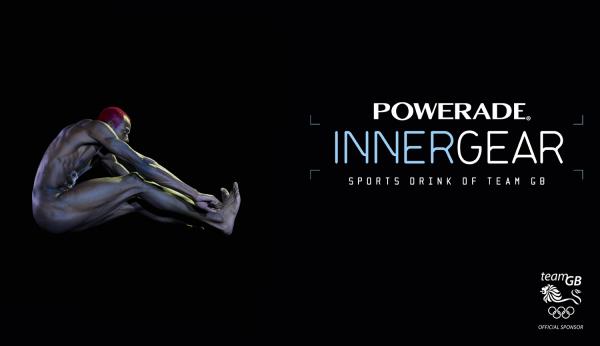
One aspect is the worship of the impossible body beautiful that only comes with hours of dedicated, grueling toil.
Even when it's tapping into hip-hop subculture, the imagery and tone is still 'joy in pain', dead serious, the quintessential pure athlete – either in their performance, or like this, the training.
There's the 'Just Do It' me-toos, like Gatorade. Ultimately though, this about 'pure product for pure sport'
And behind the big players a whole host of sciency brands for more elite athletes.
You could say the cultural convention is all about championing self sacrifice, the joy in toil. It's the bootcamp, it's no pain, no gain. It's survival of the fittest. It's all very masculine.
Map the social disruption
I want to develop a new ideology for our sports drink, expressing new cultural codes. Our target is th 25-45 year old educated professionals who go to members only gyms and drink an athletic based drink during or after their workout.
The bullseye within this are the liberal minded ones who tend to have an interest in outdoor sports. For them, the old middle class utopia of a well paying job, in a good firm, to pay for comfortable life in the suburbs is anathema. They ache for more independence, with pipe dreams of downsizing, going freelance, getting closer to nature or something more creative…..sticking it to the man and being in control of their own lives
But here's the conflict, they're too used to the money and security. So they try to look for outlets in their leisure time, cooking organic foods from scratch, wandering around farmers markets, active holidays by the coast, camping, with aspirations to learn to surf, to do proper mountain biking. They want to feel they're doing the non-obvious stuff, the kind a corporate stooge would never do, things beyond the palate of X Factor watching celeb magazine reading, football supporting commoners would never do. So they're into Opera, independent travel, world cinema.
They'll love watching stuff like this on telly
but in reality, they buy organic food and don't grow anything themselves.
If they lived in Manchester, they've make sure they lived in Chorlton.
The long, long hours they work, plus pressure to DO and experience so much, leaves a massive gap between their aspiration and the reality. Mostly, they're just as predictable as the those they want to differentiate themselves from, but with more more 'right on' clothes (organic), food and reading material. They probably bought a bike to cycle to work, but only use it once a fortnight.
So, boiling all that down, they're Bourgeois Bohemians suffering from a cultural anxiety – they ache live the life of some sort of 'artistic rebel', everything they do needs to be about spirituality or enlightenment, but working for 'the man' doesn't give them the time. So they're desperate for easy 'outlets'.
Now, they're still prey to the 21st century pressure to stay in shape. Being overweight or unfit is something for the masses. Ideally it would all be surfing, mountain biking and rock climbing, but time pressures mean they just about make it the gym three or four times a week, probably for a 30 minute slot.
But it doesn't make them feel good. On a cultural level, they can't stand the macho, pain and sacrifice culture that pervades most gyms. The huge Neanderthal lunkheads on the heavy weights, the physical elitism, the painfully thin zombies on the treadmill…all reinforced by the 'sporting purist' cultural conventions of the sports drink category. The mindless, disciplined, spartan drone, obsessed with nobilty in pain or the vanity of outward seld image, rather than something deeper inside, is exactly what they're rebelling against (or trying to).
On an experience level, they dislike the 'simulation' of it all. Everything is a pale imitation of actually going out and doing real running, cycling or rowing. Only swimming is authentic, but then again, in their fantasies they'd be doing open water swimming.
What they do like is the way it clears the head, the FLOW state they can get in. In their heads, they can go to another place, at once removed and more present in the moment.
In short, there's an ideological opportunity to carve some cultural elitism with our audience based around 'realness' , 'escape' and 'flow'– something more spiritual, enlightened and 'right on', directly challenging the purist, aggressive 'no pain no gain' mentality that's for the mindless drones they so want to separate themselves from.
OK, that will do for now. This will have to be done in two chunks. I know it's too long, but like I said, I need more time to write less.
However, if you think you can see where this is going…the sports drinks for outdoor sports, think again. It's one of the most pilfered subcultures in modern brand communications. The next stage is the search for source material. We'll discuss why outdoor sports is only half the story and hopefully, something bigger and more potent, something relevant for a 'not harsh, nasty or agressive' sports drink with a natural, 'real taste'.
I'm something of a purist when it comes to tea – always made in a warmed pot, pou r the milk in the mug first etc. I'm also pretty loyal to my beloved Yorkshire Tea.
But my Grandmother, who instilled much of this ritualistic fetish wouldn't be proud of me. She always used leaves. She didn't care about the mess when you cleaned the pot and I can still see her now, with her little tea strainer over the cup, making sure no bits got in my drink. I loved her very much, she was so kind, never spent any money on herself, she saved it all for her daughter (my Mum) and us.
I remember there was always an aura of sadness and loneliness around her. She didn't want for friends, and she lived until she was 90 largely by keeping active. Charity shops, the over 60's club, she did it all. But her husband, her Fred,dies before I was born and despite living a full life, she always missed him terribly. And when she died, ten years ago now, I missed, and still miss her.
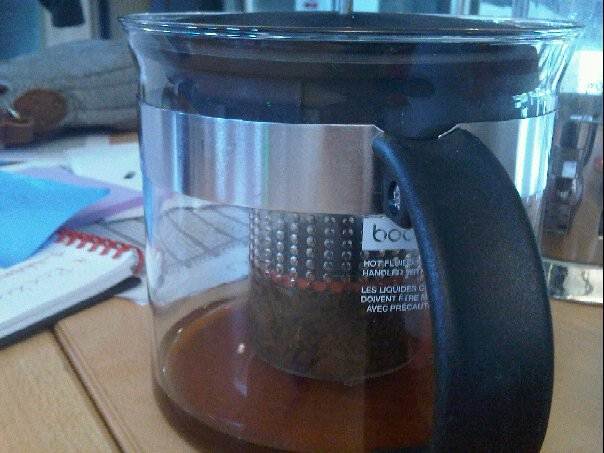
So in honour of her, I bought this teapot to do it properly. And it does taste better, but it's not just right. My Grandmother would have ignored the new fangled contraption in favour of a proper china pot and her tea strainer. And she's right, some improvements might make things more convenient, but they don't make things better.
So I'll be buying some more leaf tea, a proper strainer and every now and then, do it properly and raise my china cup to the memory of the kindest woman I ever knew.
Hope the case studies have been useful so far. After taking another look, one thing we're a bit light on is more 'meat' around Applying Cultural Tactics. What follows is a list of tactics identified by Holt and Cameron that tend to work. My recommendation would be to get to the point where you've scoped out what ideological opportunity you will pursue, you've gathered your Source Material and then review these six key tactics and see what is the most promising fit, what is right for your particular cultural innovation and the dynamics of the market you're in.
For the task you're doing, I'd also be looking for the biggest return for the least amount of money.
Another is comes from Ben and Jerry's was young. They found that Pillsbury, owner of Haagen Dazs was threatening to pull it's account from big retailers is they didn't stop selling Ben and Jerry's. So they ran a campaign based on PR and flyers called, 'What's Doughboy Afraid Off?" (Doughboy was Pillsbury's corporate icon). It pitted Little 'back to the land' Ben and Jerry's against the huge, mechanised behemoth. Basically, it lit the spark of social activism under counter culture wanabes and it worked. Read more here.
Way back when, Apple had a direct pop at IBM and other computer manufacturers by positioning them all with unfeeling, cold 'Big Brother', with Apple as the creative, revolutionary alternative.
2. Mythologise the company
Build a myth around the brand's origins and vision, something powerful that your audience instantly relates to. Your source material is critical here.
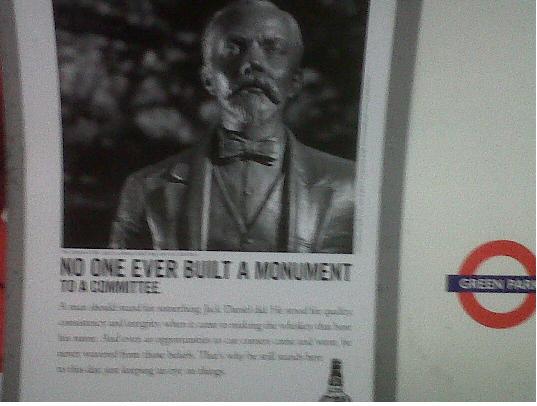
Jack Daniels consistently mythologisesit's old school distillery techniques – championing self sufficient, free frontiersmen in a world of identikit, soft men who've sold out to 'the man' toeing the line in big corporations. Every piece of communication communicates that what happens now at HQ is pretty much what happened when Jack was around.
3. Provide an outlet for reactionary ideology
Harley Davidson's success is built out of the the classic American man of action.That was the 50's and 60's bad boy, but developed in the 1980's to be the 'man of action' upholding the law by whatever means necessary, in a slack, soft and morally bankrupt world. I was about a special community for men who were the last wolves in a world of sheep…and still is. At the heart is Harley's own club.
Or there is Lambrini in the UK, making the most of a small budget to champion young women going and having fun despite the prude media and society at large that hates them drinking, not growing up and basically having fun like men have been allowed to for years. It's a downmarket drink for what society thinks are downmarket girls – Lambrini, like the girls is defiantly proud and doesn't care what anyone thinks.
3 Cultural trickle down
You might have the opportunity to make something the audience would like to do, but don't the time, budget or perhaps courage or sophistication. You can make it accessible, making something for connoisseurs more accessible for everyone. Even if they don't actually participate in the real thing, you can provide a more mass market, novice friendly approximation, or just let them feel like they're part of it.
Starbucks made the obscure world of authentic barista coffee accessible to wanabe cosmopolitan people around the world for example.
Lurpak brings the world of the authentic foodie to more people who can't, or won't cook well.
Original Source in the UK brings the outdoorsy, extreme sports lifestyle to those who probably only ride a mountain bike to their local paper shop.
5. Finally, there's playing judo with the big boy's strength
It's a variation on 'provoking a fight' , but if you not only create a provocative attack on a huge category leader, that mobilises your audience, but also directly turn their biggest strength into a weakness, you'll have something very powerful indeed.
Dove turned the intense hope derived from the incredible models and beautiful shoots from the the industry big boys into a weakness with viral videos like this:
Fuse TV parodies the fake, beautiful lifestyle MTV had come to epimtomise with culture jamming tactics like the Fuse Beach House
This is MTV's version.
Irn Bru in the 80's did something similar with the shiny version of teenage life Coke was becoming synonymous with:
Coke version
I'd argue that Old Spice's long game is a clever one, destabilising Lynx/Axe' position as the fragrance that gives young guys confidence in the mating game, by becoming the brand that get's you experience, the one thing guys really need for sexual success. Like the man says, "If you need it, you don't have it". "If you've never had any of it, people just seem to know" (not to mention bringing relevance to it's mocked 1970's hairy chested masculine heritage)
This continues that theme, albeit in a very different form.
Hope that helps.
Now this nearly concludes case studies, tutorials etc. One final exercise next week. I'm going to show what I would do with a new sports/energy drink. May as well put my money where my mouth is.
Like most brilliantly reliable things, you only really miss them when they're gone. The account director I work with is off on paternity leave for two weeks and trying to do even a faint approximation of his job makes me respect what he does all the more. Stress, stress, stress.
Back in the 1980's Levis was doing so badly in Europe they were thinking of pulling out. They persevered and hired BBH led by the Saint Hegarty and Saint Bogle. They quickly identified that the problem was a cultural one – Levis was once a symbol of rebellious, American youth culture – the James Deans and Brando's – but had lost that meaning, amidst a deeper problem, British youth rejected American (Reagan) culture in favour of home grown icons. So how could they reclaim Levi's cultural space?
First, here's a quick commercial break. When you find a one loved brand on its arse, don't do what so many so called gurus try and do, completely reinvent it, usually, the problem is that it's lost the meaning and territory it once had. Your job is to nearly always bring new relevance and meaning to what was there before they lost their way.
Anyway…the first attempt, led by the usual useless advice from a trends expert, leadingtoa campaign that dramatised a product benefit – durability. It didn't work.
They got somewhere when they tapped into Levi's heyday as a 1960's counter culture icon. A symbol of youth rebellion that Europeans felt nostalgic about, in contrast to how they despised conservative Reagan America of the 80's. So they thought they would win back their cultural space as a the ultimate symbol of youth rebellion, tapping into the music and iconography of those days.
Now, if you talk to most people about why Levi's succeeded back then, this is where the story ends.
But it goes far deeper. The first commercial was an incredible success:
But what really hit home was the rejection of mass market 'rebel' cliches. The James Dean type is always the dangerous bad boy, able to have any girl he wants. But this was the rebel posturing of the target audience's parents, not the 80's kids themselves. What worked was a provocative subverting of these images. All the cultural cues are authentic, but the portrayal was anything but.
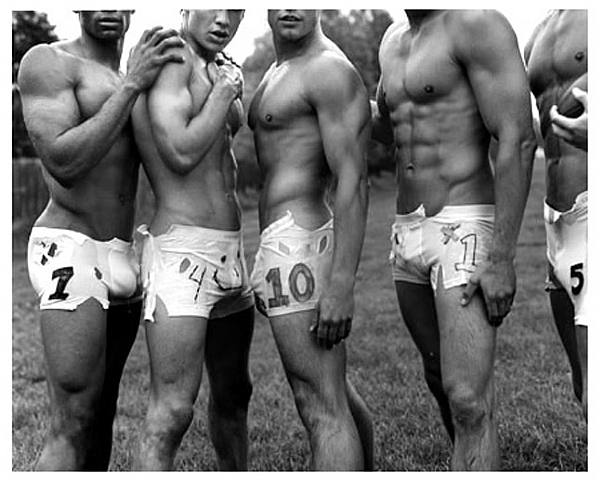
The ad objectified the male body. It was shocking, provocative, perhaps even homoerotic. It challenged the stereotypical hero who was rugged and didn't care about his looks. Kamen was beautiful.
It mocked prudery, it laughed at American conservatism and cliches, while at the same time dramatising Levi's heritage.
The idea wasn't original, it was steeped in a growing pattern in fashion culture. Bruce Webber's photography a prime example:
You have your category orthodoxy:
Basically, the shiny, hairgel automatons from every bad music video from the era.
You had a powerful cultural tension to address – every youth generation wants symbols of rebellion, Levi's provocatively subverted male, rebellious codes, providing a powerful cultural expression of gender, masculinity and , to be honest, defiance of sexual prudery.
Lots of source material, including Bruce Weber's work.
Interestingly, work that followed wasn't as successful because they only did the '60's' rebellion thing, an left out the male objectification:
They got their mojo back with:
And
By now they realised it wasn't the setting that was working, it was the depiction of the beautiful, sexual, masculine boy rebel. Which freed them up to visit other settings:
And even:
Now fast forward to the end of noughties. You're in the US, Levi's needs relevance there, as it's lost relevance with American youth (I have no data, no facts by the way, this is all interpretation).
They needed to restage Levi's pioneering, youthful rebellion spirit. Worse, young people question everything. You're in Web 2.0 world where they insist in being involved and participating.
Now map the category orthodoxy for mass market jeans and you find it replete with symbols of heroic young people, lots of it set in the rugged old country. Being individual, being original.
WK, I imagine, looked at the culture and found a frustrated youth generation feeling pretty frustrated. The economy shattered, jobs scarce, a country divided in two, with mad Tea Part activists actually getting elected. The country of George Bush, bland MTV and the promise of the American dream and the declaration of independence stolen from them. The generations before has scorched the earth, leaving a mess for someone else to clear up, oil running out, the environment tottering. A mess.
Big cultural tension to tap into – all that frustration and no collective voice in a country dominated by partisan media.
So they restaged Levi's pioneering, rebellious spirit with a new ideology - providing a collective voice for disenchanted youth to not only vent their frustration, but do something positive about it. GO FORTH. From individualism to collective action.
The source material, I suppose was obvious, once they had that hook….the hallowed US declaration of independence -the promise made to all Americans.
The first tactic, provide something for young people to coalesce around, a group statement of intent – collaboratively rewriting the Declaration itself. But there was also the imagery of the men of action, the original pioneer, exemplified in the hallowed work of Walt Whitman and his optimism for the potential that America represented.
The next stage was about taking action. Providing a multi platform story everyone could participate within. The source material, the modern iteration of the hardworking American labourer, the towns who want to work, they don't want charity, they don't want handouts, they just want the chance to support themselves. Etched deep into the American psyche, this would be a powerful cultural innovation.
This was the campaign:
Read more about it here. In short, Levis' focused it's entire campaign on Braddock, Pensylvania, contributing to, and documenting, the story of a town on it's knees, trying to turn itself around.
Overtly, Levi's was selling it's 'Workwear' range, in reality, that was just a bit more relevance to what they were doing, just as Sta Prest provided a means of narrative for more reinvention in the late 90's with Flat Eric.
You can imagine the cultural strategy set out like this:
America has lost its way because it has forgotten the pioneering spirit that made it great. America was once a promise of equal opportunity and reward for anyone who worked hard, no matter who they were, now the few profit at the expense of the many, hope has been hijacked by corporate Americna. Today's youth are the future, it's down to them to remake The American Dream. We will inspire them to rediscover the pionnering spirit that embodies both Levis and the best of what it is to be American.To rebuild our country their way. Enough sitting their doing nothing, enough frustration with no action. We will give them a collective voice, and inspire collective action. They are the new pioneers. We will inspire them to Go Forth.
If anything sums up the English, it's social awkwardness. We're useless at relation or communicating with others. It's normal here to never talk to strangers in queue or on a bus – it's a social no no, mostly because we just don't know how to do it.
Here we don't complain loudly, there is just the subtle 'tutting' when someone jumps the queue. We rarely complain in restaurants that don't serve us well and we often still tip, promising ourselves we will simply never go back.
Neighbours tend to be people who just live next door, we don't know them very well but say hello to them everday. Redundancies, illness and other significant stuff will be a complete secret. We are open, welcoming and tactile with our pets, but rarely other human beings.
So we're incredibly private and guarded. So much of how we communicate is built on irony, chronic false modesty and should rarely be taken at face value. We hate earnestness and pomposity and love to cut people down to size, because if there's one thing we hate more than earnestness, it's boasting and showing off.
No wonder ironic, subtle, self deprecating advertising is so succesful and so loved by English people. Little mystery then why we tend to hate boastful, earnest and, dare I say it, American advertising.
Every country will have their own social and cultural patterns that will dictate how they respond to popular culture of which advertising is a facet., and something that rarely comes up in the kind of focus groups global (or local!) companies use to help develop strategy and creative development. But if you're developing any kind of multi-national campaign, you need to take this into account.
Nike wasn't popular enough with women, they thought it too macho, part of the convention that true sport is the preserve of male athletes in the big stadiums, winning the trophies with thousands chanting their name
Social Disruption
Women loved sport, but for them it wasn't about the typical male traits of winning, domination and being competitive, for them it was enjoying the actual act of doing the sport, the participation. It wasn't for adulation or winning in the pecking order.
Source Material
Women around the world enjoyed dance. It was an uncelebrated sport, probably treated with derision by most men, but the demands of strength, co-ordination and endurance were the equal to any celebrated 'male sport'
Ideology and tactics
Make the 'Just Do It' ethos of 'If you have a body, you're an athlete' philosophy relevant to women by championing unsung dancers around the world as athletes worthy of respect
They created provacative of dancers pulling off improbable moves while demanding to know why they weren't an 'athlete'.
They activated the campaign worldwide with dance classes both online and offline

 NORTHERN PLANNER