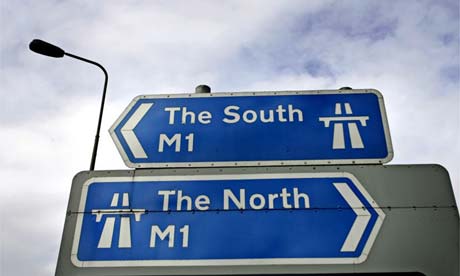
• I hate British motorway services. I haven't driven enough in other counties to know if this is something peculiar to this country, but they are truly dreadful. At this time of year, with families driving off for a summer holiday, they pretty much hold them to ransom.

    M1

    You either pack a picnic (which isn't a bad idea, there's nothing finer than a poached chicken torn apart and put into sandwiches with lots of mayonnaise – or the humble and undervalued scotch egg) or put up with hugely expensive, very bad quality, chemical laden junk.

    It's not entirely the vendors' faults though. They have to pay a huge sum to get a franchise, so that the only way they can make money is charge a lot for something cheap.

    There must another way, and maybe there is. There are little villages and towns just off every motorways all over the country with perfectly brilliant little cafes and the like. For the sake of the 2 minutes to drive an extra half mile you could be having tea made in the pot and some homemade soup with a crusty roll, a lovingly hand made sandwich or, best of all, a full english breakfast without taking out a mortgage. Of course, the problem is finding them….

    All it would take would someone to organise a network of cafe and food lovers to start sharing where these places are, rate them etc, then create something to work with your smart phone's GPS so you could find them. In a couple of years, new cars will be connected to the web and have all sorts of apps and stuff, like this or this.

    Then you would only need to stop at a service station for petrol, sweets or a magazine. If you wanted good food, you could get it.

  • Today I woke up and realised I've been in advertising, or whatever you want to call it now (I think advertising is still best, digital, content whatever, it's still giving people an impression of something so they want to buy it/do it/stop doing it), for 12 years. Jesus Christ. I'm old, with some level of experience.

    I've made some big decisions along the way. One was not wanting to work in London, another was choosing small and quality of life and being a proper Dad to my little boy. over big, famous and endless hours. It's just about possible that, after for, or with very different agencies, I might have some decent thoughts about what makes a good and what doesn't. Then again, who cares what a planner working in Sheffield thinks? Just in case………

    Don't hire advertising people

    What we do has to find a way to be at least as interesting as the culture it tries to pull attention from. That means you need people who are interested in that culture rather than just ads. There's a common breed called Homo Advertisingus who only reads D&AD, APG papers etc, who's only source of inspiration is, well advertising. Guess what? Try and make advertising and that's exactly what you get. Something that looks like something else, or is designed to impress a Tony Davidson a Stef Calcraft or a John Steele. If you want interesting work, hire interesting people, they may know nothing about advertising and maybe that's a good thing. And agencies that encourage and give people to do and look at interesting stuff is a good idea too.

    Don't expect people to fit in

    There's Homo Advertisingus, but there's also sub-species. Far too many agencies have a fixed idea of the kind of person they want to hire. They have to fit in with the culture. Now an organisation's culture is critical, but if everyone thinks and acts the same way there's no point. If you surround yourself with people like you. you'll only ever get one opinion or one answer. You want your staff to be challenged, to be exposed to all sorts of stuff. The Disruption Agency for example is remarkably conservative about who it hires and how they want their staff to behave.

    But do have a culture

    People want to feel like they're working towards some kind of collective purpose. That's not the business plan, that's not profit. A strong sense of what the place is about helps. Mother wants to create work that's culturally famous, BBH is brainy etc.

    Have a leader

    I've worked in places with strong inspirational leaders and places with managers. Agency's seem to do better with a figurehead. Not a dictator, someone you want to work until midnight for, someone who can pick you up when you're having a bad day.

    Don't focus on money

    There are not many agency people who really care about money. They want to live well, but it's not their reason for being there. They want to love what they do and create great work (if they don't you have a problem). Focus on the work, make it brilliant and the money follows. But hire someone to worry about the money. That's the problem with massive agency networks, it all becomes about quarterly targets.

    Don't worry about people's ages

    You need kids to shake up the old timers. You need old timers to calm the kids down. The tension works well. It shouldn't matter how old someone is if they're still interested.

    So challenge your people

    Don't flog them to death, but do encourage them to keep moving forward. There's nothing more rewarding than mastery of your given job and nothing more dangerous. Help people have the courage to venture our of their comfort zone, of they feel they're moving forward, they'll stay longer

    But appreciate the support staff

    There's always some who are more reliable than amazing. You need them too

    Don't pretend to be professional

    Agencies waste of time convincing clients we're just like them. We're not. We're creative people. They're not. That's why they hire us. There isn't a linear process, we just do stuff until something emerges, then pretend it was otherwise.

    Don't pretend to be something you're not

    Some agencies are genuinely cool, some are very hardworking, some are fun, some are very brainy. Most think about what agency they would like to be and pretend they are. It never works. Establish what you're culture and strengths are and focus on those.

    Be good, not different

    Most agencies do exactly the same thing, it's just that some do it better. Focus on being really good rather than really different. No one cares about your proprietary process, they do care if your work makes them tingle.

    That's my idea of what an agency should focus on. You probably have another.

  • Working on ghd was as close to working on a Nike or an Apple as it gets if you work outside if London in the UK. One of the problems on working on a brands like that is that the industry at large always thinks it knows what made that particular brand great.

    I always felt working on ghd that the world and his wife wanted to tell me why ghd had got to where it had (£100 million turnover in 5 years etc) and what should be done with it, commercially, as a brand, what the ads and stuff needed to be. Not everybody was 100% wrong but no one was 100% right. Because they didn't know the business, they hadn't seen the tracking, they hadn't done the segmentation, they didn't see the client, they didn't talk to women about ghd and their hair week in week out.


    I had a few ideas about it before I worked on it, some strong opinions about the work and the brand in general. I was almost completely wrong, but didn't know that until I started working on it. So what's my point?

    I think it's healthy to have an opinion on other people's work and think about what the strategy was. It's good to look at the work and have a view in the creative idea and how it's executed. But it doesn't make much sense to think you know better than the people that worked on it – unless the people who've worked on it have told you.

    That's why I have a problem with lots of business books with half baked theories and case studies of stuff they haven't done. By default, they don't KNOW why something worked. They only have an opinion. That's why I hate Campaigns creative review, it's a bit of fun, but in the end, it's someone's opinion…and this industry finds it really hard to say anything good about other people's work.

    On the other hand, there's work as bad as this. Feel free to say what you like.

  • What kind of planner are you? Brand planner? Engagement planner? Digital planner? Content planner? I'm not sure which one I am and to be honest when I started out (which wasn't that long ago) I was just an account planner. The only other kind of planner out there was a media planner.


    I still think I'm just an account planner – which means most of what I do is develop brand ideas – very long term strategy –  and communications ideas, which basically means what do this year, this quarter and this week. Sometimes I've been lucky enough to get involved in NPD and stuff, which is happening more as it become part of marketing rather than marketing making sense something another department made, but that's another story.

    By and large, I help create ideas rather than where the idea need to go. More and more, that's been ideas BEFORE deciding where to show up,rather than 'the answer's advertising, what's the question?' But transmedia planning isn't a theory, it's a reality. Ideas as narrative etc become essential but you can't escape having to bake in ideas about engagement into the creative process and vice versa.

    In my opinion, no planner can do both the creative planning and the engagement – they might have the talent but no one has the sheer time and mental space to do both really well. From my point of view, I need to work with someone who can do the engagement bit as soon as possible.Picture3

    So if there's a engagement planner to work with, work as a team from the start. The best work from the APG awards this last year were as much about context and the right place to show up as they were about creative execution. What drove the case study for Axe's Wake Up Call was the realisation that young males use their phone as an alarm clock, which provided a great place to show up in the morning routine – where usage of Axe was low, for example. What drove Nokia's 'Someone else's phone' idea was the two observations that for young people a phone is an integral is their keys and they live their lives through them.

    Most of us are not lucky enough to have engagement planners to work with, but there will be media planners your client uses. Collaborate as soon as possible. They may want to do more obvious, traditional stuff, but less and less these days. They have all sorts of data you won't have – work with them and develop joint ideas rather than 'the creative bit and the media bit'. And from my point of view, media agencies are trying to do creative. Most of it is laughable, but watch out nevertheless.

    So, call yourself what you like, but really you either do planning for creative ideas or for engagement ideas.Which one do you want to be? Whichever that might be, learn to love the other side that does what you cannot.

  • …..and Mrs Northern needs a rest, I take Will to see the goats.

    Goats

    It's only about a mile and a half to walk there.

    Walk

    He never gets to see the them though, always falls asleep.

    Asleep

    One day.


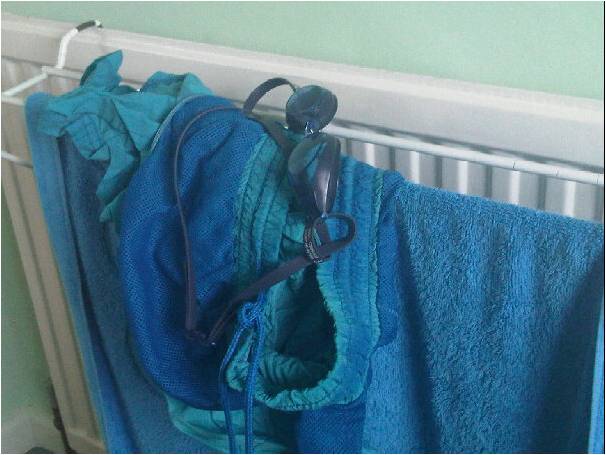
  • It's only four weeks until the Great North Swim and I'm nowhere near bloody ready. It's going to be more survival than doing well, partly down to waiting too long to do anything about my bad stroke, partly down to a baby boy precluding training nearly enough. No point moaning about stuff you can't change. I'll finish and I'll finish in style, I just know I'll be annoyed knowing I could have done better.

    Picture2

    The thing is, it was never really about the result, I needed a goal to keep me going. It's tough getting out of bed at 6.15 when you've haven't been allowed to sleep by a teething baby. And so it turned out, without the added motivation, I would have trained less and been more miserable for it.

    But the thing about a journey is that you're never sure what you pick up along the way, and what you gain is not always what you expected. It's the premise for one of my favourite ad campaigns:

    …but that's not the point. In the quest to sort out the stroke, I found out about some intensive training session for oldies that haven't quite lost it and want get more if it back. They're bloody hard. 7.30am on a Saturday morning, my new regular date with pain and suffering. But it's great to be training with people again. Having a coach and people around makes you push that little bit harder. No chance of kidding yourself you're working hard, with these session you know you are.

    So all that's good, I've a new regular thing to look forward/dread. But the first time I went, I bumped into someone I used to swim with more than twenty years ago. It was lovely to see her and find out what she's been up to (I still can't close the circle and get my head around her being a Mum of two). Anyway, it brought lots of memories of those times and the people I spent it with. It hurst to think of those days and know they're gone forever, but it's also good to think about them and how great those times were. Made me realise I'd kept in touch with them more.

    That's why falling short of what I set out to do doesn't really matter. It's true of this and true of everything as far as I'm concerned.

  • There was a guy I used to work with, he was an account manager. He was a little old for his title and did sometimes wonder why there hadn't been any discussions with how he could get to Account Director level.

    Now there were some developmental reasons for this, little things, stuff he could work on. mostly around thinking a little more strategically and taking things an ounce more seriously. But he was experienced, never dropped the ball, things got done well, on time, clients really liked him. Everybody did. But that was part of the problem.

    He wasn't a star. He didn't set the world alight, he was never going to be a Johnny Hornby, he wasn't cool. So the management just tool him for granted, he was the human equivalent of a kettle.

    Kettle

    That's what's wrong with so much of this industry, we always look for extra-ordinary when sometimes solid and dependable are what's needed. In fact, the stars can't survive without solid and dependable, it makes up the bulk of any successful agency.

    There are masses of brilliantly solid people who know what to do in agencies. You want them around you when things go tits up. The stars just flap, these are people are the ones who know what to do. We should celebrate them more.

    Not to mention work that does a solid job. Fair enough, lots of Tesco work is amazing, but just try and shake the tactical press ads around and find something wrong with them. That's right. nothing.

    The buyers (maybe the most important people in any supermarket's marketing) care about these ads more than anything else. They're the sum total of an intense week of photography, re-touching, genius detail account handling (get a price wrong and it costs Tesco and therefore the agency hundreds of thousands) and artworkers who really know what they're doing.

    Usually, some poor bastard is at work until midnight on a Friday checking the endless regional adapts. What thanks do they get? What plaudits? These ads are genius art direction that will not break down under pressure, every bit as worthwhile as some of the sexier stuff.

    And then there's the solid, dependable clients. Mostly retail, but not all. The ones that bring in huge monthly fees, pay a lot of people but never get plaudits.

    What I'm saying is, be thankful for solid dependable, we'd be lost without it.

  • First, read this post by Rob on Old Spice – take in the point about relieving tension and contradiction.

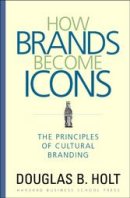
    How-brands-become-icons

    Then buy and read How Brands Become Icons by Douglas Holt. It's a disgrace this book doesn't get talked about more.

    Don't be put off by the, pretty much accepted premise, that brands become icons through carving a values position in culture and becoming and outward demonstration of ones values and identity. Do be excited by the idea that they resolve clashed between cultural values and expectations and personal realities (or that's how I read it).

    So Johnnie Walker makes you feel like a modern man with depth, experience and inner strength even if you're a one dimensional, avaricious  image conscious idiot (or an account handler).

    Levis makes you feel confident, rebellious and cool, even if you're a nerd.

    Innocent makes you feel good, naturist and environmentally aware, even if you leave your telly on standby.

    One interesting outcome though – it really does point to a problem with contemporary society. We may have moved from 'image and owning' in some cases, but 'Values and experience' still seems to encourage us to have impossible ideas of who we can be, and make us feel bad for not living up to them.

  • One of the best things about sport and the surrounding cloud of keeping fit good tiredness. Your body knows it's pushed itself, the muscles have stopped quivering, you've probably showered, you're still hot, it still hurts but now it's a pleasant ache.

    Your mind is wonderfully clear, you feel at once relaxed and outrageously alive; proud of what you've just managed to do. It's lovely to put on some comfy clothes, brew some good tea and eat something really nice. After swimming on Saturday morning, there's nothing finer than a massive bacon sandwich – apart from knowing you can eat this and not have to worry for a second about getting fat.

    But this feeling isn't just limited to sport. If you're pitching, there are plenty of late nights and early mornings, hopefully culminating in some sort of presentation where you and your team are at your best, nervous energy coursing through your body. Then it's all over and you're exhausted in a good way. Time for the pub and some good food, or relaxing on your own sofa with something good to eat and drink, watching some good telly.

    There's the creative brief and briefing you wouldn't leave until it sang, or the workshop that took weeks to prepare because you knew the right stimulus would make it go like a dream – and that curious feeling when you're moderating when you're aware of EVERYTHING, you have the pace in your own hands and you know you're running this show.Then it ends and you slump in happy fatigue.

    Feels good doesn't it? Yes, there's that sense of loss when it's over, like finishing a good book, but there's that mixed feeling of relief, pride and calm. It only comes when you've given everything.