• Oke Doke, as promised it's time to finish communications planning. For previous posts, go here, here and then here.

    When we left it, we were at the point when we'd worked out the task for communications – what actions do you want your audience to take – the thing communications can influence people to do to best contribute to the business goal.

    Grow impulse purchases by getting top of mind with young buyers…


    That's more than half the battle – really defining the task is the best thing you can do, in  some agencies, planning stops there – you'll see the proposition as a task in many briefs, JWT focuses on what we want people to think and then opens up the process to everyone. I must admit, that's how I would prefer to work, but most agencies still have a wall between creative and planning and you can't shape the rest of the process as a team everywhere.

    However and wherever you work, it's critical to make sure you don't stick to 'advertising's the answer, what's the question'. Knowing when and where to show up in your audiences lives is not only a must now the web enabled, marketing savvy consumer can filter ads out if they want to, it can actually form part of the actual idea.

    So you need to answer the following question – when and where, and in what circumstance will our target be most receptive to our communications? You need to thinks about:

    What media do they consume, why and how? What else do they interact with that isn't strictly 'media'?

    What role does different possible connection points play in their lives? What do they pay attention to during the day? What are they doing at the time? Are they looking for entertainment?  Information? Companionship?

    How does the competition connect to the audience? Are their opportunities to find different connection points? Should we use the same but in a very different way?

    Think again about what role the category plays in their real lives? When are they most in need of what they're offering? When could we make the most difference or be of the most use?

    When and where does the brand vision and personality fit the most?

    Think again about the purchase process – what does that tell you about when and where to show up?

    Of course, TV is still a great medium, but you're deluded if you think all you have to do is put a logical ad up there and that's it. It's harder to stand out now, so relevance is critical, and you need to think of this as part of multiple touch points in  story – in store, on-line, PR events and other media you want to invent.

    Coming back to the Gorilla, they knew that the ad had to be something viral, that would get people talking and sharing on Youtube.

    Axe in Japan (I think) needed to increase usage in the morning and discovered that males there use their phones as an alarm clock – so the moment became when they woke up..with sexy alarm calls from the girl of your choice.

    Orange engaged with a younger audience through film – and picked a couple of moments. One was the actual film experience itself, this one was even more specific – engagement with Star Wars fans.

    Another was a night of the week to share a film with a mate.

    Sainsburys conceptually is about that rainy Tuesday night when you can't think of anything to cook – Try something new today.

    Ghd focuses on the ritual of getting ready, and the hidden desires inside every woman.


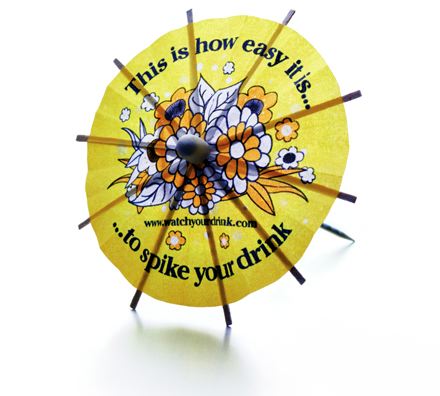
    But then there's TBWA London's work to make young women aware of the dangers of having your drink spiked – by actually spiking their drink with a specially made cocktail umbrella.
     

    Umbrella

    A word of caution. Be sure what you're doing will the reach the number of people you need to. Stunts etc are waste of time if they reach 100 people when you need to generate trial with 10,000.

    Then consider the experience you want people to have, maybe think of it as a reward. What you're going to say, do etc to make people end up acting as you want, this ends up as the proposition in the creative brief.

    Consider functional – Ariel makes whites whiter. And don't be afraid of telling people about a unique product benefit if there is one.

    This ad is just telling you that a Sony Bravia has better colour, the rest is how that is delivered.


    Just bear in mind, it's how you deliver that message that counts and thought and input on that is needed – it usually and should come from the brand vision/tone etc, but we'll come to that.

    It can also come from knowing what the experience is of th medium – only an idiot produces a cinema ad that doesn't entertain, but you can interact with a small crowd here too.


    Purified so it tasted fresher


    Sensory/emotional  benefit….freedom, power, confidence.

    Independence..


    Belonging


    Expressive – being to communicate to others that you are experienced..


    Intelligent..
    Economist-Ad  

    A great mother..


    How do you choose the right focus? Think why the audience isn't doing what you want, find the blockage, judge your solution by how much it will overcome it.

    You should think about support- give the reasons why the target should believe what you're saying. This should really be the actual stuff of the communication.

    You can be literal – 9 out out of ten cats prefer Whiskas

    British Airways brings more people together than anyone else..


    Honda used their hatred of diesel engines to spur them to make one they could love.


    Demonstration…

    The Accord just works


    ..or dramatise it.

    Women enjoy Yorkie's even thought they're masculine.

     Check your logic – how does the action, the reward and the support fit together – a useful check is to complete the following sentence from the audience point of view:

    "When I (intended action), I will (reward), because (support).

    Now, traditionally tone of voice etc comes last – you would hope because this is already set and agreed, everyone is clear about the brand idea, the personality etc. Other people have talked betterthan I could about why this matters (and offer alternatives to this way of comms planning, but remember, these are the basics, know the rules, do them well before you break them).

    Anyway, you must say, behave etc in a way that people will FEEL it. Just telling people will mean they won't listen. Nothing will happen.

    Every piece of comms says something about the brand, like it or not. It needs to be appropriate for the brand and the audience. You need to be clear about this, and agree it with client especially creatives.

    Too often, a creative is briefed really well, but tone is left out. Or even worse, it's not and they ignore it, because they believe it's up to them to decide how communication is delivered. It is up to a point. But it was Boddingtons – it MUST have been delivered creamily with  a Mancunian twist.


    If it's Apple, it must be simple and human.

    You might want to be consistent with how you're perceived already, you might want to play up an element of what the brand's about, you might want to shift perceptions a little of what the brand's about.

    In the end, it's got to be appropriate for the objective, brand and audience – but creatives don't own tone and manner and the sooner you talk about it and the more work is put into getting it right, the better.

    I've only shown TV here because it's easy to get hold of Youtub video, more and more that will be less of what we do…but TV's real long term benefit is building up how people feel about the brand. You need to make sure they feel the right things.

    And that, as they say, is that, hope it's useful.
  • If you ever fancied buring holes in a web page, now you can here.

    Like this..

    Rob

  • After months and months languishing on Sky + I finally watced Marcel Theroux's 'In Search of Wabi Sabi'.


    http://video.google.com/googleplayer.swf?docid=-6916115281561390843&hl=en&fs=true

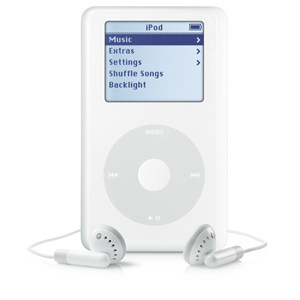
    In case you can't be bothered to watch or follow the links, Wabi Sabi is a japanese theory to aesthetics and transience as the touchstone of beauty. Now I think the basics of that are worth whole series of posts, how flaws and wrongness are much more attractive than elaborate or even pristine, minimalist design. I personally dislike the design directions of Apple, I know it taps into human needs to simplicity etc, but to me it's too hard, too obviously 'designed' too hard.

    Wikipedia-on-ipod
    Aaanywaaay….

    That's not really the point. Wabi Sabi is actually a much more complex ideas than that. Even though most of the people Theroux meets in Japan know what Wabi Sabi is, they find it difficult to describe. It has all sorts of roots and expressions. From the tea ceremony to Haiku. From Zen Buddhism to rugged potter – it's so rooted in culture, they're so used to it, you might as well ask what red looks like.

    I think there's a number of themes in this:

    Sometimes language simply isn't enough, you can only get to some sort of approximation to describe whole load of fuzzy associations, feelings and experiences – you need to find other ways to express it. That's the problem with brand onions etc, that can be the problem with single minded propositions for multi-touchpoint campaigns…and trying to describe why you love someone.

    Rituals are terribly important in our lives, they civilise us, they help us get in touch with each other, with ourselves, and can be a constant in an ever transient world – we all need some ballast.

    Perfection isn't necessary, and maybe shouldn't be sought after, but being a purist about things is no bad thing in a world (our industry in particular) chase other's approval and fall for fads all the time.

    There's a world of difference between admiring something and feeling genuine affection for it. I really admire some films, like Zodiac, but didn't really enjoy it. The same can be said for lots of clever advertising that's very impressive, but doesn't make you FEEL. Baking in warmth and depth to all sorts of stuff is really important.

    Complexity is important, but I like the idea of stripping out what isn't necessary. There are about 20 buttons on my DVD remote I never use for example. So many presentations are really boring because some git wants to show off rather than tell me something interesting. And so many pieces of design, music or film just look like they're trying too hard – sometimes trying to be simple.

    The japanese are more like the English than I thought -we both have a deep love for tea and gardening.


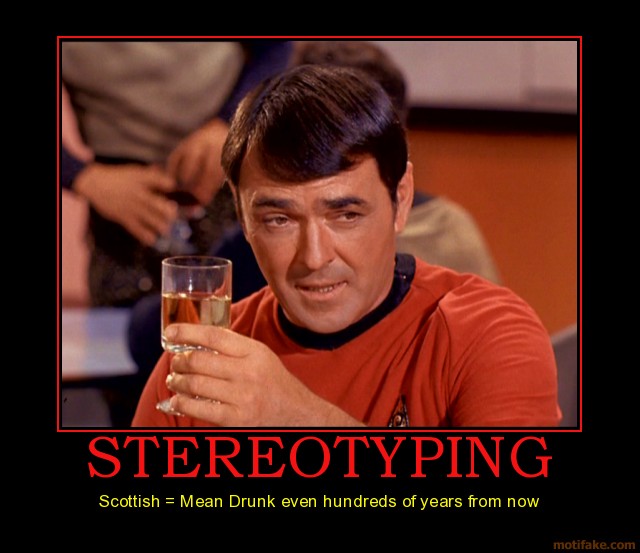
  • Scottish parliament becomes concerned about people drinking too much and so a law is passed to force pubs to close at 9pm. The year? 1436

    Stereotyping-scottish-drunk-demotivational-poster-1215971740

    From Future Thoughts on Twitter

  • Okay, back to it with communications planning. After this and then this.

    Once you know who your audience is you need to consider their relationship with the market, it's communications and your brand.

    What's their relationship with the product/service? What about the category? What are th issues that matter to them? How do they choose? You need to get off your chair, away from the office and do this properly. Go and meet them, so you can find out what really matters – how does the product/category etc actually fit into their lives. How are people really using it?

    In folklore, the cheeseburger was invented by JWT, although you can get they observed people making their own someplace.

    Ikea knew that people were retreating into the home as recession bit, and was being reappraised as a safe place rather than an investment as the housing market crashed.


    Pot Noodle found that it was an understandable weakness.


    I think this bit is crucial – there's too much advertising in all it's guides, too many products. If you're going to cut through, you need to be relevant in people's real lives. You're competing against all sorts of stuff people find more interesting – so it makes to find what they're really interested in and work back from there.

    Then you need to look at communications. What it everyone else doing? What are the rules? What can we challenge? If you've done the previous bit first, this should happen naturally. Once upon a time, all you had to do was look at what the category did and then do the opposite. That's how TBWA's Disruption worked and what HHCL used to base their thinking on. Problem these days, it that you can't assume the consumer's paying attention to anyone's work.

    But still, directly breaking the category's conventions can and still can be powerful.

    From Irn Bru poking fun at 1980 Coke's fresh faced teenagers.


    To Dove challenging the perfect models everyone else tended to use (this went deeper of course, turning the beauty industry into a monster in general).


    Finally, what's their relationship with the brand being advertised? How do they feel about it? How do we want to move the relationship on? It's very rare you ever need to re-cast a brand from scratch. But that said, it's amazing how many brands portray themselves as they want to be rather than how they actually are. Find out what positive associations people have, build on that. Pepsi will find it hard to not be about the youth generation, Sainsburys is about quality food etc.

    Topline, this will all help you decide what strategy will deliver the objectives with the audience. What is the course of consumer behaviour, opinion etc you want to influence or change. In essence, what do you want people to think, feel or do that they are not right now, and what you know about the brand, consumer, market and especially culture that will help solve th problem.

    Delve into the culture around the brand, delve into culture in the category – real culture, real lives. FInd the connection and bingo.

    So that brings you to the core question.

    What action to you want the target to take?

    Successful, persuasive communication ends up in a change in behaviour. Of course you want people to think and feel different, but in the end, you want them to act. Communications may well change how they feel but that's always in order for them to act differently than before..carefully looking at the decision making process should help you define what behaviour you want to change.

    Honda wanted people to test drive the cars, but they had to make the idea occur to them by making the brand interesting.


    That Pot Noodle example before was about increasing frequency by making revel in their guilty pleasure rather than feel bad about it.

    Lurpak wants people to take time over Saturday breakfast.


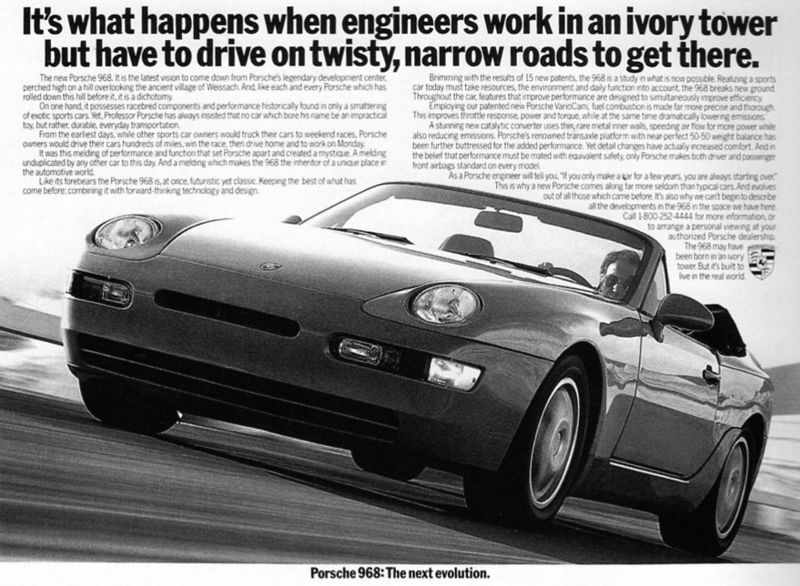
    In one of the most famous case studies ever, Porsche wanted non-Porsche drivers to respect the drivers a little more as driving enthusiasts rather than image conscious wankers – so that considerers wouldn't be put off.

    Porsche-ivory-tower
    Playstation wanted to move beyond their loyal, cult fanbase by getting more people join in, making the games a fun social thing for all, rather than a solitary pursuit.


    Morrisons wants new visitors by redefining the stores from cheap and old fashioned to th best place for fresh quality food.


    So, to recap. What's the objective? What audience is big enough and has the right interests and characteristics? Delve into the brand culture and the consumer culture – pinpoint what you want them do. What behavioural change can you influence that will deliver the results you want.

    Coming back to Sainsburys – if we can get every customer to spend one more pound with every visit we'll hit the numbers we need to.

    We want to change their behaviour from sleep shoppers – a boring routine in the store and a boring eating routine at home, to experimenters.

    The task for communcations is to encourage safe experimentation – 'Try something new today'.

    That's all for now, promise this will be finished this week….


  • Andrea's published her dissertation. It's on ghd, so naturally I'm interested. You should read it too.

    Andrea did work experience with me last year. She blew us away with her project on reducing teen smoking. She's graduating this year and you should be thinking about taking her on.

    Ideas pour out of her and she'll look at something in a way you simply haven't thought of (she makes good tea too).

  • I like the Adidas Originals stuff – it gets that a great brand needs a setting, a sense of place.

    It also gets the need for story.

    'The street where originality lives' ticks both boxes for me.

  • If you want to be more creative, you could wear black and the occasional ironic t-shirt, maybe say 'no' a lot and even make logos invisible to the naked eye.

    However, there are some psychological tricks you can employ instead.

    1. Introduce some greenery. Red agitates us, blue relaxes us, but green both calms and invigorates. Get a pot plant, write in green ink, if you're running a workshop, wear a green t-shirt.

    2. Do something else. The subconsious is very clever, you need to let it work.  Once you know what the task is, do a word puzzle, anagram or play  a bit of Sudoku. Then get back to it – your subconscious will have lots to tell you. On the other hand, if you hit a wall, just push it a little further, then do something completely different – stuff will just pop into your head and the subconscious carries on working.

    3. Lay down. The bits of the brain that do the creative bit actually work better when you're horizontal.

    4. Get into the frame of mind of someone else. Write down a day in the life of anyone creative, disruptive or anti- rules. A day in the life of a punk, an artist or a dancer. Your mind convinces itself it's brimming with ideas and creativity and off you go. Don't do this for a creative genius though – the mind get's intimidated and blocks – so no Da Vinci, Keats or Bono (just kidding about Bono). Or just ask yourself 'What would XX do?'.

    5. Get some modern art. If you have a poster of a number of arrows all pointing in the same direction, except for one, the brain reacts the rule breaking…sounds silly, but it's proven.

    6. Get interested.  Every day, find out why something is as it is – like why tihs snetece is rdaedlabe tohugh it is slpet worng. The brain get's stimulation and you have lots of stuff stored to connect to.

    Have a go, you never know.

  • I'm not the first to notice the importance of simplicity of course, but anyway…

    Just in case you thought talking or writing in big words and complex language makes you look clever, think again.

    Talk like a human, take the time to write less.

  • It's not hard to end up busy

    All those routines

    Grafting to pay the bills

    Maybe trying to do something better than last time or just hit a deadline

    Scurrying to do all the things you put of until later, but later is suddenly nowc dammit

    Yep, very busy, busy existing. But living? Hmmm

    I usually wake while the sun us still coming up. Tomorrow, I'm going to get up ten minutes earlier, drive a mile into the hills and just look at it. No reason, just want to remember I'm alive, I live in a beautiful part of the world and be grateful.

    Then I'll go swimming.

    Then I'll go to work.