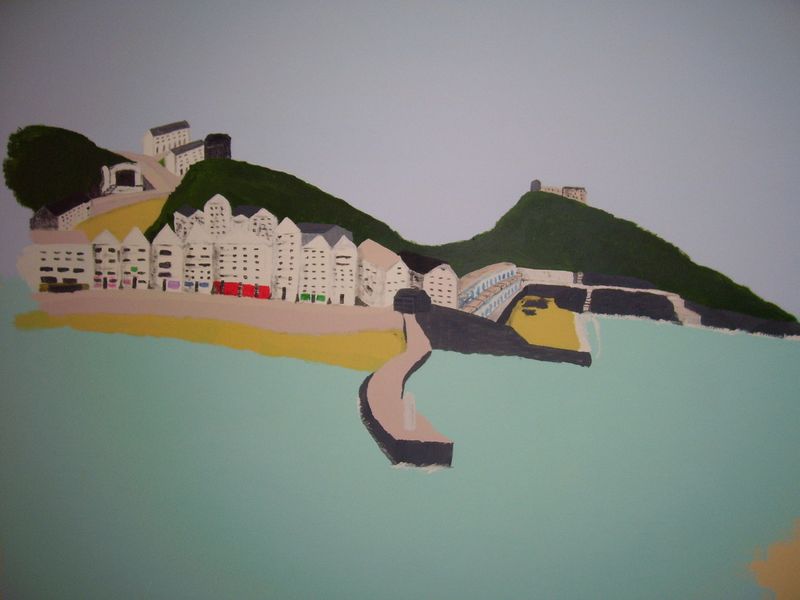
It just needs some boats, seals and a few people.
Mum and Dad live in Cornwall, which will be 400 miles away from, soon to be born, Baby Northern. Naturally they're less than pleased about this.
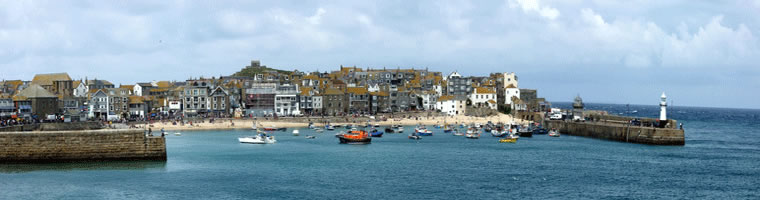
They live in St Ives, which is probably the most special place in the world to me. My child doesn't know it yet, but he she will be spending lots of time building sandscastles, playing in the sea, learning to surf and stuff.
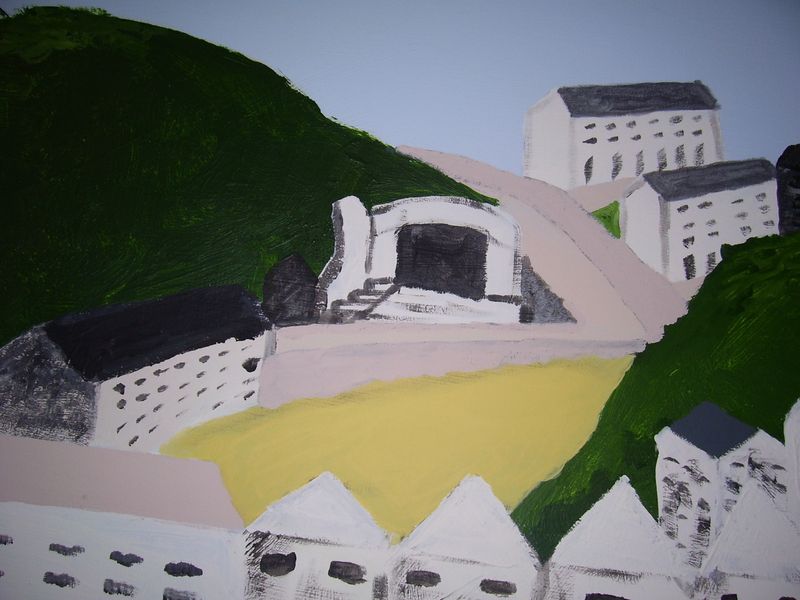
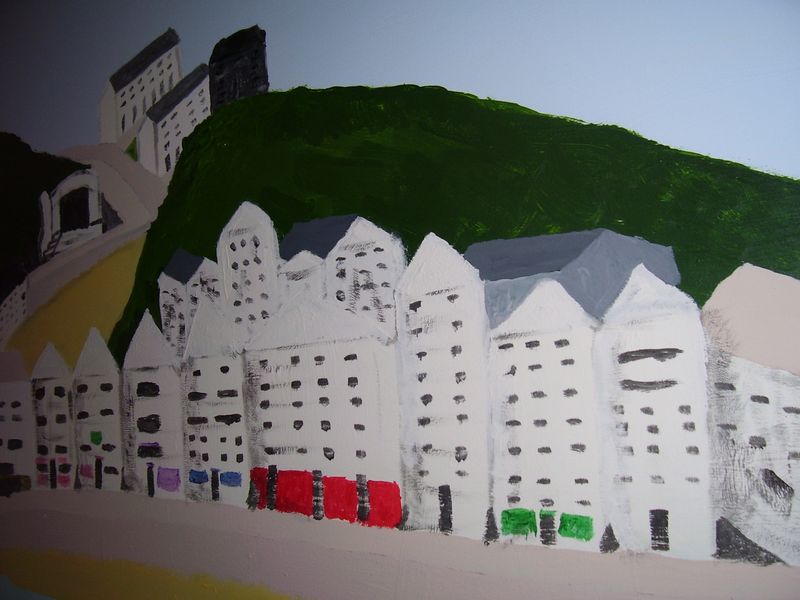
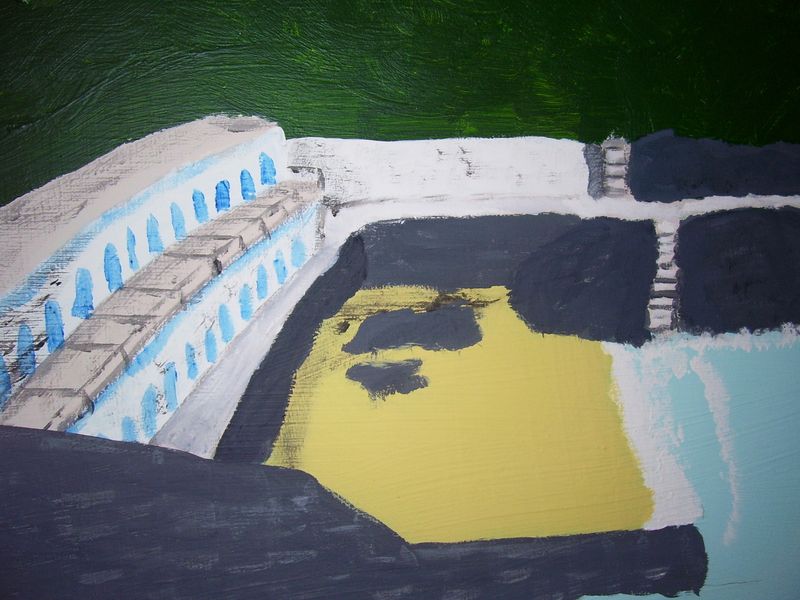
So I've solved the 'do we paint the room in girl or boy colour?' problem by doing neither. It's on the way to being a painting of St Ives, where Grandma and Grandad live.
Replete with harbour, Tate Gallery, Grandma and Grandad's house, seagulls and boats..and lots of artistic license.
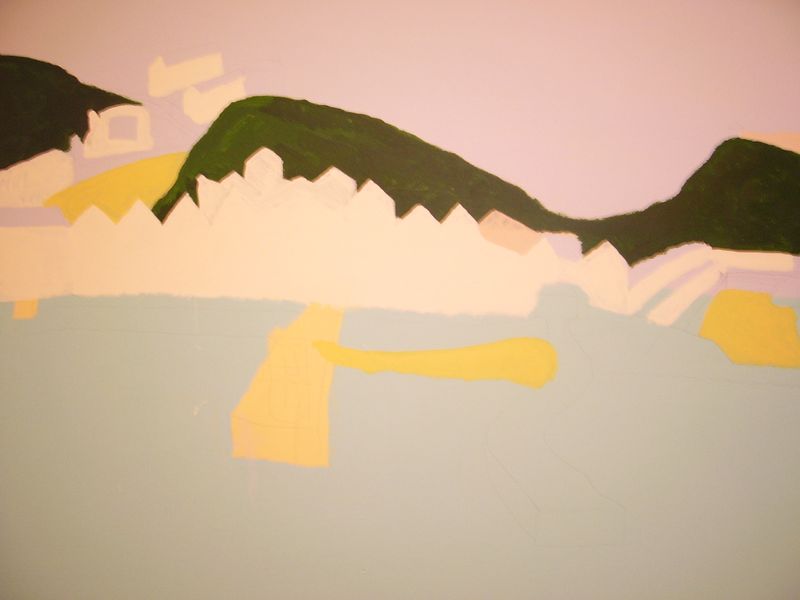
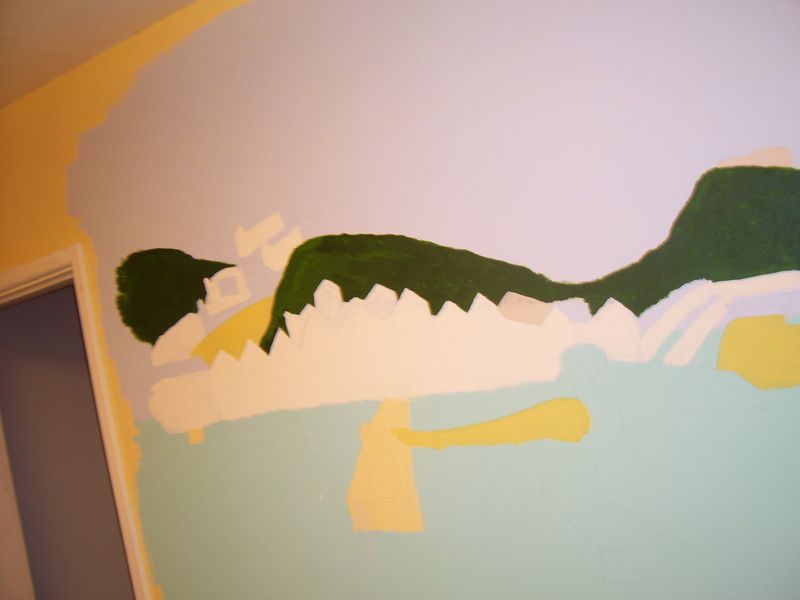
Like Rolf Harris says, can you see what it is yet?
On Friday I had to get one of those moody black and white work related portaits done (it's for IPA nominations stuff in case you're interested).
Frustratingly, it seems I just can't do moody, I just look grumpy. I also don't do thoughtful half smile, I just look like psycho.
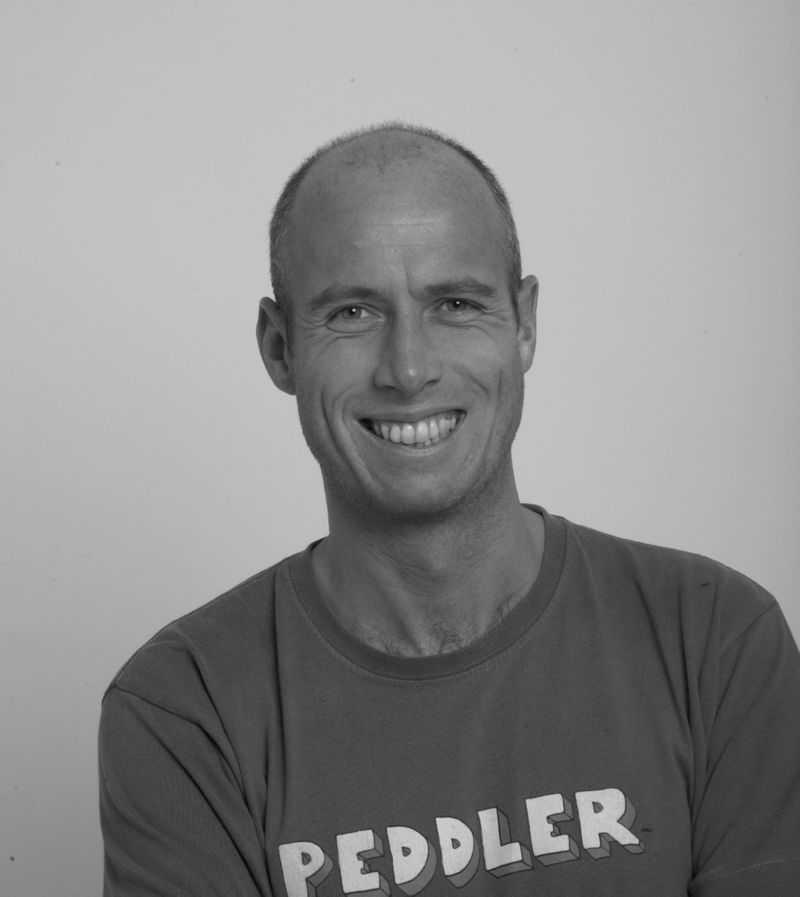
So that just leaves cheerful.
Imagine someone organised the biggest planning conference ever. Big enough for every planner from the four corners of the Earth to attend. Let's dwell on that for a second- all those converse trainers, moleskins and furrowed brows. Imagine the chaos with no suits to organise it.
Ok, good. Now pretend the conference was utterly destroyed in an earthquake. Suddenly the world is devoid of planners. How would everyone manage?
I bet you most agencies wouldn't grind to a halt. Account management would keep things moving, creatives would still have the ideas, media would still get bought. Market research would still get done to make sure campaigns were not exercises in guessing. Some might even venture that things happened a lot quicker without all the prevarication.
So what is the point of planning then?
Let's roll back to the 1960's. Marketing departments were overflowing with all sorts of data about consumers, while agencies had no one who could make any sense of it.
Meanwhile, they had heated debates about creative ideas with no input from the people that mattered, consumers. Research got in the way of ideas if it was used at all.
So planners were invented to bridge the gap between research data and creativity – use research to create more powerful creative ideas.
Not the voice of the consumer – that's too passive. Planners are not simply market researchers, they use that raw material for the basis of building ideas – new stuff, not just what research tells you to do.
All the other stuff: brainstorming, workshop moderating, trend spotting, blog writing, media neutral planning, all that came after. All of it was, and is, valuable, but is extra to what planning came into the world for. The trouble is, it's easy to mistake these bits as the day job as they increasingly take up more and more of your time.
Is that would you would be missed for?
Maybe that's why planners find it so hard to tell other people what they do, we're suffering from an identity crisis. The world has got more complex, there are more ways to go about it and ways to output what you have learned, but in the end, if all the planners disappeared in that imaginary conference, what you would hope people would miss you for would be why we were invented:
To use information about consumers to develop better strategy and creative ideas.
That's it.
Gareth's doing the next shool of the web project here. You should do it, it's good.
Next month to be precise. The wait is nearly over, if it was born now, it would live relatively normally (but very small). Here's some things I've learned along the way:
An expectant father suddenly becomes very interesting to women – turn up to work with the baby scan and they'll mob you as if you were Simon Le Bon in 1885.
It brings you closer to the Mrs in ways you would never expect.
Mundane things like tea and Sunday papers become increasingly special as you realise they'll be gone for a while.
You were never really a grown up before all this started happening. That was good, but so is this.
You admire and understand your Dad a little better ( and realise how much like him you really are).
You promise yourself not to be pushy and secretly hope for the academic genius that is also a sports star (but you're kidding yourself).
You quietly hope that if it's a boy he doesn't inherit your hairline.
It is easier to put together an Ikea flat pack wardrobe than fit a car seat.
We're going to have so much fun playing in the sea at Mum and Dad's.
Some things you can never really be ready for.
A world of possible futures disappears, but another one arrives instead.
Global recession? Global warming?
Here's something to really worry about , the price of tea is going up.
So you're a clever clogs. You sit in meeting's stir things up, make people think, get them excited over all sorts of stuff. But somehow the strategy that get's signed off, and the resulting work is never what you had in mind. How come? if people were that interested, why did we revert to type?
Here's why. People like to get exited about stuff, but when it come to actually doing it, it suddenly becomes risky, so they revert to type. You need to keep the momentum going. The more it builds up a head of steam, the more 'real' it becomes the more it's going to happen.
So keep that initiative. Next time you get people interested in something, get an agreement to make something, or do something. That might be some desk research to share for next time, an agreement to do a workshop to develop stuff together (make the stimulus amazing), could be proposition boards if you have some sort of direction to explore -anything. But get an agreement to make something or do something for next time, don't let it fizzle out, don't let doubt creep in, don't let the easy option in.
In the end of a day, we work in a factory, it may be an ideas factory, but it's a factory nevertheless, so keep that production line going, keep working to go beyond talking – to making or doing stuff.
In other words, always be closing
Thought it was worth building on Flat Eric to discuss this campaign (the ad is here). Interesting – big call to action telly, lots of stuff to do online, encourages young people to rediscover the pioneering spirit that built America and remake it anew.
Why?
Lots of context I guess – few would disagree that America is in a bad state, makes sense to tap into all that 'Obamaness' breaking with the past, rejecting the generations and 'system' that got them there.
Levis hasn't been about product for some time, it's about how wearing the jeans make you feel – rebellious, anti-establishment, an 'original'. But probably not to the current generation of young Americans. Like every new generation, they'll be rejecting all that came before, Levis needs to become relevant to them. But not like in the past. They see through 'image' advertising, ads alone won't cut it anymore. They demand credibility, they demand to be involved.
So this campaign bridges the gap between the Levis of old and today – it doesn't tell them what to do, how to be, who to be – it challenges them to put the money where their mouth is, to do something and gives them a forum to come together and do it, share it, feel like they belong, become a movement. Own it.
Very smart. The most commercial thing Levis can do is become The Jeans for every young generation. They've understood that today isn't about 'telling' it's about starting, joining in and housing conversation. Influence culture, sell more.
 NORTHERN PLANNER