
-
You can read the APG Awards shortlist here (they'll add them week by week).

Mother's PG Tips paper is a joy. Reminds me that there's no point just having the best strategy or actual work when it comes to pitching, presenting or even in your day to day. It's how you present it.
Which reminds me of a top tip for meetings (especially if you're shy). You're likely to be going with the account team – agree with them who will be saying what, make sure you have something to say, you know what it is and so does everything else.

There's many a planner who's done the thinking, written most of the deck (if you're doing one) but not agreed who's doing what bit, so on th day, the suits, verbose, charismatic people as they are, go through the whole thing, leaving planning person no chance to have any impact, unless they're equally brimming with chutzpah and effortless charm. Most of us are not.
So agree what you're going to say before hand. Make sure you have something to say.
-
This was an incredibly popular campaignback in the late 1990's. It spawned a number 1 hit single and God knows how many toy Flat Erics.
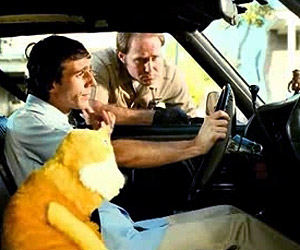
But what were they trying to do?
Let's roll back to the 1980's and the launch of Levi's Laundrette,followed by some of my favourite ads ever including Creek and Drugstore. They knew what they wanted to do, rather than have a jeans brand about fashion or style, have one with real meaning with their chosen audience.
That chosen audience was young people. Their observation was that people this age are non-conformist, rebellious and reject the establishment – 'The man'. So they wanted to make Levis the ant-establishment brand.
One problem, were very cynical about America in the UK then (and now). Anything to do with contemporary America was likely to fail. BUT – we loved, and love American heritage. That might mean the America of the fifties, the pioneers that conquered the American West and everything in between. Levis were the original jeans, they has been there since the days of the Wild West, they were part of American history. Part of that pioneering spirit.
So that's how they brought the rebellious spirit to life – they told stories of young people challenging authority in America's past, not right now. The Hollywood version rather than the 9 'o' clock news one.
And my God it worked. But the problem with becoming the brand for a generation is that the next one coming behind wants to do the exact opposite of the one before – like Punk rejecting Rock and the New Romantics then rejecting Punk.
Levis had to make their anti-authority DNA relevant to new generation which meant a break with their own recent past. So rather than the sweeping, filmic grandeur with the soundtrack of American music history, they moved to something contemporary. With a new hero product – Sta Prest, that was only intended to be short term, and really make most people feel different about buying the core jeans range.
I guess I'm saying they were still following the strategy of building meaning into the brand, selling the same attitude to the same audience, but they had to modernize how they brought that to life, so a new generation could feel like they were rejecting the one that came before.
And then they reinvented again with Twisted, and yet again with anti-fit. But then they ran into a new challenge, which I reckon I'd like to cover next time.
-
I have always loved this British Airways adfrom way back in the 1990s.
Others can talk about the way the ad is made, the casting of PJ O Rourke etc. I want to talk about why I think it was made.
I think it all comes down to consumer insight. That dreaded, dreadfully over-used phrase.
This ad wasn't aimed at everybody thinking of flying that year. It was aimed their specific premium, frequent flying audience:
'British opinion formers who are highly cynical, speak loudly over other people at dinner tables and express their opinions as fact. Unlike every other country in the world who talk up national success stories, they delight in knocking them down'.
What a great observation about the British! And how true, it doesn't matter what subject you're on, if you're British, you'll be suspicious of success; anything that's done too well. We love underdogs, we celebrate cheerful failure.
So if we have a communications challenge of making influential British opinion formers proud of British Airways, feel good about it, rather than knocking it's success…what was the business challenge?
This to me is all about justifying BA's price premium, creating emotional involvement and longer term loyalty. Much more commercially effective than promotions. Make feel good about spending money with you and you won't have to continually bribe them. Despite what many will tell you, reducing price sensitivity is rarely about delivery of facts, it tends to be about emotional, communicating the brands r'aison detre in a compelling way.
BA was a great British success story, they has sheer bigness, world wide success, that would make any normal country feel proud and want to join in with.
That's where the clever communications strategy at once identified the barrier and the opportunity. With this audience, showing off will work against us, not for us. But if can get to the heart of this, find a way to make the conversation ABOUT this very British habit, we can not only overcome the barrier, we create all that pride, loyalty and, ultimately, price premiumness we we're looking for. All we really have to do is laugh at ourselves a bit.
What do you think? Does that make sense?
-
I realised the other week how much my job doesn't consist of talking about advertising. By advertising, I of course don't mean the old fashioned 'above the line' thing, just ways of making people want the thing your selling. But whatever you want to call it, planners don't do a right lot of it next to all the other things.
'All the other things' will vary, depending where you work of course, but amidst commissioning, managing or doing research – groups, quant, ethnography, TGI runs, desk research etc etc, analyzing data, preparing and running workshops, strategy presentations and a whole lot more, writing creative briefs and doing creative briefings, attending creative reviews and tracking meetings don't make up the bulk of our time.
I suspect most of us like talking about the actual work though, I know I do. So, to vent that particular spleen, I'm going to do more of that here.
Not in that dreadful, self serving way they doing in Campaign Review. A trick to get better at thinking about strategy for new work is to look at stuff that's been made and 'work backwards'. Try and think about what the strategy was, what the brief might have been. It worked for me back in the day and seems to be useful in training bits and bobs.
So I'm going to do a bit of that, look at stuff I find interesting (not necessarily like) and write about what I think they're trying to do and why. Hopefully that will be a bit constructive. Hopefully, if anyone thinks I'm wrong, they'll quickly set me straight.
-
9 months (ish) ago I had to share a Zurich hotel room with Mel from work. Yesterday she brought in her new baby girl.
The purpose of this post is not to deny being the father (looks nothing like me, she found out she was pregnant the day before). It is also not about how time flies, and how so much has happened since last November (though it has).

What I want to say is that I held that adorable little baby in my arms, until one of the girls finally peeled her off me and just wanted my own baby to be born right away. I have to wait until October for mine, too long. Looks like I'm as ready as I'll ever be.
-
"Sir Martin, too, thinks that American and European consumers have been “scarred”, and will take a long time to rediscover the joy of splashing cash around. But as Mr Swinburne points out, advertising has done so badly of late that “it doesn’t have to come back all the way to have a strong recovery”

From The Economist
-
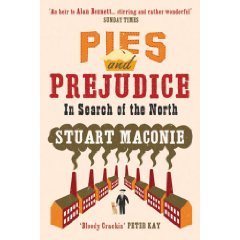
I'm in the middle of reading Pies and Prejudice by Stuart Maconie. Not only is it fun, he manages to get an incredible amount of detail into everything. Really worth looking at if you want to understand what people are like Up North – and if you're a planner in London, isn't that essential?
This book is pretty essential for anyone involved with communicating to the English. In 'Watching the English', Kate Fox, a 'proper' anthropologist, has looked at all aspects of English behaviour, from food rules to dress rules, from our houses to why we always talk about the weather. Much of planning is understanding why people behave as they do, this book gives you lots of hidden behaviours that will help.
-
I was reading in the Economist that they're on the way to proving that extreme calorie restriction makes you live longer, they might even get to a simple daily pill and nothing else. It might even add two decades to your life.

I say, what is the point of living a life like that? (picture thieved from russell). Where's the joy?
-
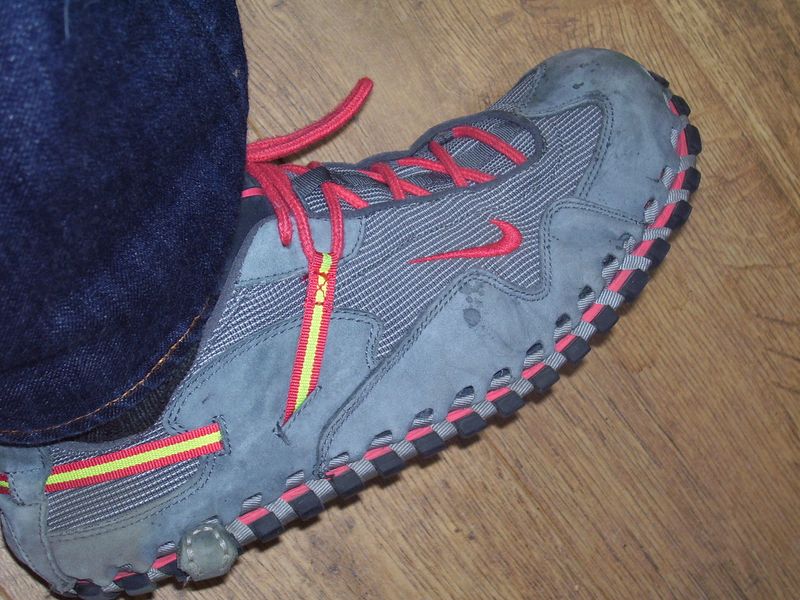
Meet the Marmite of trainers. Embarrassingly, this is the most provocative thing about me (unless I get to tell you my f*** dis custard joke).
I love these, I haven't seen anyone wearing these, which is why I do (although I don't admit to myself there's probably a good reason I'm the only one).
So what do you think? Are you with the naysayers who reckon they look home made, like they're Apache or just plain stupid? That I'm to old for trainers like these?
Or are you with those that think they're ace?
 NORTHERN PLANNER