• Hello, it's been quite a while since the last post. Truth is, I haven't been lazy, I haven't found there's nothing to write about, I've just been too busy lately. Doing a 160 mile round trip to work is never condusive to spare time, but there's just been too much to do. I'm guessing that come October and the arrival of our new baby, this won't get any better.

    100_2471

    To be honest, I had considered just packing the whole thing in for a while. I've found that writing a blog, like so many things, is all about momentum. You need to find a rythm, build up some sort of pace and the posts just type themselves. It's a bit like going to they gymn, it's much harder to go a couple of times a week than it is to go every other day. Writing little and often is hard.

    But I'm going to carry on. Not for any vanity reasons I hasten to add, I'm not labouring under the illusion that any one is panting with antipation about the next Northern Planner post, willing their RSS to show something. I hope that the basics stuff is useful and will continue to be, I think that stuff is really important, but really, this blog is for me.

    It's forced me to keep writing something, to keep interested, it's allowed me to try out a thing or two. This is a good thing. The job's hard work, there's little time to think out of the here and now. A blog forces you to do that. And then there's the community. I've met a lot of people I wouldn't have, I'm part of a community that I simply wouldn't be without blogging and stuff.

    These are all reasons to carry on. Posts will not be as regular as they once were, but I'm  going to try and find some cadence again.

    Anyway

  • This talented planner, who is hard working, joy to work with, great thinking, digital native, well rounded, great human being…

    …needs a job. Hire him or spread the word. The campaign starts here.

  • Decide the context for yourself, shouldn't be hard..

    BEHIND EVERY GREAT FORTUNE IS A CRIME

    Balzac


    Oh, and here is another thatone of two people could do with reading, looking in the mirror, nd then reading again..

    ECONOMIC ADVANCE IS NOT THE SAME THING AS HUMAN PROGRESS

    John Clapham


  • So to finishing off thinking about propositions. (There was this post in case you're wondering).

    So far we've covered most of the ground needed to think about writing a good proposition. Now we're going to have a little debate that goes right to the heart of planning for advertising and how brands should communicate.

    There are two schools of thought when it comes to building communication and the strategy behind it. The most common is what we've already covered – reduce everything down to a single-minded thing you want to communicate or say. Make a proposition the answer to the following question: What single thing must we convey?

    This is, of course, fine. It's a common language for planning and creative departments all over the world, because it makes things easy. Agree on a statement, bring it to life in the most compelling way, job done. But……..

    Another school of thought has been around for a quite a while, challenges this view and is possibly more relevant today than it has ever been. This way of thinking is based on developing communication around what you want people to think, feel or do afterward – the take-out, rather than a 'message'. The focus of a brief should not be what to say, rather, what the outcome of the communication will be.

    This tends to lead to a proposition that is expressed as a task rather than a statement. or not even having a proposition, replacing it with a creative challenge.

    This is not new, JWT's creative brief has centered, around 'What is the key response we want from the advertising' for some time. It then asks you to highlight what attribute, news, need that's fulfilled or whatever, that might provoke this response.

    So the core of the brief for Lurpak becomes: Make Lurpak the champion of good food

    The core of Nike Hurt becomes: Dramatise how much pain and failure are part of what it is to be a true athlete

    The core of Gorilla becomes: Put a smile on the face anyone who sees our ad

    The core of ghd becomes: Make ghd the conduit for desires hidden deep in every woman

    Make the Audi TT utterly synonymous with design

    I think this approach is worth considering because it's rare these days to be 'just doing advertising'. You're looking for ideas that are more like stories that run across lots of platforms, usually across more than one audience. There's little that is 'single minded messaging' about that. You're looking for a theme rather than a 'message'.

    Advertising was never really about 'message'. Like all communication, it's a two way thing – it's what people make of what you say, not what you say.

    Culture is becoming less linear and simple. Look at the Matrix, Lost, video games, even sit coms. They leave you lots to work out, they ask you to put threads together, and we readily do it. Ads, brands,all that are expressions of culture and competing against it – so it has to be at once like it and stand out somehow. Ads become the signal for deeper content elsewhere.

    We're navigating the world in a much more visual way these days – briefs need to be about an experience rather than 'message', tone of voice, brand behave

    This is all put much better here.

  • I did something I haven''t done for quite some time, moderated some focus groups. It's not my favourite way of researching stuff I have to admit, but you know what? Groups are still  a pretty good way of finding stuff out.

    100_2169

    Don't take everything at face value, watch for when everyone is agreeing to fit in, be careful of selective listening, but still, qual groups ALWAYS throw out something interesting – quickly. Not an answer, not a definitive direction, but input, something you haven't't considered, a spark, a clue…stimulus. What's so bad about that? I think that's pretty great.

    A common criticism of groups is that you don't get to what people really think, you get a misleading consensus. That doesn't have to be so bad. Few people act alone, few want to think for themselves, most are influenced by other people.

    It can be useful to sit back and watch that in action. Let them talk, let them debate, watch a real conversation, look for what they want to talk about. Brands these days are largely about starting, or joining in with, a conversation. It's no bad thing to find something they actuallt want to talk about.

    I was talking to builders and electricians, even creatives in an 'Eh by gum' North England agency are highly unlikely to put themselves in their shoes, not to mention suits and planners!

    One last thing, the groups were getting feedback on creative work. Mostly, I'd rather open my veins with a rusty scalpel that test ideas…BUT……….as a planner, sometimes you know some work isn't right.

    It may be an amazing idea, but it's not right for the audience, it's not right for the brand, it's just not right. A clear, inspiring brief and briefing is always the start, never the blueprint in my book, so just because it's on/off brief, it doesn't mean it's wrong/right.

    Even the greatest powers of persuasion can fail against a creative director that's seeing shiny awards in the mind's eye. It's one of the dark arts, but sometimes, consumer input can do that work for you, maybe killing a route, maybe saving it by some modification, sometimes throwing up something more interesting.

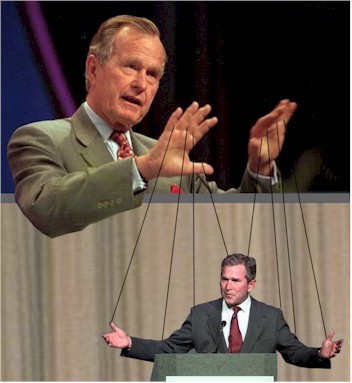
    Bush_puppet

    In other words, sometimes it's better to get someone else to talk for you.

    Come to think of it, research can be great to use defensively against the risk averse client. Get the right work through research, or kill the wrong work for that matter, prove how pointless making the logo bigger is, how boring their ads are, whatever.

  • This perfect for summer, really quick so you won't miss much tennis. This is a doddle. It's really tasty and if you shut your eyes when you eat it, you'll think you're in the Mediterranean. And, in cash strapped times, really cheap.

    For two people you'll need:

    Two whole mackerel, filleted (any decent fish counter in a supermarket will do it)

    Large glass of white wine

    Handful of fresh parsley, or heaped teaspoon of dried

    Small punnet of cherry tomatoes.

    I large clove of garlic, chopped.

    Big handful of dried spaghetti

    Wrap the fish in foil, with a few sprinkle of parsley and half a glass of the white wine. Roast in the oven at 180 degrees c for 20 minutes.

    Roast the cherry tomatoes in the oven at the same time, uncovered for and splashed with a little olive oil.

    While they're roasting, finely chop the garlic and fresh parsley

    Bring a large pan of salted water to the boil, in the spaghetti, make sure it's covered and cook until it's soft, but with a little bite left in. Should take ten minutes.

    While it's boiling, in another pan, gently fry the garlic in olive oil, don't let it colour. When your whole kitchen smells of garlic, pour in the wine, turn up the heat, bring to boil and keep boiling until 1/3 of the liquid has evaporated,

    Pasta should be ready now, drain away the water from the pan, pour in the garlicky wine, take the tomatoes and fish (remove the skin from the fish if you like) from the oven tip in the parsley.

    Return the pan to the heat and stir like a madman for a minute, mashing at all together, coating the pasta – leaving a think, tasty sauce coating your spaghetti. Serve immediately with crusty bread and a glass of chilled white wine.

    Enjoy!

    Tip – tastes better outside.

  • I thought it was time to get back to some planning craft stuff, it's been a while. Now we've done creative briefing already, but I thought it was worthwhile looking at propositions in more detail.
    100_0997

    I think it's important because it's always the part of the brief the creative reads first – to the point where they'll read that, hopefully plow on ahead and only read the rest of your brief when they get stuck, or want to build on their initial ideas. Like it or not, it's the most important part of the creative brief.

    It's also the most debated. How it should be written, how long it should be, how simple, how single minded, how open, how closed, ask four people in any agency and you'll probably get five answers.

    One thing most will agree on is that there is a part of the brief that focuses all the other information into a simple statement. The role of that statement is the bit where the conflict comes in.

    Many cling to what I believe to be an outdated view of advertising, based on 'information processing'. This still dominates most thinking about how ads work. Basically, it assumes we are all rational people, you can predict our behaviour and, as long as you give people the right (usually very rational) message, they'll behave, think, do what we want. The role for creativity and emotion supports the core message by making someone 'like' the advertising, while the advertising is most effective when it gets high attention and people think a lot about what you are saying.
    100_0977

    Another way of looking at this is to focus on response rather than 'message'. I think this is a much more credible approach. It's not what advertising 'does' to people that matters, it's how they respond to the advertising. Long gone are the days when you could assume that a person was passive, rational receiver of information, ready to do or think what you say. People make a contribution to how communication is received. Let me explain:

    Humans are influenced by subconscious perception, we like people without knowing why, we act on instinct way before we have time to think about it. Decisions are always influenced by feelings. In this sense, communication is continuing process of developing and modifying relationships through behaviour, not just 'words'. There are signals that are responded to without the person knowing, feelings, associations. At the moment of communication, HOW you say it is important as WHAT.

    I'm not saying delivering facts or information is wrong. I am saying though, that advertising with no clear 'message' or 'benefit' is always right, in my view, quite rarely.

    What I think this means for propositions is, firstly, that they are not the most important bit on the brief, whatever the habits of creatives. Tone and manner matter too – that's hard to get across in words when these things are, of course, intangible. So the briefing and the stimulus you provide really do matter.

    Secondly, a simple sentence is good, but a proposition isn't necessarily a simple benefit or USP, it the one thing you need to communicate to reach the objective set for communications. That can be a lot of things.

    Whatever you write should be interesting, true and shouldn't be an endline. Sources for it might be:

    Product characteristics

    Ways of using it

    How it is made

    Surprising things about who uses it, how they use it

    Price characteristics

    Product/brand heritage

    Direct comparison with competitors

    Picking new competitors

    Philosophy of the company

    They tend to be written as a statement, promise or observation, but should never be just information, it should be information that's relevant. Imagine telling someone your proposition in a pub, would they be interested.

    You should already know your strategy, for example make people trust British Airways because of its scale.

    So explore the product/brand truths – every year British Airways carries 12 million people

    But then follow the argument through – every year BA carries 12 million people…to other people.

    Then find the observation that brings all that to life, something that makes it human, emotional relevant and reflects tone of voice a little – BA brings more people together than any other airline.

    I guess I mean push it. Whatever fact, benefit or observation you have, find the fact behind the fact, the benefit behind the benefit.

    It's fast…it saves you time…….it saves you time……it gives you more time with your family…….it gives your family more time with you.

    Polaroid lets you look at pictures just after you've taken them….everyone can look at the picture you've just taken…..polaroid isn't a camera it's social lubrication.

    For brand usage – Eating Revels is a risky business

    For target audience – Harvey Nichols is heaven for fashion addicts

    Benefit – The new VW makes you feel safer than the average small car

    Philosophy – Irn Bru is the maverick of soft drinks

    Comparison- Umbro don't make leotards, they only make gear for football

    Product usage – you either love or hate Marmite

                            Oasis is for people who hate water

    Now, we could stop there, if we weren't going on to go about process. In fact, we will, I've run out of time. We'll go on to show how 'task' based propositions free up a different kind of work, a different kind of process and maybe lend themselves to the 'take-out' or 'emotional school of thought' a little better.
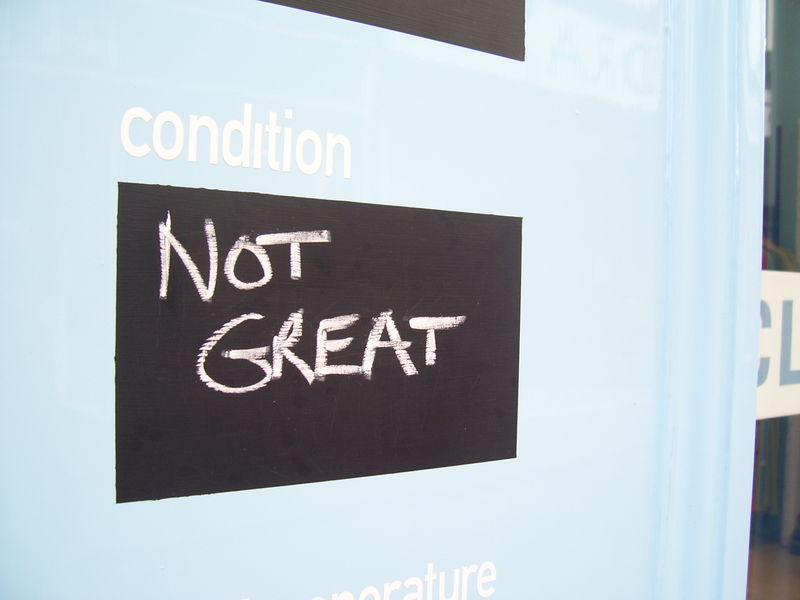
    1. 30 years of sport leaves you with a variety of long term niggles that means you'll always be playing in pain
    2. The gap between how you feel inside and how others view you widens as you get older, especially the young
    3. This a recession that few are truly immune from
    4. Speed bumps exist
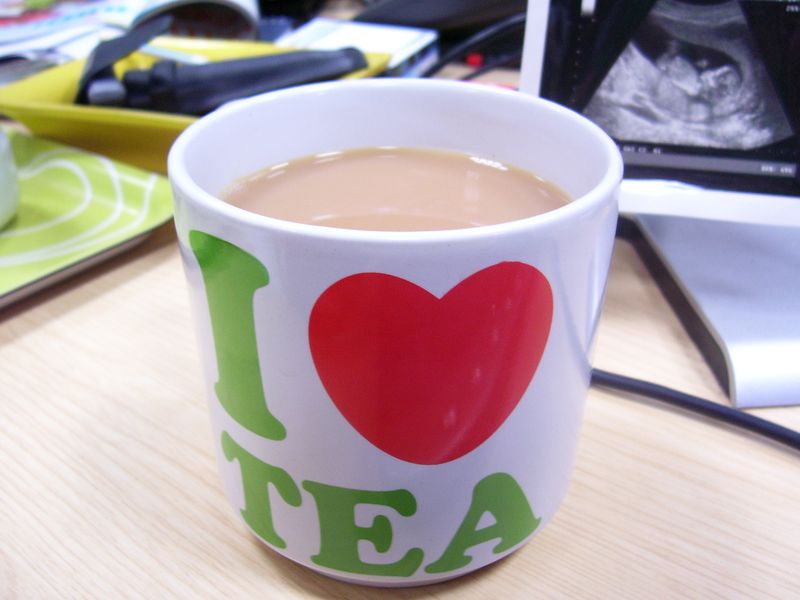
    5. Most people make their tea in the cup, not the pot
    6. Most people couldn't give a monkey's about government and politics
    7. I'm not a particle physicist
    8. I'll never own my own seaside restaurant cafe stacked with books and regulars
    9. I didn't work in advertising in the 1980's but if I met a me who was born 15 years earlier and had, I would detest him (only a few people know my potential for pretension and self delusion, and saved me way before it was too late)
    10. My parents will live 6 hours drive away from their grand child
    11. I'll never get to work in another country
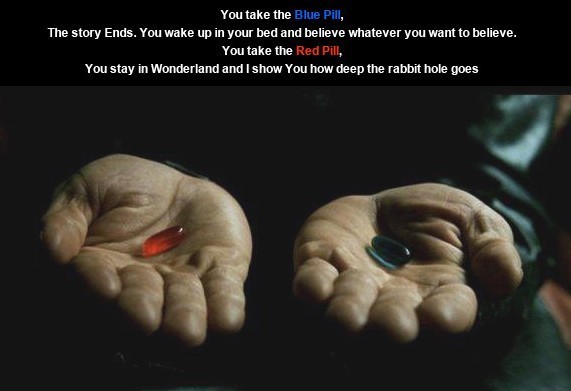
  • If you've seen the Matrix, and I presume you have, you'll be familiar with the moment Morpheus offers a choice of the red pill or the blue pill to Neo. The blue pill will result in forgetting the whole thing and going back to daily life, but the other offers the truth – no promises of happiness or anything else, just the truth.

    Matrix_red_blue_pill

    As you know, he wakes up to find himself a human battery and the first words he hears are, "Welcome to the real world". The ultimate dose of reality, and yes it may be science fiction, but it's rooted in a deep truth about us humans that either makes disappointment and frustration inevitable, or keeps us sane and happy depending on your point of view.

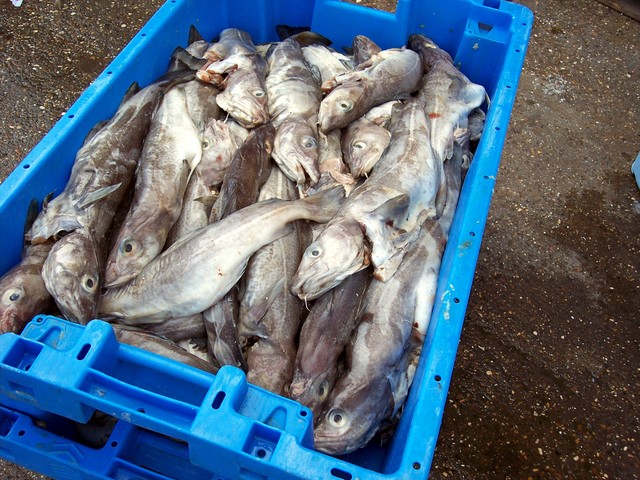
    We have all experienced moments of reality, that feeling of being jolted, like being slapped around the face with a wet fish, when something we strongly believed in, took for granted, or longed for is shredded before our eyes.

    Fish

    It can be all sorts of things, such as realising that somebody doesn't love you, that you will be made redundant, that the career you have built for all those years is not for you. It may be as profound as loved one dying, or realising that your parents are not perfect, it could be realising that you've run up too much debt on you credit card.

    Seems to me that ad agencies will get one soon when they finally realise that they can't work the same way they have done. Clients see through the bollocks now, telly alone isn't good enough and the old brand models we're probably wrong and certainly don't work now.

    Probably, ivory tower creatives will get a shock when the molly coddling ends.

    God knows, we're getting one at the moment with a worldwide recession. Even for the lucky ones who's income and mental health remain OK, you wonder how much self indulgence and 'have it now' culture has been given a rude awakening.

    Every now and then, we are given the red pill, irrespective of whether we want it or not.

    How does this happen? Why are these things such a shock? They happen all the time, to lots of people and even if they've happened to us before, and why are we are still bemused when they happen again?

    I think it's because we con ourselves. This happens in so many ways.

    Firstly, we're incedibly good at post rationalization. After the event, we convine ourselves that things didn't happen as they actually did, usually making ourselves come out a lot better than we should. You were not happy with the partner that dumped you anyway and you never were, someone else was to blame for that disaster at work, I wasn't sacked for being useless it was politics, my point at that meeting was clear but no one wanted to listen. So we don't learn from our mistakes and are doomed to repeat them.

    Deep down, we know a relationship isn't working, we know when our job isn't going well, we know we'll never be a film star, we know we'll never go home with the prom queen, we know how much money we need to spend. But we're constantly post rationalizing every situation, or skewing our knowledge of the future to fit what we want to believe.

    So when we're dumped, demoted, sacked, find we can't pay the bills or amazed we're going home alone, what we should have prepared for as inevitable, we see as bad luck, unfair or punishment from the fates.

    You could argue this is a good thing, it protects us from feeling too bad it stops our confidence being shot forever, or you could argue it stops you understanding your reality a little better and living a happier life in the future.

    This curious optimism appears in other ways. In western society a, largely wrong, belief that humans exist as individuals enables us to believe that terrible things that happen won't happen to us. We won't ever get divorced, we won't work in a recession, we'll succeed where others have not. All because, despite the experiences of others showing otherwise, we believe we're different, so it won't happen to us. Despite the fact we're 99.9% the same as every other human being in the world.

    This optimism means we're not so good at recognising luck. When good things happen, it was down to us, rather than the truth that fortune affects everything. In Outliers, Gladwell shows that even world famous geniuses got lucky. We only seem to believe in bad luck, when something bad happens we take it much harder because it isn't balanced by us recognising good fortune.

    We're always going to get a dose of the red pill, but the more we can prepare for it by understanding that things just happen – it's the way of the world, the better.

    I don't mean just accepting your fate, I mean be realistic about it. There's plenty of room for optimism, but it needs to be based on a true picture of what we're like and what we can do, forcing ourselves to learn from what happens to us, rather than post rationalizing events. We're all great in our own way, we all have chronic faults. I don't think we would be happier by being less optimistic,I do think we would be better off understanding and appreciating our true selves, making the very best we can of what we have.

    100_2243