• So you slide into you’re battered vomit hued GNER seat, looking forward to closing your eyes for an hour or so. It’s 6.50am, the paper is slightly tempting but there’s a long day in front of you, it will be nice to give in to the urge to doze.

    Then there’s a commotion behind you. You turn to see harassed Mum, arms struggling with an improbable bundle of bags, her brood bouncing down the carriage in front. Her two boys jump into the seats across from you, she sorts out the paraphernalia before flopping opposite her adorable little darlings. Straight away, there’s a commotion over the bacon sandwiches she’s lovingly prepared for breakfast.

    You quietly seethe. You’re peaceful journey is ruined. It would be simple to get up and join another carriage, but you don’t want to offend the poor Mum who looks like she needs a nap more than you do. So the paper is opened instead.

    Amidst the comments section you realise something’s not quite right. It’s silent. You peer over the paper to see Mum in the land of nod while her 10 year old reads Harry Potter. The little one is 7-ish. He’s meticulously colouring in a street scene, and completely ignoring the colour guide. So the traffic warden has lost his customary black and lurks on the pathway, resplendent in shocking pink.

    Suddenly 5 year old hugs his older brother fiercely. 10 year old hugs him back and tells him he loves him. And all you can feel is shame at you’re earlier grumpiness. You wonder what they’re going to do in London, and silently hope they’re going to have a good day. You know what Londoners are like with tourists.

    Mum stirs, on eye opens and sees you staring at her flesh and blood. You quickly return to Polly Toynbee, hoping she’ll let you help her with the bags later.

  • I was at a free conference in the morning. All the while I was thinking that the Breakfast Club Coffee Morning was only about 500 yards away.

    I finally got there at 1.30 to meet Carol, not thinking some Coffee Morningers might still be around. We had a good hour or so plotting this and that and if the day had finished here, I would have gone back home happy as lark. But then…

    Brekfast

    An oddly familiar face appeared at our table and asked if I was Andrew (I was) and introduced himself. Next thing I know, Will’s (the best connected planner in London I’d wager) sitting next me bursting with the millions of things he has to say while Charles Frith eats his heroically proportioned brunch. Then another familiar face walks in too. Blogging’s ace.

  • Someone mentioned that I’ve some fight left in me, I responded flippantly but he’s got a point. I do go through life with a sort of quiet stoicism. That’s being Northern I guess, but some of it is down to a past life as competitive swimmer.

    100_2207

    (this is me, the one on the right, and two mates on the way back from a swim trip to Chicago. We thought we looked cool. We didn’t)

    Come to think of it, I learned quite a lot from swimming. I think it’s worth sharing for two reasons;

    1. I think a dose of exercise is good for people in general (sorry if that sounds a bit like Mr Bronson from Grange Hill – who also played Admiral Ozzel, the first character to get ‘force choked’ by Darth Vader).

    2. What I’ve learned has been helpful for a struggling planner living Up North. Up here we have to work hard to justify our existence and prove our worth. Planning isn’t ingrained in agency cultures, you have to really make people want you in the room. Planning anywhere takes hard work, patience, humility, maturity, a thick skin and being able to take the knocks. Out here this is doubly so. You get nothing by right, you can enjoy the value of rarity – but you have to bloody earn it.

    So enough with the tenuous links. What I learned was:

    1. Working hard pays off. To get anywhere, you have to train for three hours before school and three hours after. And push it to the limit. That’s a lot for a twelve year old. But on the day of the race, all that work was worth it. Talent is fine, but slackness finds you out in the end.
    2. Discipline can equal fun. With all that training, and school, homework and eating the required 4,000 calories a day, there wasn’t much time for playing out and doing the things kids do. So you learned very quickly to do the dull stuff with no fuss, that way you could have more time for fun. That also meant that the organised kids had the best time.
    3. You need rivals. Quite simply, they keep you sharp. They force you to never relax.
    4. Love people better than you. When I was in the under 8’s, i trained with the under 10’s. It was hard, but they pulled you along. I also watched what faster swimmers did, and tried to copy them.
    5. Process and technique win over brute force. You had to be fit, you had to be strong. But there were these huge,strapping kids who just made lots of splashes. A bad stroke gets you nowhere fast. There were also kids who had great strokes but bad starts and turns. In a sport where success is measures in flakes of a second, little things matter.
    6. You need other people. I needed a coach, Mum and Dad to take me places and cheer me on (it mattered), I needed chaperones when I was abroad without them and I needed the people I trained with. When you go through that much together, you need it to be fun. We all got very close.
    7. There are times when you just have to get on with it. Traveling abroad without your parents at 10 is quite scary, so is ordering food, staying with strange families and meeting American girls who think you’re older than you are ;-0). You can quiver and not do things, or you can grab the experience with both hands. It’s no accident that my best friends in lower school were swimmers, so were my girlfriends. We were simply more grown up than the people at school.
    8. Losing is good. There’s no point having a tantrum or giving up. Understand why you lost, learn from it. Put it right. Sometimes people are simply better than you. That’s quite a shock for a young boy.
    9. Patience is a virtue. It takes time to get  good. Good technique, getting fit, those things take time. You’ll fail a lot, and badly, before you start to win. Also, the wait between heats and finals seemed forever. You got used to waiting.
    10. It’s good to be around people like you. There used to be a bunch of lads who were deadly enemies in the pool, but liked being around people out of it. We all knew what we’d done to get here, the sacrifices, the work. There was some sort of unwritten, mutual respect that’s hard to explain.
    11. You learn the value of transferable skills. Cross country is a doddle and bullies can’t keep up. Growing up quick also helps avoid the first term meltdown some university freshers go through.
    12. You learn humility and generosity. When you’re competing against your best friends, you don’t crow over beating them, and you try and help when they’re down.
    13. Focus on what you’re doing. If you’re always worrying about what people are doing, how good they are, you’re not focusing on what you can do. If you’ve done your best, and you always look to do even better, the rest will follow.

    So there you are. That should be helpful if you’re daft enough to take up swimming, I think it’s been helpful for survival as northern planner too. I suspect it could be useful for a planner elsewhere too.

  • The thing about promising to do stuff online means you have to do it. So here’s the first bit of commonsensical advice for people who are thinking of going into planning:

    Why have planners at all, and why they’re more important than ever?

    It was the first session in The APG Networking course, and as far as I’m concerned, something anyone in marketing should hear. George Bryant did the talk. Don’t expect anything ground breaking, but I still find it a good call to action. And don’t forget, this is a translation of HIS words.

    I’ll pick out a bit that has has lots of resonance with why I’m doing this is the first place. He told us all that it takes about 5-7 years to find your voice. Up until then you need to focus on doing the basics really, really well. After that you can begin to invent, but before you start to do planning you’re way, you need to know what rules you’re breaking. That doesn’t mean having the job title ‘planner’ as far as I’m concerned, but it does mean being involved in strategy at a client company, research company or agency.

    Most account handlers in agencies outside London are strategists by default, since they have to do the work of absent planners. To be honest though, that tends to involve giving a lifeless brief to some poor creative and getting them to arrive at the real brief themselves. If all this stuff does is make a few creative briefs more usable, that’ll do.

    Incidentally, as an account exec I learned more about strategy from creatives than ayone else. You know who you are and thanks for your patience.

    So………..

    1950

    Imagine it’s around 1950 in the UK. You can have any car as long as it’s black. The average supermarket stocks about 300 lines. There’s one television channel. You have to buy things before they sell out.

    Marketing was easy then, we lived in a world of undersupply. Basically, if you told someone what something did, and it was available, that was pretty much it. Even in the 1980’s you could get away with spendinga fair bit on TV and bludgeoning your message through.
    100_2131

    Now fast forward to 2007. Not only can you have a car in any colour, there are hundreds to choose from. The average SMALL supermarket stocks 30,000 lines. There are hundreds of TV channels to choose from and, well, we’re making too much of stuff. Think of anything you might want to buy and you’re faced with a bewildering choice. 90% of new grocery products ultimately fail in the US. And all that goes for those carfeully crafted marketing campaigns too.

    Back in 1950, we got around 300 selling messages per day. Now it’s around 3,000.

    But our attention spans have not changed. They are still around 50 hours per week. There is just too much for us to take in. Human bandwidth is limited.

    And that means one thing – attention has to be earned, not bought. Buying space isn’t enough, you can’t buy people’s attention now. If you want people to take notice you have to earn it.

    We get 3,000 messages a day. We pay attention to about 50, we engage with 25 and we act on 3. That’s pretty long odds.

    100_2161

    Thankfully our opportunities have never been greater. There’s still TV, press and posters of course, but now there’s the internet, social media, PR (which is oddly diverced from creative in most cases)phones, DM, sponsorhip, branded content, experiential media – the list is endless.

    And this is where planning comes in. Someone has to make sense of it all. Someone has to distill all that choice down into something that will will make people want to give you their time.

    Their are pioneers, and since this post is already getting long, here’s just one famous example:

    Subservientchicken05

    Subservient Chicken from Burger King was based on the discovery that a significant proportion of Americans have the computer in the same room as the TV. So they ran a TV ad promoting something the audience could enjoy doing straight away. It was all based on THE FACTthat you could have a chicken burger you could ‘have your way’. The creative was great, but the idea was as much about finding something people would want to spend time with. It’s a fact of retail that the longer you spend instore, the more money you spend which means making instore as enjoyable as possible. It’s sort of the same with communications.

    So we need a new agenda. Marketing is getting tired. Strategy itself needs to be creative. That doesn’t mean leaving out the basics. We still need to understand who our audience is and what we need to tell them. We still need to delve right into the culture of the client company, it’s product, service and category.

    But finding the truth is not enough. You need to tell the truth and INVENT. Strategy needs to be creative. Process that leads to ideas. Science that leads to art. So we’ve never needed good planners more than we do now. Not planners who have ideas about advertising, planners who have IDEAS about everything – and can prove they’ll work. Attention is simply too precious these days.

    100_1974_2

    New laws to live by:

    Be hard on  every idea you have
    If you can’t express it simply there is no point
    A good idea gets you out of a lot of trouble
    Don’t provide commodities, we provide ideas
    Don’t do creative work, win people’s attentionattention
    Don’t give presentations, present ideas

    And that was that. Before he started there was a room full of young-ish people sizing each other up and enjoying the free booze. At the end you could hear a pin drop.

    After that we got a series of lectures on other bits, some of which I’ll share (just wait until I recount Russell’s talk on working with creatives). We also did a course project on preventing teenage smoking. I’ll show off quickly – my team won, not least because we had David Bonney. Seems ages ago now.
  • If you do nothing else today, read this post from Rob Campbell on presentaphobia. The most useful advice I’ve read in ages. Just do it.

  • 100_0819

    It seems that OK feedback for the recipe stuff means we’ll be carrying on. As usual with these things, you learn as you go along. So there’s some additional housekeeping….

    Firstly, where possible, ingredients will be fresh, or the next best thing. Packets will be avoided at all costs. Secondly, there will be a washing up rating. You’ll also see that most stuff verges on the healthy side. That’s just the kind of food I eat.

    By the way please do read the comments. Recipes have always evolved as people alter them to their personal tastes – and you’ll find some good suggestions, not to mention some additional recipes, like these from Helen and Marcus (no link now he’s vanished) here.

    Next up cherry tomato and bacon pasta.

    To serve 2 you will need:

    Two good handfuls of penne (by the way I use wholeweat, if you follow the recipe, you won’t taste the difference, but it will fill you up for longer and not give you a dreaded insulin surge if you care about such things)

    A punnet of cherry tomatoes

    A clove of garlic, finely chopped

    A teaspoon of fresh basil (or a handful of fresh)

    A teaspoon of dried chilli (optional)

    Three rashers of smoky bacon ( back bacon/or Canadian depending on where you’re from)

    Half a glass of white wine (vegetable stock from a cube is cheaper and works fine – but add a dash white wine vinegar if this is what you use)

    Method:

    1. Turn the oven on to 200 degrees.
    2. Put lots of cold water in a big pan, and bring to the boil.
    3. While you wait for the water to heat, put all the cherry tomatoes in a baking tray. Splash with olive oil and put in the oven for 15 minutes – until the skins go a little black and start to crack.
    4. The pan should be boiling now – chuck the pasta in.
    5. Put another glug of olive oil in a frying pan and and fry the bacon. When it’s nearly cooked, thrown in the garlic. Whiz it around the pan for no more than twenty seconds, then splash on the wine and bring it to the boil. Then turn the heat off.
    6. The pasta should be cooked, and so should the tomatoes by now. Turn the oven off, drain the pasta and put it back in the pan with a small nob of butter. Throw in the cooked tomato, and the contents of the frying pan. Throw in the herbs, put on a very hot hob and stir vigorously until everything has come to the boil and the tomato is crushed
    7. You’re done. That should have been no more than half an hour. Serve in bowls. Works a treat with parmesan if you like it.Turn off the oven.
    8. You’re left with two pans, one baking tray and eating crockery and utensils to wash up – and there won’t be much scrubbing. Which is pretty much okay.
    9. This meal is great for microwaving for lunch if you have leftovers.

    This is great with frozen spinach too (which has as many nutrients as fresh) – and Morrison’s is very good.Just put a metal sieve above the pan of boiling pasta and steam four frozen chunks. Stir it in with the rest at the end. That’s just one sieve to wash up in addition.

    You’ll notice that most of these recipes rely on a few ingredients. Not only does that make it simple, I find that a few simple flavours always work best, if they’re decent quality. Fresh herbs make a difference for example.

  • I got an email this morning from someone called Troy Parr. He thinks he knows me since he’s sure he can help me stop being unhappy and fat.

    The way to the holy grail of felicitation and lean-ness seems to be anatrim. But since I’m sort of okay on a good day, and I’m still a 32" waist, maybe I’ll pass.

    I wish I could reply to Troy and tell him.

  • It seems that the reaction to my recipe wheeze has gone to my head. I’m going to try to be useful again. But it won’t be for many.

    100_1653

    Let me explain.

    While I dearly love the fact I’m part of global subculture thing, like the name says, I am a Northern Planner. I plan Up North. Hopefully, people will have an idea of what it’s like doing what I do, where I do it. There must be a bit of osmosis through visiting here from time to time – and in the vainglorious hope that it may be a little bit diverting, I’ll get around to being a bit more specific about life out here.

    For now, I’ll start with the obvious. Planners out here are rare. I’ll meekly venture that planning in these boroughs is different too – more of a mindset than anything else. That’s a whole post,and then some, so I’ll leave it there for now. But however you cut it, getting a planning job outside of London ain’t easy.

    Unless you’re very lucky, getting to be a northern planner  usually means doing something else in an agency first –  usually being a suit – or having been a planner somewhere else.  I was very lucky to have a boss who let me learn on the job (do you ever stop?) and send me on loads of APG courses.

    Which brings me to basics. Reading John Steel is a great start, but learning mundane, essential things like the difference between groups and quant is virtually impossible without a mentor, or trips to London. You can have the skills, with no where to put it.

    It would be easy for a suit up north, who blogs, to think planning is easy – all theory and drinking coffee. So I’m taking it upon myself to share some basic learning from all those courses and learning the hard way Sorry if 99% of you find it like sucking eggs, but if I want more planners to talk to out here ( and I love the ones here already by the way) I’ve got to put my money where my mouth is and help people who may want to be one.

    Little of it will be original, it’s gleaned from the wisdom of course leaders, so I’ll name check where I can. Hope that avoids any delusions of grandeur accusations. While I’m no one, these people are not. Folks like George Bryant, Merry Baskin, Janet Grimes and, of course Russell. And I’ll be starting with what the hell planning is actually for.

    For now, here’s a link to this blog’s most visited post – working with suits. In case you weren’t around in this time last year.

    And hopefully those people who actually know what they’re talking about can add to this stuff with their comments.

  • Emer

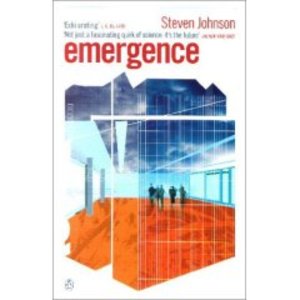
    For some reason when you promise to do something on a blog, you tend to do it  (or at least I do). So I’m going to promise to give JamesB his Emergence by Steven Johnson book back.

    While I’m on the subject, it’s great. I won’t go on too much, since you can just read the synopsis on the link above, but suffice to say here that it’s about how systems can self organise – emerge –  from the bottom up. Group intelligence if you like, from the even the dumbest individuals organising in a certain way to become collectively brilliant. Examples include how ant colonies organise themselves, how cities think and how computers can learn.

    Of course it’s useful for all sorts of plannery things. But forget all that, it’s simply interesting.

  • This post from Rob has got me fired up. Like so many people these days, he’s finding it hard to eat properly thanks to having bugger all time. Now while I happen to think cooking a proper meal is actually fun and a great way to unwind, I perfectly understand people who think it’s a pain. Especially if you’re cooking for one.

    100_1753

    But we know enough about the crap that goes into ready meals to know they are less than good for you. Still – I don’t believe cooking something tasty and good for you from scratch (which is also cheaper!) AND having enough time for other stuff has to mutually exclusive. And I’m going to prove it.

    So I’m going to post recipes. There are two rules; 1.They have to be no more than half an hour to make, start to finish. 2. They have to be dead easy.

    The only reason I’m remotely qualified to do this is that I cook from scratch every day, I work pretty long hours AND fit in tons of exercise. My personal view is that too many cookbooks are full of fancy stuff people will only cook on special occasions. Real people need to know how to make real food.

    You won’t find any of these recipes in cookbooks, these are meals that have evolved since I ate baked beans out of a cold tin on the first day of university. I’ve never written them down, which is another reason to do it come to think of it.Hope it’s useful. And if anyone has a go, let me know how it went.

    I’ll start with a simple one. Salmon in a bag. Feeds two. You’ll need:

    • Two salmon fillets.
    • Kitchen foil.
    • Handful of Sugarsnap peas (or mange tout, or asparagus)
    • Handful of cherry tomatoes.
    • Splash of white wine vinegar.
    • Dried or fresh (chopped parsley).

    Turn your oven to 200 degrees centigrade.

    Get a big bit of foil. Enough to cover the base of a baking tray and fold over the top. Put the two pieces of salmon in the middle. Spread the vegetables around them. Splash the vinegar all over the food. Sprinkle a teaspoon of dried parsley over the lot (or a handful of fresh). Fold the foil over to make a sealed bag. Put it in the oven (all this will take no more than five minutes).

    25 minutes later. Take the parcel out and serve on plates. That’s it (but turn the oven off).