• Picasso

    Picasso once said that art is a lie that tells the truth.

    He has a lot to tell agency folks.


    Because great advertising doesn't just sell the product, it becomes the product.

    It makes Coke taste better, as makes the fit of your jeans feel better.

    It makes a car that isn't really that different to the legion of others more reliable, sexy, faster..or even make you feel like the rebel/success or whatever you probably are not.

    I liked much of what Paul Feldwick said about the value of 'Showmanship', but I don't really think this is as different to the dark arts of psychology and subtlety as he claims.

    I totally buy the Byron Sharpe 'fame' and 'distinctiveness' argument. You need to reach as many people as possible and make the advertising gets noticed…because when it comes to buying stuff, folks buy the ones they remember.

    But the quant research that dismisses 'differentiation' and noticeable brand preference forgets a truth most of us conveniently forget.

    Research is rubbish at getting people to describe how they feel about stuff. Verbal communication in general is rubbish at describing the intangible.

    I really would struggle to tell you why I love my wife, I just do. I could tell you some core facts if pushed of course, but there is a warm fuzzy 'Julietteness' I can't really put into words.

    Just as I can't really tell you why I tend to prefer Nike. Apart from the fact it just feels better. I can't tell you why it's different, there is just a feeling of 'Nikeness' built up from years of advertising.

    To be honest, I didn't understand 'Just Do It' when it first launched, but I remember how the ads made me feel. I suspect most folks didn't get it, or cared. They probably remembered it because it was different.

    I don't feel intangible stuff based just on emotional content or tone of voice.

    The 'Nikeness' is also built out of the intangible value of the showmanship advertising, the great, powerful advertising that magically inserts itself into the product.

    Yes, great ads and stuff are essential to get noticed, as Byron Sharp says, but they do much more than that.

    It's no accident that 'Fame' campaigns, the one that folks talk about are the most effective, according to the IPA Databank. We just naturally feel that the products are better if the ads are good and create natural PR. It's not just about being seen to lead in my view, it's as simple as really liking the ads means really liking the product.

    These ads are as generic as could be in terms of messaging.


    "We'll find you the right glasses, so you'll see properly".

    There might be a subtle emotional wrapping about 'the need not to look daft' (which I can imagine some brand consultant saying is the main fear of folks buying glasses).

    But to be honest, the ads are very funny, very consistent and entertaining.

    I'm not sure they would work without the single minded message – relevance still matters in my view (even if there isn't any real 'differentiation') but what really works is the fact you like the advertising and therefore like Specsavers.

    No 'consumer' could really tell you why Specsavers is different. They won't tell you 'I just like the ads' in any quant research either. 

    So when the brand comes to the front mind in buying situations, which Sharp tells us is the main role of advertising, it's not just that it's remembered, there is an emotional smudge we can't describe, that makes it feel good…not must from a tone of voice, but from great ads.

    The 'lie' has become the reality.

    That's why you can buy success by outspending your market share, but aware winning advertising increases the effectiveness 11 times (Source IPA).

    11 times.

    The ad has become as much part of the product experience as the sugar content, the engineering story or whatever.

    How you build a 'showmanship' ad campaign is up to you.

    A great source can be a cultural flashpoint…

    The battle of the sexes and young men's search for identity in a contradictory world for example. 

    It can be taking a simple category generic, for example, the main buying need and ramping it up to hell.


    It can be, and perhaps should be more often, a brand or product truth delivered in a devastating way.


    It can even address a negative about the brand in a way people will just love.


    Or make a spurious, but confident claim about quality. This campaign has been resurrected.


    And let's face it, most of the above fit into one category, in fact, if they do, you know you're onto a winner.

    So yes, there is a treasure box of source material to create ads like these.

    The magic ingredient thought, is, well, magic.


  •  

    I love these new Curry's ads. There's that universal in here that everyone has dreams of another life, of what might have been, no matter how happy they might with the one they're living.

    And even more fundamental, people are perfectly capable of having two opposing principles, or points of view at the same.

    Just as I move heaven and earth to get home in time to see the kids during the week.

    Then plot and negotiate to leave them for two hours on a weekend to indulge in mid-life crisis bike riding.

     But let's forget all the planner speak, they're just funny.

    Where as this, which again shows the pain and joy of parenthood, is so charming…..


  • I've worked on one or two supermarkets. Hard work, but then again. that level of intensity means you work fast.

    It struck me then, as it does now, how contradictory people are about these kinds of places.

    On one hand, we think they're the devil, ruining independent high street folks, making us fat and unhealthy while shafting their suppliers.

    On the other, people still tend to agree that 'their supermarket offers value for money' and, let's face it, most people have spent and still spend most of their grocery money in these places, even if they shop around more.

    Just like, if you read the papers, everyone thinks Amazon is evil (they don't) but everyone shops there (they mostly do).

    What does this mean?

    Firstly, don't assume what you read in the papers is what people really think. It usually isn't.

    Secondly, don't assume people will put their money where their mouth is. We all go down the path of least resistance, it's just we try and feel a bit better about it.

    Thirdly, it's pointless listening to what people claim to think or do, we are all liars in research. In fact, we all do contradictory things too. Most people that shop in farmers markets also go to a supermarket every week.

    Finally, no one has a God given right to survive.

    Back in the days of the independent high street, most of the shops were overpriced, gave bad service and didn't sell good stuff (and they also shut on Wednesday afternoons).

    But it's true too, that many good businesses went under when the big boys came along. When markets move on, when culture does, those that haven't stayed ahead get crushed. 

    There are still some ace local retailers though, because, well they are ace and give people a reason to bother.

    My local butcher has more business than he can handle because his stuff is better quality, keenly priced and his knowledge of his product is second to none.

    In other words, if you want to survive as a business, don't ask people what they want or what they'll do.

    If people will have a choice, they'll go with the easy option, not always the best – unless you're exceptional.

    And finally, don't stand still. If you're not ahead of the market, eventually it will crush you.

    Those creative agencies still churning out 30 second ads as 'the idea'? Yes, there are still some. It's not business as usual, it really isn't.

    Those media folks only talking in terms of reach and frequency, you need a new act.

    Digital agencies that don't get brands and how communications works? You won't get away with it for long.

    Social media folks still talking about 'likes' and 'retweets' as valuable business metrics? Enough said.


    Don't stand still, the market will always move on and crush


  • (Excuse the typing I've broken my wrist)

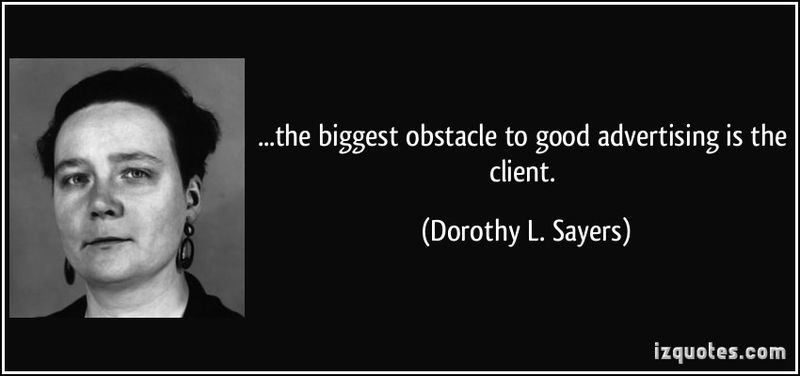
    Client

    I hate this quote, really hate it. I loathe the way it shifts responsibility away from agency folk.

    I hate the disrespect, you know, "Clients just don't get it, if only they would let me do what I wanted we would be so much more successful".

    Yes, you know advertising, but they know their business, they know the board that signs stuff off. There is a reason people work in most types of agencies, they haven't the personality or skills to do a real job. Respect the people that do.

    We're supposed to produce compelling work, that supposedly doesn't need a clear selling message. If you can't make your client sell compelling, you're in the wrong job.

    Now I've been fortunate to have some lovely  clients in my time. Some really good relationships.

    Good enough to have me sat on their side while they were pitched to.

    Even good enough with another client to sit with them while they talked colleagues through the process they'd just gone through in hiring another agency.

    I suspect much of that is down to the fact I love the job, therefore love working on their stuff. Genuine enthusiasm gets you a long way, even more so when you're senior.

    I also think it's because I'm very honest, trust me, I'm a useless liar.

    It's not the looks, charm or talent mark my words.

    I also got to hear Sara Leach of Coca Cola talking through the client perspective recently.

    Distilling much of this, here's some stuff to think about.

    1. When you're presenting, especially in pitches, just like advertising should leave some space for the consumer, leave some space for the client. In major presentations, clients are faced with well honed arguments, great theatre, charm, wit and the sheer force of slide after slide of crafted persuasion. It can be quite intimidating, especially if you can't get a word in. Find a way to draw them into a conversation. Because when we feel fear, or uncomfortable it's fight or flight. You don't want that.

    2. In reviews of work, I usually find a way to give feedback last, or not even give it. Because I need to entertain an idea a bit before I decide what my view is. With clients, agencies push for immediate feedback on the work they have just shared, right at the point they are struggling to process what their opinion is. Push them to share and they'll share something they might not mean and then stick to it. And the default reaction is to add some builds, builds that turn into issues that kill your entire project. Don't push for immediate feedback unless they really want to give it.

    3. Listen to feedback. Clients do want to be challenged, but they don't want to be ignored. Try and discern what is up for debate and what is not. You MUST actually listen to feedback and show you've taken it on board. In between tissue meetings and final presentation, the number one loser of pitches or work getting rejected, is that agencies haven't listened to clear feedback- or even worse, they've ignored it.

    4. Be likeable. My favourite client ever once told me,"You can be great at strategy, wonderful at execution, you can be the cheapest, but if we don't like you, forget it". Of course, some agencies ARE successful with the whole arrogance thing, but being cool and mistakenly thinking you work at CDP and it's 1976 only gets you so far. Some agencies get hired for being totally brilliant, but I know of one hot agency where the client hated their guts and kept with them as long as they delivered the goods. But as soon as they cocked up-and you always do- they were toast. No one perfect, good will and trust gets you past the moment you make a pigs ear of it.

    5. Keep things clear. There is more jargon than ever. Clients can't be arsed to de-code your work, and they usually have to present it on, make it easy for them.

    6. Stop working so hard. Done is better than perfect. Good clients pay you to be on time. They also pay you for what you think. Spend a little less crafting the powerpoint and more time getting a tight argument – in fact, a little imperfection is good, is gives clients the chance to correct you and feel they are playing a part.

    7. Clients are human too. There are wankers who enjoy making you work weekends, but most are uncomfortable working with pale faced ghosts who look exhausted. See point 4.

    8. Get the bloody set up over as soon as you can. They're sitting there waiting to see the ads, the plan, or whatever the main output is supposed to be. Get out of the bloody way. Most strategy bits of decks tend to be about looking clever, rather than helping. And be brave, show them the ads first, show them the proposition, then tell them how you got there. Surprise the poor bastards instead of showing basically the same deck over and over again. It's boring, and bored clients fire you.

    9. Their hours are shorter than yours. But don't mistake that for an easy life. It's a cultural thing that they leave on time, but that puts them under pressure to cram more into the day – and only 10% of what they do is advertising and brand stuff. They don't get to lounge around and have the banter that we do, it's serious and intense. And their offices are usually grim, grey affairs with no decent tea or coffee. So no wonder they like their agencies to be fun. But also, respect their time, give them plenty of notice if you need stuff approving, their days are choc full in ways we are less used to.

    10. Would they like to spend a couple of hours on a train with you? Boil it all down, especially for planning folk and they want smart intelligent folks they could have a chat with. The smart and intelligent bit is about being interesting, especially if you're shy and introverted like me, read lots of stuff, know a little about a lot of things. As for the having a chat bit, find out what they care about and know something about it, even better, just listen! Ask questions, lots of them and you'll find out what you might have in common. So, if you found yourself on a train with a client, what would you both do? Have an easy, natural chat, know each other well enough to even read in silence? Or would you pretend not to notice each other. If it's the last, you're fucked (see point 4)

  • Obviously I've read Paul Feldwick's book about how advertising works. I'm sure you have too.

    I don't there is any point a monkey like me offering any kind of review, except that you should read it and form your own view. I certainly enjoyed it and appreciated the reasoned approach, as opposed to the self importance or 'this is the new that' conceit of other authors and industry voices.

    What I did want to meekly point out was the fact this was a book about advertising. Not Growth Hacking, not brand communication or any other of the stupid phrases folks bandy about.

    Advertising.No bothering with above the line, online v offline. Advertising.

    Perhaps we should call it this more often and not pretend we're in another business. It might be harder then to dismiss the work and ideas of those that came before us, by kidding ourselves stuff is that different.

    I'm not saying it's business as usual with digital and stuff.

    It wasn't business as usual when TV came along either.

    Just saying.


  • I went to see Ryan Adams (NOT, I repeat NOT Byan) the other night at the O2 Academy in Leeds.

    Rather good in case you're interested. I like gigs like this, nice to be surrounded by my own people or so to speak.

    But that's not the point I want to make.

    You see, leaving the venue, we walked past a nondescript pub.

    Except it's not for me.

    Over 13 years ago, I didn't have a full time job and the money was running out.

    So I was temping in a call centre, selling plumbing and drainage insurance.

    Soul destroying, which is why I'm always nice to cold callers. I've been there.

    We worked from 12pm until 8. Lunch was 5. But it wasn't lunch, everybody went to this pub to drink their way into a state to get through the rest of the shift.

    Misery.

    The spoiled, ex-student, recently ex-ad agency me met all sorts of people there.

    And I learned how lucky I was, because I knew this employment arrangement was only temporary.

    For others, this wasn't a stop gap. Just part of an endless cycle of undertainty.

    Sometimes it's worth being reminded you could roll the dice a thousand times and never be as lucky as you are.

    Anyway.


  • So I went to see Queen last night. 

    Sort of against my will. Campbell dared me to confront my prejudice and I accepted, only to find him putting his money where my mouth was.

    It wasn't totally hateful. 

    I took my sister and it made her happy. If anything made it worthwhile, it was that. 

    But it's hard to not to appreciate 10,000 happy people singing their hearts out. It even made me smile.

    The songs, and yes I do unfortunately know most of them, do work in a live setting.

    Adam Lambert confounded my expectations. Once he forget to try and impersonate Freddie Mercury and just perform, he's a very good singer, he won the crowd over, not least because he could see they were enjoying themselves. 

    But Brian May was the real star of the show. It's uncool to play a guitar that looks like he crafted in a school woodwork class and he always has this squinty frown. But he's a very good guitar player. 

    Someone apart from Freddie Mercury was missing. They played Under Pressure, a David Bowie song Queen got involved that in that I do love – and it missed Bowie. 

    Overall, I wouldn't go again. The songs just aren't that interesting. Eventually, like listening on record, it just became slightly camp power rock played with a very similar guitar style. It was a bit boring. 

    Meatloaf does this kind of thing a lot better in my inconsequential view. 

    Queen

    Queen 2

    The one surprise was when they forget to be 'Queen' there were some good bits. They played a very earnest and affecting Days of Our Lives for example. That was OK. 

    So I maybe hate Queen a little less. They make a lot of people happy and you can't argue with that.

    It's just not for me.

    But at least I gave it a go. 

    Thankfully I'm seeing Ryan Adams in February and Morrisey in March to cleanse myself. 


  • “Who will be my primary contact to interface with?”

    “We’re way off the point of actual ideation”

    “I like recessions, the fear means we can squeeze far more out of our people”

    “I agree with you completely. However….” (every single meeting)

    “Put that hardhat on. No really put it on. Now take this celery and hit yourself on the head again and again, because it’s more likely you’ll eventually knock yourself out than me paying this fucking bigger fee”


    To a creative team:

    Day one: “This is the last change the client is going to make”

    Day Two: “Just a couple of final tweaks before it can be signed off”

    Day Three: “Has the print run started yet?”


    “These are not the fucking changes I briefed, what sort of a twat do you take me for? How fucking simple is it to get a fucking wine leaflet right? Oh bollocks! This is the chicken leaflet isn’t it? Fuck me, I’m sorry, mind you why the fuck didn’t you say I was talking about the wrong bastard leaflet?

    “The secret to marketing? I’ll tell you the secret to marketing, it’s selling a loaf of bread to poor simpletons for 10p less than the other bastards”

    “We just don’t go for this emotional stuff”

    “This is a professional organization, put some bloody shoes on”

    “I haven’t got my credit card, can you get the bill?” (said the Head of Client Services to the account exec when the £2,000 bill came in for the client lunch”

    “I can’t make my mind up with these scripts, can we have an animatronic please”

    “Fucking salience? What’s salty water got to do with my fucking brand?”

    “Just letting you know you replied to my email. I’m assuming you wanted to forward it?”

    Ring ring….“I know it’s two in the fucking morning, but I’ve just had a thought”

    “Do they still bother with suits Up North”

    “Bloody planner”

    “Can you give us a worse proposition?”

    “We’re going to make a cartoon panda sponsor a racehorse”

    “Get out of my broom cupboard”

    "No one leaves this bar until dawn. 6 more black russians on the way"

    "Look, the trick of a contact report is not to report what happened and what was said. It's a second chance to get we wanted out of the meeting. No one reads them anyway"

    "When you sign on the teleconference, everyone can hear you mate"

    "You forgot to press mute"

  • (Okay I lied, a couple of extra posts before a long departure)

    There have been many examples in history of famous quotes, pieces of work or leaps forward in technology that have been mis-interpreted on purpose, or through lazy thinking.

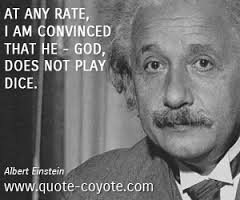
    For example, Einstein once said, “God does not play dice”.

    God

    This was in relation to being uncomfortable with the random nature of quantum mechanics.

     But plenty have taken it as proof that once of physics’ greatest minds was religious.

    He was borderline atheist. He just believed nature would be a little neater.

    In fact, many have taken the weird nature of quantum mechanics too far.

    They think it means you can’t measure what is happening.

    That physics is bollocks.

    When quantum theory has been measured to ridiculous lengths. Because of quantum theory, we know what is happening in stars billions of miles away, we can predict what will happen to them too.

    Perhaps ‘survival of the fittest’ is the most terrible.

    Darwin didn’t actually write that in ‘Origin of the Species’ and it doesn’t mean the strongest.

    It doesn’t even mean individuals or species.

     It means genes that produce traits and qualities that are best suited to their environment.

    Homo sapiens are far weaker than previous species of hominid.

    Homo Erectus would destroy you in a fight.

    Homo

     And it’s more genes that survive an environment as much as accidentally making you better.

    The appendix is fairly useless but doesn’t get in the way for example.

    Which brings us to developments in brand and marketing theory.

    Which does get in the way, as all sorts of people use to sell all sorts of weird and wonderful things.

    Now most theory in brands and marketing are bollocks anyway.

    Opinion dressed up as science based work.

     But even some stuff that is good if often not understood and applied wrongly.

    To show you what I mean, let’s rewind a few years, to when I once worked on a global client coming to grips with digital.

    They still held on tightly to the comfort of the Millward Brown brand pyramid.

    The brand teams worked in isolation of marketing and sales teams.

    Both has separate measures of success.

    They could spend millions on brand stuff and be happy with shifts in brand tracking.

    Sales didn’t matter, that was marketing’s problem.

    Distribution was a discussion for a totally separate department. Despite the fact it was a low interest purchase you had to make the effort to buy.

    Now because of the famous Millward Brown pyramid, ‘awareness’ was a credible measure.

    Which meant most digital stuff was measured on pure reach.

    The game became how little you could spend on production and media to get the logo in front of as many people as possible.

    It didn’t matter if they cared, it didn’t matter how relevant the stuff was.

    Just that it reached a decent number of people.

    So the PR charlatans has a field day. The social media folks thought it was Christmas.

    Because they knew how to get stuff out there.

    But they didn’t know how get people to buy anything. They didn’t have to.

    Since then, Saint Byron Sharp has given us all some evidence based ways of thinking afresh how brands work.

    And the same organisations that were able to peddle paid/owned/earned reach as brand metric are newly empowered.

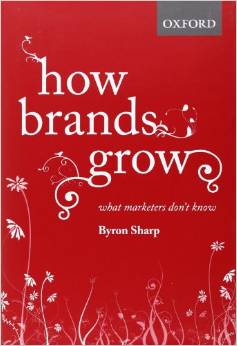
    Because the central argument of ‘How Brands Grow’ is that the most efficient role of advertising in all its guises is to reach as much of the market as you can.

    How

    In the wrong hands, this information can be really unhelpful.

    Confirmation bias means many of the awareness peddlers have leaped on it as proof of the ‘reach’ approach.

    For some it’s a genuine mistake.

    While the more devious have blatantly post rationalized it, to suit their argument that reach is all that matters.

    But, to quote Rob Campbell (I admit I’ve passed this off as my own how and again), most people are aware of Hitler. I don’t many who are particularly fans.

    Even worse for the digital reach brigade, simply getting stuff into people’s timelines or clicks on YouTube Trueview or whatever doesn’t mean people have taken anything out of the communication at all.

    Even worse, many display ads are really cunning at making us click by accident, but that click gets recorded as a score.

    The real argument that came from Byron Sharp was ‘salience’- Mental Availability. Making sure the brand gets front of mind in buying situations.

     That means you have land something distinctive with people. They need to remember.

    Which is why ‘Fame’ campaigns that get people talking work so well.

     They stir the emotions that generate longer term memory, they make the brand feel it’s on the up – while being seen to lead creates a feeling of quality.

    Because people can’t be bothered to think about buying most things.

    (which is also why my old client was daft not making everyone think about distribution – physical availability. In the case of some categories, especially FMCG, shoppers, even allegedly loyal ones, will simply buy what’s there. If your product isn’t you’ve lost the sale and given your customers the chance to build up a new habit).

    So, when it comes to digital brand communications, we need to apply exactly the same rigour that’s applied to TV and other channels.

    In fact, scratch that. I bring you back to my old client again. The entire brand tracking system needs an overhaul.

    Of course, knowing how many people saw and recall something about the advertising is fundamental.

    But understanding if it drove salience with those people is the measure that really matters.

    And the contribution both short and long term sales, or whatever the hard business measures are.

    Econometrics, real time reporting, control groups, whatever.

    Of course if you have a ‘response’ led client, you can measure the journey to sales online, but even in these cases, there will be plenty of people who didn’t convert right then who did later – or even bought offline.

    By the way, short term measures do matter, namely removing reasons not to buy, but overall, there’s enough evidence out there to show that the real contribution to profit is building long term brand salience over time.

    So yes.  

    Any great piece of writing or thinking can be used for evil in the wrong hands.

    It’s a real danger in marketing.

    With all those received wisdoms.

    All the different disciplines and agencies competing for, the increasingly squeezed budgets.

    The temptation digital presents to measure all sorts of vanity metrics that have nothing to do with growing a business.

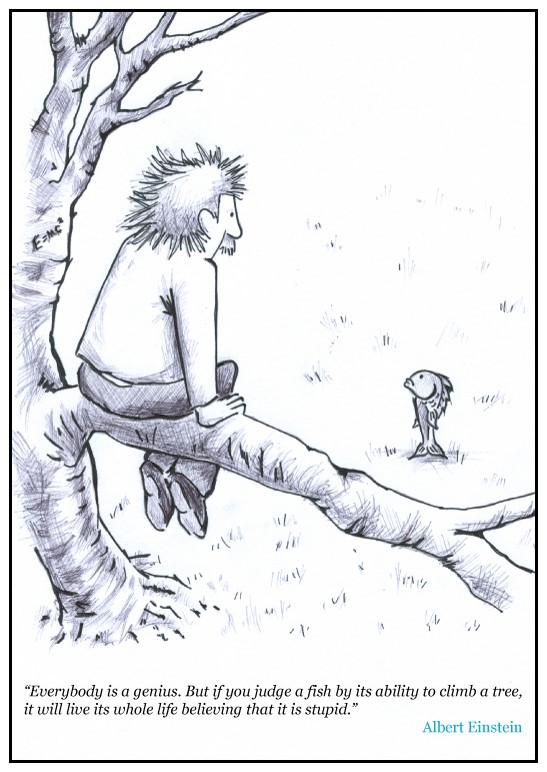
    Back to Einstein. He also said we shouldn’t strive to be successful people.  We should strive to be people of value.

    Whatever the latest theory, that should never change.

    You can be successful getting loads of reach and totally fail in creating any value whatsoever.

    Plan on.