• I'm nearing the end of this, which is making me rather sad, in the way that you want to find out the resolution, but you don't want the experience to end. 

    Freedom

    I think I liked it more than The Corrections, maybe because there was less weight of expectation around 'The Great American Novel" cliche (despite the fact I think it's a Greater American Novel), beautifully realised characters, relevance in so many ways. Wonderful.

    Real books and real writers, as Franzen suggests himself fall into one of two camps. Art for arts sake, you know, difficult books, almost a chore to read, because literature isn't supposed to be ENJOYED, it's supposed to challenge you. Or the other kind that believes you can make a book challenging, make people think AND enjoyable and absorbing.

    This book is the latter. It's virtually perfect, and sometimes searing in what it is implying, but immensely compelling and, well, it makes you feel something. It makes you forget you're reading, whicb is a skill very few writers posess.


  • This is the usual rehashing of common practise masquerading as Damascene revelation.

    What is less talked about is the dark art of re-purposing the rough story that is already in someone's head. It's usually there unless you're launching. 

  • Don't seem to have blogged much (as if anyone cares). Largely because it's easy to fall into the trap wanting to write long-ish meaty thingumys with something to say, which is sort of wrong since blogs and stuff are really lots of little things sometimes punctuated with bigness. 

    That's a little what brands that want to get all social and collaborative should be thinking about (starting why doing this adds to the bottom line of course).

    By all means, have a big idea, in fact, please have one, but it's worth trying to avoid the 'single-minded' ghetto, you know, lots of big showpieces and 'grand narrative' and think about lots of little bits punctuated by occasional big bits. Some big bits to get people excited,  provoke them and pull them in, and little stuff to keep the conversation going.

    If we're going to persist with the 'relationship' metaphor, let's be true to it and remember that all relationships  start with some spark that make you want to spend time with them. You keep it going from day to day, but every now and then, you need to make the extra effort to make it still feel special.

    If every day of marriage was a romantic dinner for two and flowers on the bed, you'd never get the cleaning done and she'd be moaning about never getting the chance to watch Eastenders. But if every day was 20 minute pasta in front of the telly you'd get a bit bored.

    Or something.

  • When I was growing up, in the days when I experienced advertising and stuff like normal human beings, meaning I didn't think about it that much, it was the longer running campaigns I remembered and still do.

    Heineken refreshed the parts other lagers cannot reach.


    Tesco's dotty


    The Man from Del Monte


    And so on. Long running campaigns that, like Ariston, went on and on on for years.

    More and more, the 'long running campaign' is a thing of the very distant past.

    There's stuff like The Power of Dreams, but not much.

    Buy why?

    One of the most common reasons I  hear in meetings is 'wear out'. The concept that people just get bored with the same campaign over time and cut-through gradually decays.

    To be honest though, in most cases, that's just marketing bollocks for the fact that there is a new brand manager or CMO who wants to make their mark.

    How long is the average marketing exec tenure these days? About two years? That would explain a lot. The new broom comes in looking for problems to solve, naturally finding all sorts wrong with the existing strategy. Not to mention firing the agency for their own pet shop, who naturally want to do their own groundbreaking work and reinvent the brand too.

    But marketing people live a total bubble. No one cares about their brand as much as they do and they certainly don't think about their campaigns much, if they notice them at all.

    People don' want to think about brands, what these bubble inhabiting marketing hot-shots forget is people use brands NOT to think. Brands exist as signposts for people to buy something familiar and get on with stuff that is, frankly, more important.

    As Byron Sharp puts it, the only real role for proper advertising that creates a significant return is building memory structures, making distinctive assets, feelings and associations more famous and familiar over time.

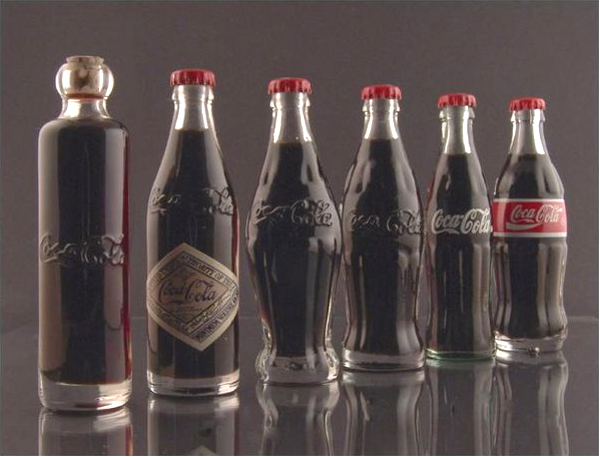
    Of course, as culture changes and markets shift, brands and the communications that promotes them need to be refreshed. But that's REFRESHED, not wholesale reinvention. If you find you have a brand idea that isn't fit for purpose anymore, it's more than likely it wasn't a big strategic or creative idea really, it was just a bit of executional fluff.


    I would argue that the second of these is really a refresh of the first – that Reassuringly expensive was never the real brand idea, rather it was a dramatising Stella as the epitome of Franco Belgian sophistication by appopriating French cinema.

    I'll say it again, truly effective advertising works by building a consistent, distinctive,  picture over time.

    Because people really don't think about brands that much, especially the light buyers that are essential for long term brand growth. Getting noticed and being remembered (for the right reasons) are all that really matters.

    This mad thrust for newness at best reduces effectiveness, at worst it's a waste of money to feed a few egos.

    It is imperitive that brand managers and their agencies stop thinking of themselves as trouble-shooters, here to save the future of the brand by turning it upside down, and begin to act as temporary guardians, here to preserve and enrich the story that people created before them and, when they move on, hand over their precious asset, intact, perhaps with a new chapter, but a new episode in an evolving narrative, not a new book.

    It's a bit like an old house. Imagine something built 100 years ago. Chances are at least 5 different 'owners' have been and gone. Each will have done something to it – maybe even as drastic as an extension. But essentially it is still the same house, enriched and evolved, no more, no less.

    Brand management is a really just like real estate. 

    Which makes sense since ad folk are even less respected than estate agents, but that's another story.

  • CokeBottleEvolution

    "What most brands need is careful and effective maintenance"

    Jeremy Bullmore

    "I don't revolve, I evolve"

    Alan Partridge

    Building distinctive, consistent memories in the mind of people over time is the route to sustained brand growth. People buy the brands they've noticed and have some level of favourable familiarity with.

    In other words add to, or re-configure,  the story that's people's heads already. Don't try to start a new one.

    Continually tring to 'reinvent the brand' is commercial suicide. There simply isn't enough room for ego and the need to 'make your mark' in the commercial real world.

  • TV isn't dead.

    Digital is not the only channel in town, in fact, it's not even a channel.

    Ok? Good.

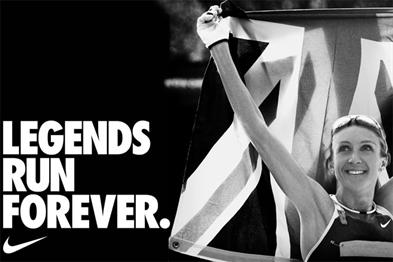
    Now watch this. It wouldn't matter where I watched this. It would still make me think. It would still move me.


    Captures everyday heroics and bravery. Makes powerless people feel a bit more able, makes you feel something real in a jaded world etc

    Few things capture the imagination like a great piece of film. Who gives a monkey's where it runs as long as people see it and can talk about it?

  • So Michael Phelps got his record. Well done him, but it was tinged with disappointment when Mr Invincible lost the 200m butterfly at the final touch.

    But it struck me how gracious and generous he was in defeat.

    That's what often gets missed with coverage of sports and the elite participants at the top. They go out year in, year out, to fight each other tooth and nail for medals, points, trophies and money, but the adversarial nature of the actual battle belies the brotherly/sisterly culture around it.

    Performance athletes (with some notable exceptions of course) are bound together by mutual respect and the sheer hard work involved in what they do. That's even truer of those at the very top.

    My own experience – of training 5 hours a day, travelling to strange countries without Mum and Dad (chaperoned of course) from the age of 10 and having to deal with the pain of losing, seeing months, years of work and hope going up in smoke and, even tougher, learning to handle winning. Not letting it make you arrogant and be kind to those who lost to you on the day- was that experience this abnormal made you incredibly close to those you went through it with because only they knew could grasp what it was like.

  • So the Olympics are finally here. Naturally I'm watching a fair bit of swimming, which is bittersweet as it makes me want to drop everything and everyone and swim and swim until my chest bursts and my arms stop working. I can't begin to describe the pure joy in feeling your own strength and doing something you know you were born to do. But it's more than that.

    Once you reach a certain level of skill and fitness it's incredibly liberating to just go mental and tear into your chosen sport because you can. The sensation of endless energy and incredible, unstoppable momentum is more addictive that anything else I could possibly imagine.

    One more thing, we celebrate gold silver and bronze, but to just make the final, in fact, just to qualify is an incredible feat of persistence, hard work and physical excellence.

    I can only really speak for swimming, but that's 5 hours a day of intense agony, you are never really free of the ache in your shoulders, and sacrifice.

    Hannah Miley of the UK 'only came 5th' in the 400 medley. That's 100 metres butterfly at full pace AND THEN another 300m mixing up the other strokes.

    Doing ANY butterfly at all is beyond most humans, let alone 100m and certainly not following that with another 300m of anything, let alone sprinting. It's agony for the best and beyond most of the speed merchants you'll find in your local pool.

    That's why I love the Olympics, it's celebration of humanity and the sheer,wonderful possibility that resides in all of us.

  • Every block of stone has a statue inside it and it is the task of the sculptor to discover it.

    Michelangelo

     

    Chisel

    If you haven't read Jonathan Lehrer's fantastic book about how creativity works, you should.

    Firstly because it goes a long way to prove that creativity is much less a 'skill' than the way you go about things. Anyone can be creative if they want to.

    Secondly, because it clearly shows (with proper science) that being creative is not just about getting big ideas that arrive by 'not thinking'. You know, seemed epiphanies that arrive from nowhere when you're in the shower (although the shower is a good place to have them since they come when you're relaxed and slightly fuzzy- not when you're wired on coffee, which is, funnily enough the beverage of the creative type….perhaps wrongly so).

    This is often used as justification for the languorous flaneur in agencies, slouching around, just shooting the breeze.

    When, in essence, this approach only works if you've gone through the pain and misery of abject failure, read, scribbled, struggled with a cacophony of sources and crap ideas and literally thought, "That's it, I can't take anymore".

    Ideas don't float up from the sub-conscious unless it's been properly fed.

    But, let's be honest, serendipity often fails us. Which brings us to a, more reliable and less feted, form of creative approach and idea generation. Again, sheer hard work, but hard work to refine and refine again. 

    Now, you don't often see 'hard work' anywhere near 'artist' but the truth is, in my own experience, the people with the best ideas just work harder than anyone else.

    They don't sit around and waiting for ideas to appear my magic, they immediately start writing, drawing or scribbling, creating very bad starters and then refining, editing and improving until they get to something great. 

    Lehrer calls this practise 'unconcealing'. Getting those jumbled thoughts down from the front of your mind as quickly as possible, to create something half formed, mostly wrong and, essentially crap, then working out what's wrong with it bit by fit, fixing it one step at a time.

    Chipping away at the wrongness to reveal the shining brilliance hidden in there somewhere.

    Don't get me wrong, it's bloody hard work, but it's also foolproof, as long as you continually pick up what you have, shake it around, throw it against the wall until it's not just okay, it sings.

    For a planner, it's the only way to  consistently write consistently great creative briefs, presentations, proposals or anything else.

    It's also, in reality, the way you should approach strategy and ideas themselves. By all means look for epiphanies (and do the work to give yourself the chance of having one) but don't wait for them, start making crap stuff and push yourself to make that crap into gold.

    That means switch off Facebook, don't flit around online, don't stop for little chats. Sit down, stay there and keep going.

    You're looking for that heightened level of concentration when you don't even know you're thinking, where you're just lost in the task – flow.

    That also means you need a framework to channel the crap into. I used to be a fan of open creative brief formats but now realise you need constriction to free up creativity, the tyranny of answering specific questions within a limited space forces editing and precis and, the discipline of HAVING to develop your thinking so it all links and fits.

    God forbid, perhaps there's a role for brand onions and proprietary planning processes. Perhaps.

    Take the Haiku. It's bloody hard to write anything that makes sense in 17 sylabels, let alone something beautiful, but the constriction seems to amplify creativity and produce  profound and moving little pieces of wonder.

    I hated the 'Disruption' process at TBWA with a passion, but I have to admit, the rigour of having to fit brand ideas into 'Convention' 'Disruption' and 'Growth Vision' didn't half make things develop quicker, as long as you treated the framework as an idea shaping filter, not an idea generating tool of itself.

    Perversely, I'd suggest that telly ads end up MORE creative because they have to fit into 30 seconds, just as press needs to fit into a quarter page. It creates focus, it creates tension and problems, it forces extra development- it forces better ideas.

    Which is why it's so important to have some constriction as to how you might express ideas themselves.

    I'm a fan of using 'log-lines' for campaign ideas for example, like they use in film pitches. It forces you to get to the essence of an idea really quickly, rather than mistaking art direction or a line, or even casting for a genuine thought.

    So, yes, the most consistent route to great ideas is ferocious hard work and continuous refinement. It's less flashes of insight and more seeing what's wrong with things. It's not very cool I'm afraid, but, to quote Lehrer, "If you want to be at the cutting edge, be prepared to bleed".